Last updated on September 28th, 2026 at 08:58 pm
Rate of fire in paintball is measured in balls per second, or BPS, and the number that governs the modern game is 10.5. That is the cap the NXL rulebook enforces, defined as no more than one paintball every 95 milliseconds. Recreational fields vary more, with semi-auto-only rules being the norm and full auto usually reserved for specific game types, but the tournament cap is the reference point the whole sport tunes around.
Here is what BPS actually means, what the firing modes are, what physically limits how fast a marker can shoot, and how the caps are enforced.
BPS and Firing Modes Explained
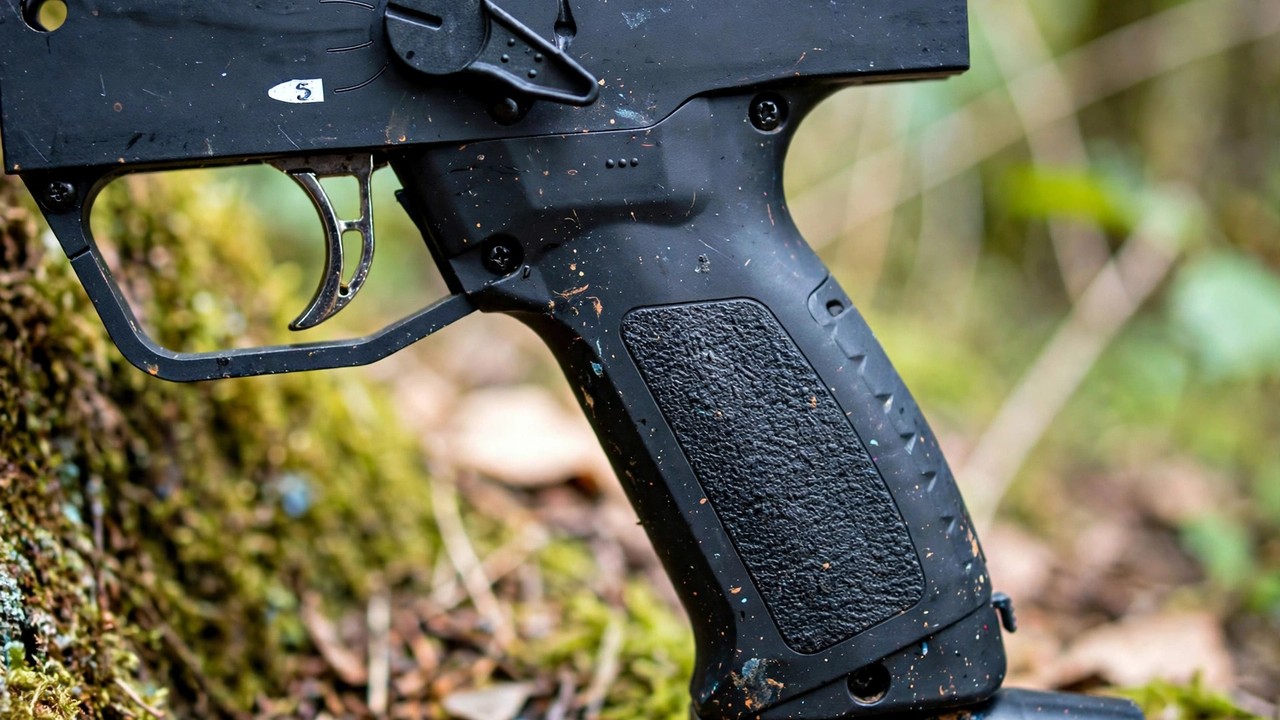
BPS counts how many paintballs leave the barrel per second. What controls it is the marker’s firing mode:
- Semi-Automatic: one ball per trigger pull. Your finger is the limit. Most rec fields run semi-only.
- Ramping: an electronic mode where sustained fast pulling makes the board add shots between pulls, up to the cap. This is the standard tournament mode.
- Burst: a fixed number of shots, commonly three, per pull.
- Full Auto: hold the trigger, the marker keeps firing. Mostly limited to scenario and magfed events or banned outright at rec fields.
Ramping has precise entry conditions in league play. Under NXL rules, a marker may begin ramping on the fourth trigger pull after three semi-automatic pulls, provided each pull comes within 200 milliseconds of the last, which works out to sustaining five pulls per second. Let the gap exceed 200 milliseconds and the marker must drop back to semi-auto for at least three shots. Our guide to ramping in paintball breaks the mode down in full.
The 10.5 BPS Cap and Its Penalty Ladder
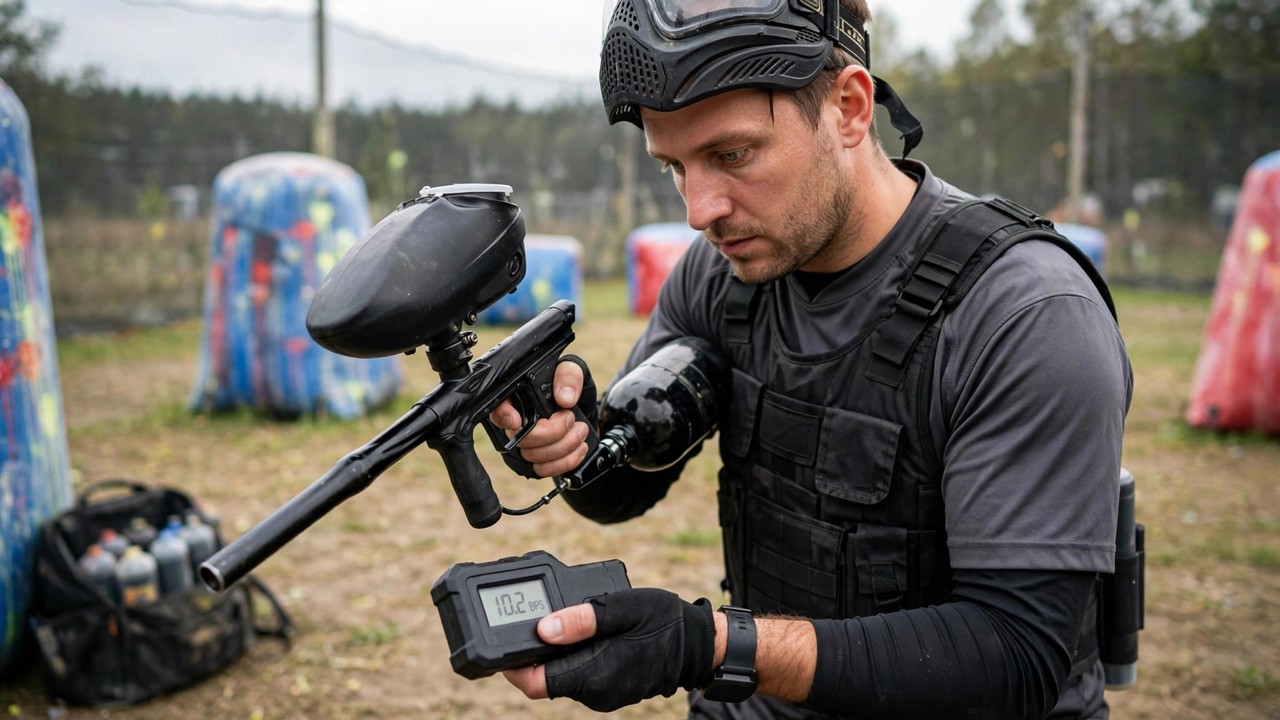
Tournament markers are tested at the chrono station and on the field, and the rulebook attaches escalating penalties to how far over the cap a marker fires. Two shots at 10.6 to 10.8 bps draw a major penalty. Two shots at 10.9 to 12.4 bps draw a major penalty and hand the point to the opposing team. Two shots at 12.5 bps or above add a tournament suspension for the player on top of the major and the lost point. The message in that ladder is blunt: a marker board set even slightly hot is treated as cheating, not as a tuning error.
Referees also test every marker for runaway triggers, meaning markers that keep firing without deliberate pulls due to trigger bounce. A runaway gun is barred from the field entirely. We cover that phenomenon in our guide to bounce in paintball.
What Physically Limits Rate of Fire
Three things have to keep up with each other for a high BPS to work: the trigger, the loader, and the paint.
The trigger side is technique. Top players do not hammer one finger; they walk the trigger, alternating index and middle finger to sustain rates a single finger cannot. A practiced mechanical player can sustain roughly 7 to 8 bps in true semi-auto, and skilled walkers exceed the electronic cap, which is exactly why the cap exists.
The loader side is hardware. A gravity-fed hopper feeds around 8 balls per second on a good day, which is why force-feed electronic loaders exist: they push paint into the breech fast enough to match anything a legal marker can do. Pair a fast marker with a slow hopper and you get dry fires and chopped balls, not more hits.
The paint side is fragility. Every ball must survive being accelerated into the breech at speed. Brittle winter paint plus an aggressive loader spring is the classic recipe for a barrel break, whatever your board settings say.
How Much BPS Do You Actually Need?

Less than the arms race suggests. High sustained rates matter most for laning during the breakout, where you are putting a stream of paint through a gap opponents must run across, and for keeping an opponent pinned while a teammate moves. In a one-on-one gunfight, the first accurate ball wins, not the fastest ten. A rental-grade marker shooting 5 bps in the hands of someone who snap shoots well beats a capped tournament gun sprayed from the hip, a point our snap shooting guide makes at length.
Rate of fire also carries a social dimension. Pouring a full ramping string into a first-timer at 30 feet is legal under the rules and terrible for the sport, which is why overshooting sits near the top of every etiquette guide ever written. The cap limits the marker. Judgment has to limit the player.
Frequently Asked Questions
Balls per second, the standard measure of rate of fire. The NXL tournament cap is 10.5 bps, defined as no more than one ball every 95 milliseconds.
Rarely. Most recreational fields run semi-auto only, and tournament play uses capped ramping. Full auto is generally limited to scenario or magfed events that explicitly allow it.
As fast as your finger. A practiced player sustains roughly 7 to 8 bps in true semi-auto, and skilled trigger walkers can exceed 10.
It keeps the game survivable and fair while still rewarding fast shooting. The rulebook backs it with escalating penalties, up to suspension for markers firing at 12.5 bps or above.
The loader and the paint. A gravity-fed hopper feeds around 8 bps, so fast markers need force-feed loaders, and brittle paint breaks in the breech when pushed too hard.