Last updated on September 28th, 2026 at 08:35 pm
This page collects the paintball numbers that actually get asked about, injury rates, velocities, rate-of-fire caps, participation, and costs, each one traced to a rulebook, standard, study, or industry report rather than to another blog. Figures are current as of August 2026, and the sources are listed at the bottom. Writers, students, and field owners are welcome to cite this page.
Safety and Injury Statistics
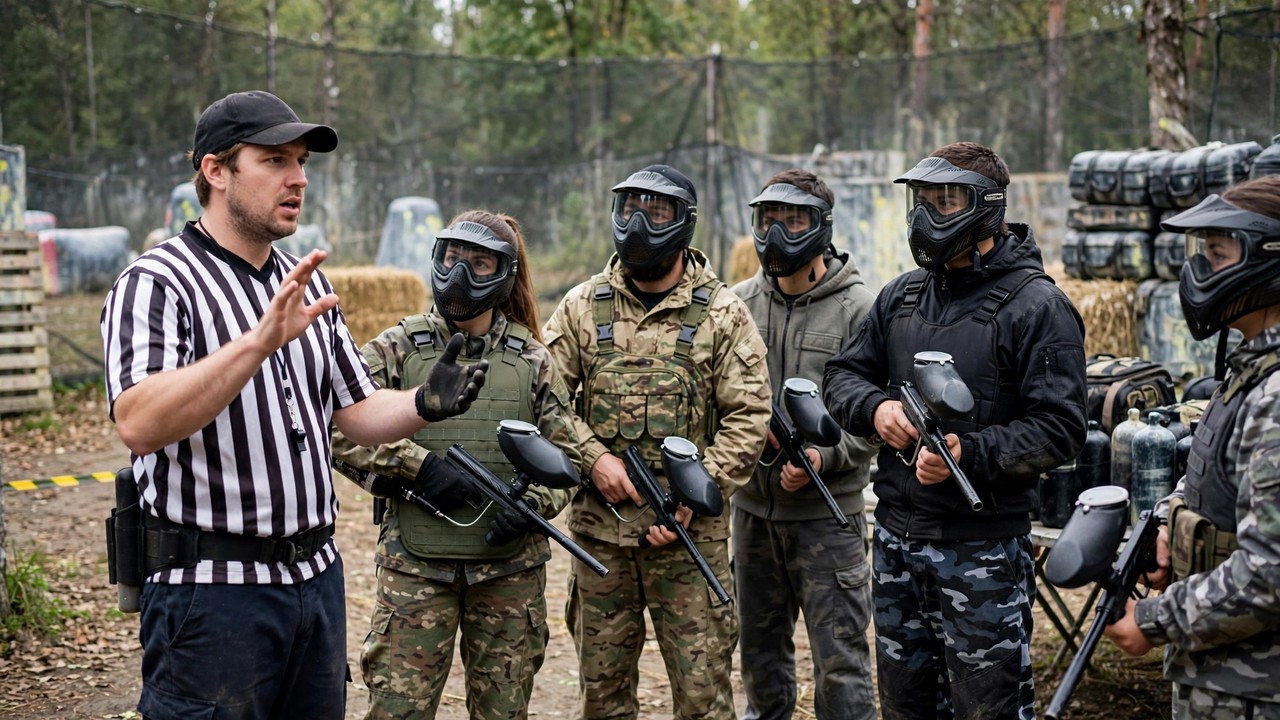
- About 0.2 injuries per 1,000 player exposures: paintball’s measured injury rate in league safety data, compared with roughly 8.5 to 43 per 1,000 across youth football studies.
- Around 10 percent: paintball’s share of sports-related eye injuries seen in US emergency departments in published ER studies.
- Highest odds of lasting vision damage: among sports eye injuries, paintball accounts for roughly a quarter of cases involving impaired vision, which is why the mask rule is absolute.
- Up to 97 percent preventable: the share of paintball eye injuries that proper eyewear would have prevented, per ophthalmology research. Nearly all severe eye injuries happen to people not wearing a mask.
- ASTM F1776: the standard paintball goggles are certified to. Studies of compliant masks show essentially zero penetrating eye injuries while worn.
The full picture behind these numbers, including where paintball’s risk actually concentrates, is in our review of whether paintball is safe.
Velocity and Impact Energy
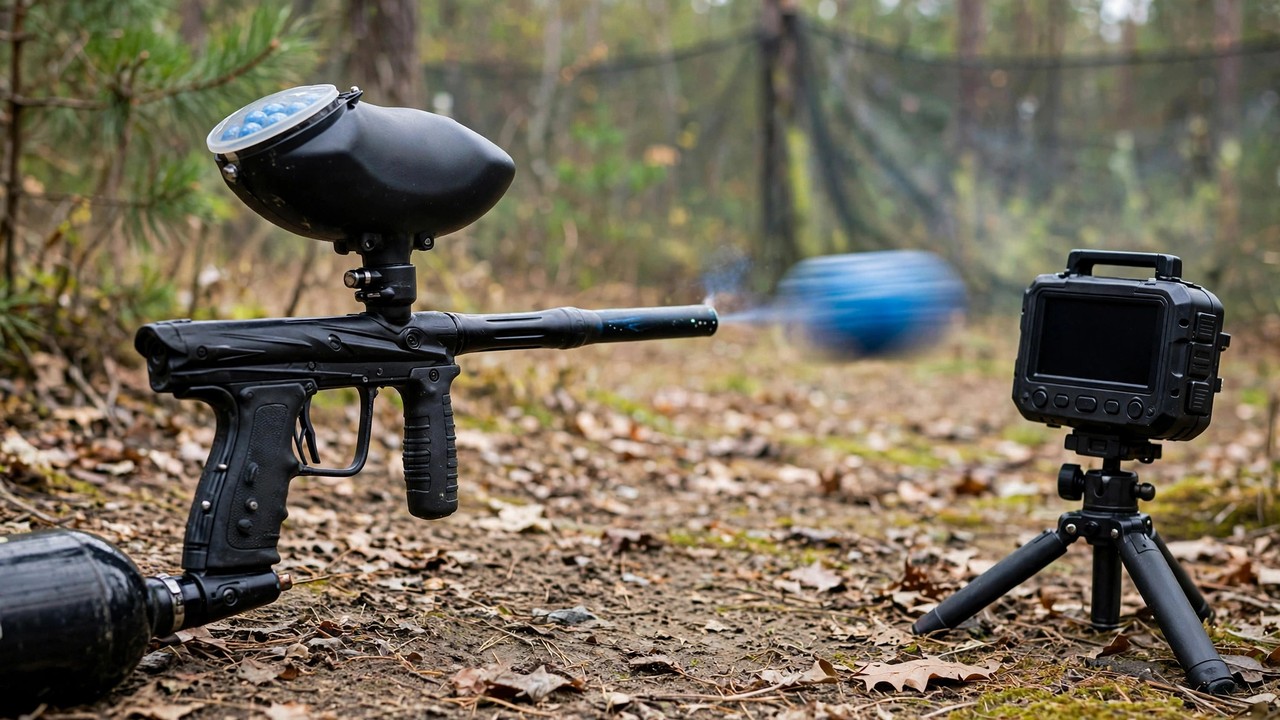
- 300 feet per second: the industry maximum muzzle velocity, equal to about 204 miles per hour or 91 meters per second.
- 280 to 300 fps: the range most outdoor fields chronograph markers to; indoor fields commonly run 250 to 280.
- 200 to 250 fps: typical low-impact velocity for kids’ play.
- Roughly 13 joules: the kinetic energy of a standard 3.2 gram paintball at 300 fps, in the neighborhood of a hard-thrown baseball but spread across a ball built to burst.
- Tournament enforcement: under the NXL rulebook, 300 fps or less is legal, 301 to 314 draws a minor penalty, 315 to 329 a major, and 330 or above a gross major.
Why the cap sits at 300 and how fields enforce it is covered in our guide to FPS in paintball.
Rate of Fire
- 10.5 balls per second: the NXL tournament cap, defined as no more than one ball every 95 milliseconds.
- 200 milliseconds: the maximum gap between trigger pulls that keeps a marker in legal ramping mode, which works out to sustaining five pulls per second.
- 7 to 8 balls per second: what a practiced player sustains on a mechanical marker in true semi-auto.
- About 8 balls per second: the feed ceiling of a gravity hopper, which is why fast markers pair with force-feed loaders.
The firing modes and the penalty ladder behind the cap are in our guide to rate of fire in paintball.
The Paintball Itself
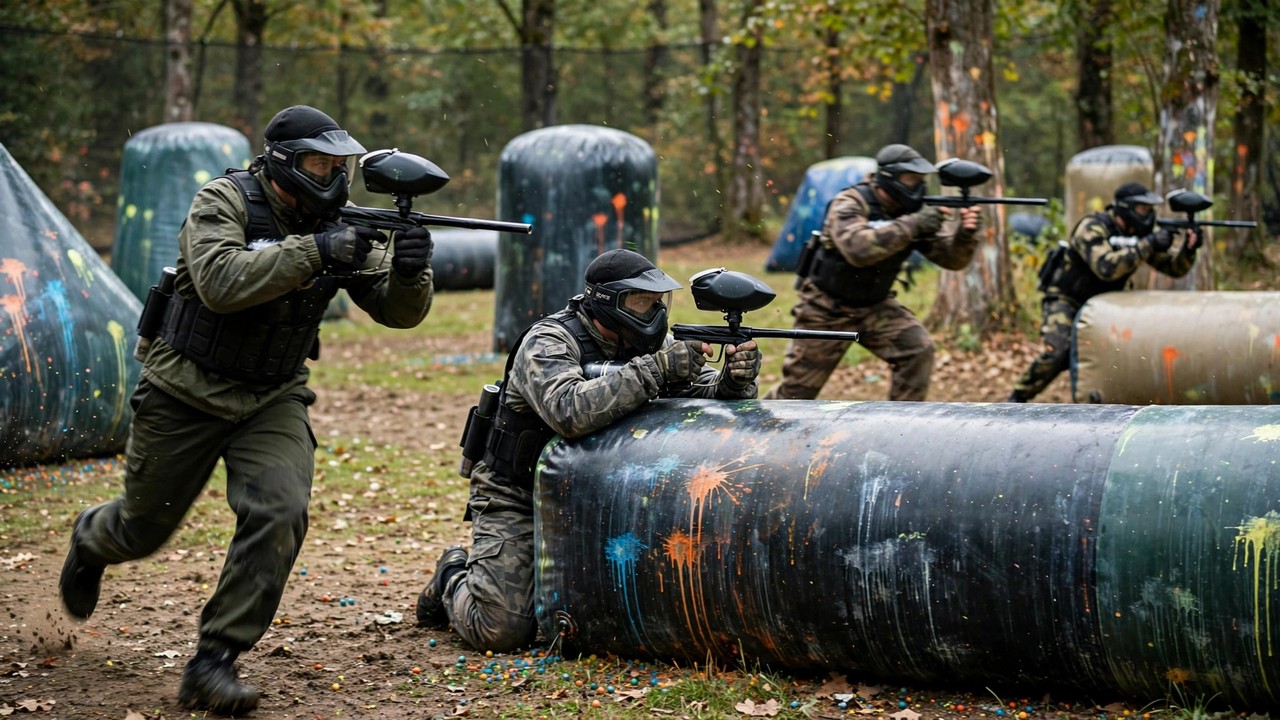
- .68 caliber: the standard ball, about 17 millimeters across and 3 to 3.5 grams, averaging roughly 3.2.
- .50 caliber: the low-impact ball, about 12.7 millimeters and roughly 1 gram, carrying about two thirds less energy at its lower velocities.
- 2,000 rounds: the standard case; a pod holds about 140.
- 80 to 100 feet: the effective accurate range of a paintball, with maximum carry well past 150 feet.
The kids’ version of the sport built on that smaller ball is covered in our guide to low-impact paintball.
Air Systems
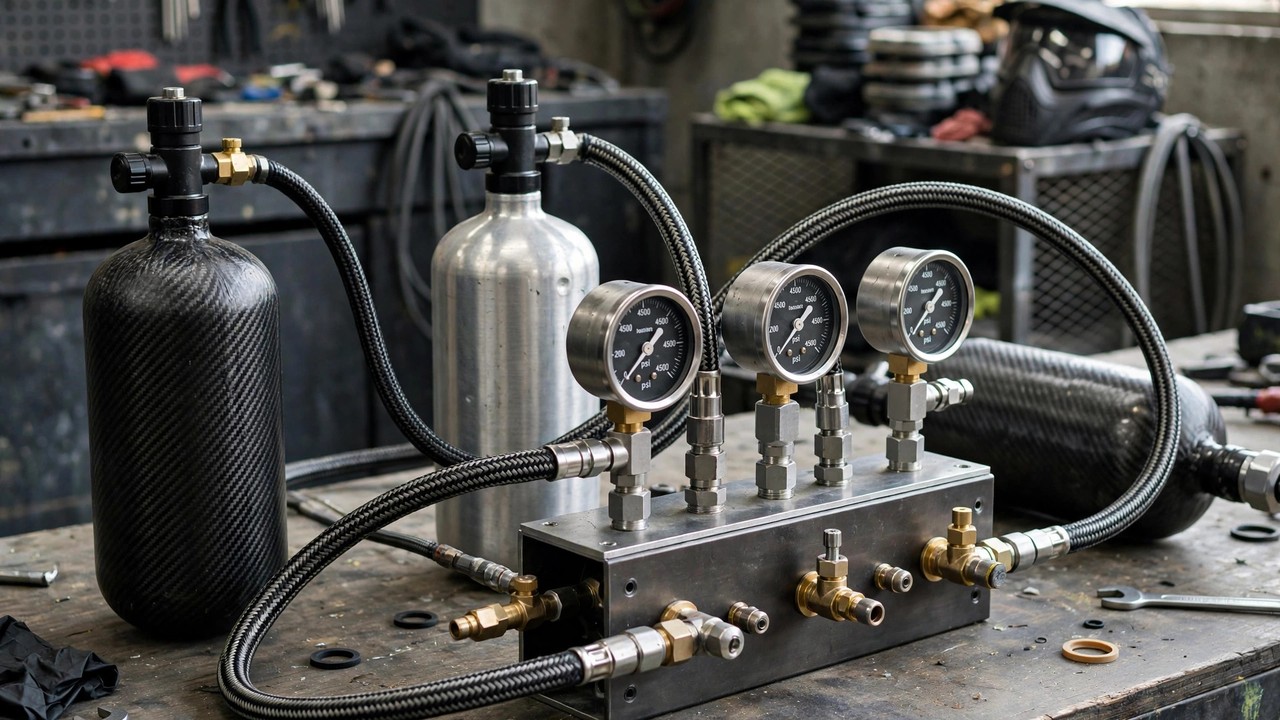
- 3,000 to 4,500 psi: the working pressures of high pressure air tanks, which is why only dive compressors, cascade systems, and dedicated fill stations can fill them.
- Every 5 years: the DOT hydrostatic requalification interval for refillable paintball cylinders.
- 15 years: the total service life of a carbon fiber tank, after which it is retired regardless of condition; aluminum tanks can keep passing tests indefinitely.
- Five thirds of service pressure: the test pressure a cylinder must survive in the water-jacket test.
What the test involves and how to read your tank’s dates is in our guide to hydro testing. For air travel, TSA requires the regulator completely removed and the cylinder visibly empty, covered in flying with a paintball gun.
Participation and Industry
- Roughly 2.7 million Americans: played paintball at least once in 2023, per SFIA participation data, with the trend modestly upward since the pandemic low.
- Over 5 million: regular US participants at the sport’s mid-2000s peak, the benchmark the modern sport is rebuilding from.
- Around 223 million dollars: the estimated global paintball equipment market in 2023, projected by industry researchers to roughly $400 million by 2033 at about 6 percent annual growth.
Fields, Events, and Costs
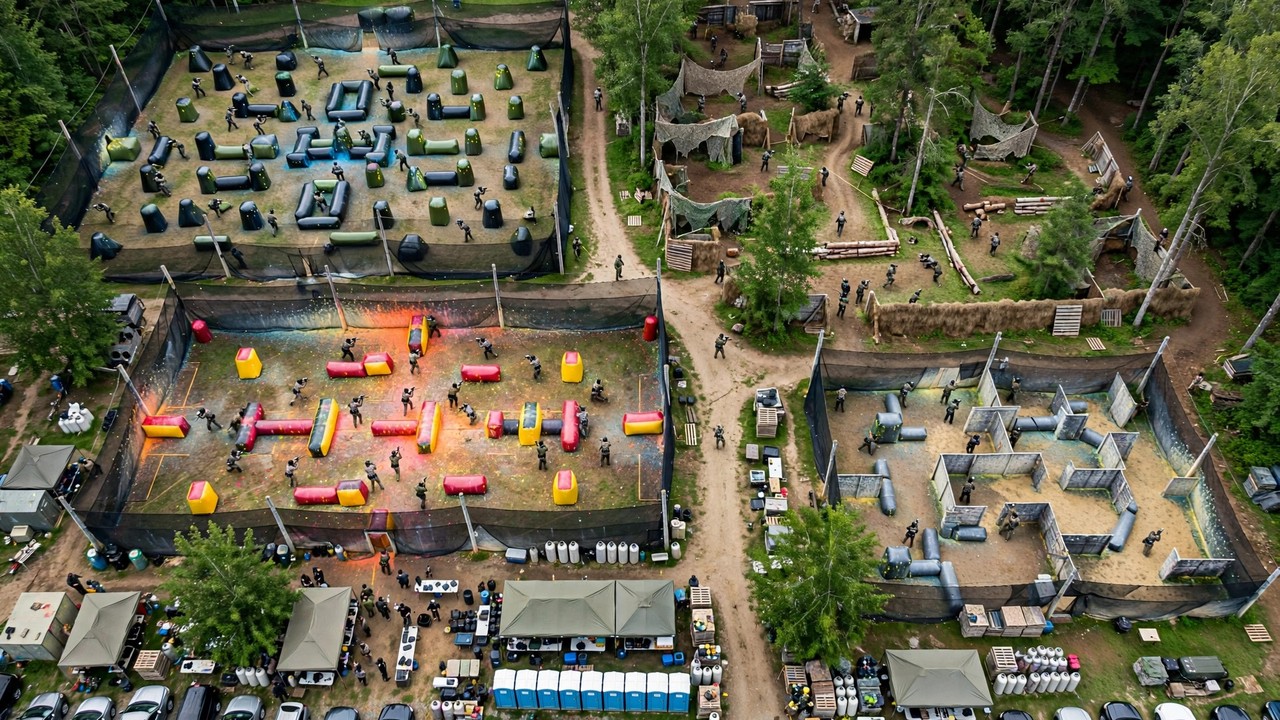
- 10,000 to 30,000 square feet: typical indoor arena size; outdoor parks measure their space in acres.
- About 80 by 120 feet: the practical minimum footprint for a playable backyard field.
- 740 acres and roughly 4,000 players: Oklahoma D-Day, widely described as the world’s largest scenario game, held every June in Wyandotte, Oklahoma.
- $50 to $100: what a typical walk-on rental day costs all-in, with paint as the biggest variable; CO2 fills run a few dollars and all-day air is commonly a flat few dollars.
The full cost breakdown lives in our guide to what paintball costs, and the biggest events are covered in scenario paintball.
Data Sources
Velocity, rate-of-fire, and penalty figures come from the current NXL rulebook. Mask certification references ASTM International standard F1776. Injury figures draw on league safety reporting, published emergency-department studies of sports eye injuries, and ophthalmology research on eyewear prevention. Tank requalification rules come from US Department of Transportation regulations, and air travel rules from the Transportation Security Administration. Participation data comes from the Sports & Fitness Industry Association topline reporting; market sizing reflects published industry research estimates. Where a figure is an estimate rather than a regulation, the wording above says so.
Frequently Asked Questions
Roughly 2.7 million Americans played paintball at least once in 2023 per SFIA participation data, down from a mid-2000s peak of over 5 million regular participants but trending modestly upward since 2021.
League safety data measures about 0.2 injuries per 1,000 player exposures, far below youth football at 8.5 to 43. The risk concentrates almost entirely in eye injuries among people not wearing proper masks.
The industry maximum is 300 feet per second, about 204 miles per hour. Most fields chronograph markers between 280 and 300, and low-impact games for kids run 200 to 250.
A standard 3.2 gram paintball at 300 fps carries roughly 13 joules, comparable to a hard-thrown baseball but delivered by a ball designed to burst on impact.
Industry researchers estimated the global paintball equipment market at around 223 million dollars in 2023, projected to roughly 400 million by 2033 at about 6 percent annual growth.