Last updated on September 29th, 2026 at 04:53 am
The written rules of paintball keep people safe. The unwritten ones decide whether anyone wants to play with you again. Most of them are never mentioned in the safety briefing, because they are assumed, which is exactly why new players break them without realising.
None of this is complicated. Paintball etiquette comes down to playing honestly and not being difficult to share a field with. This guide covers what that means in practice. For the written rules, see our plain-English guide to the rules of paintball.
Wiping: The One That Ends Days
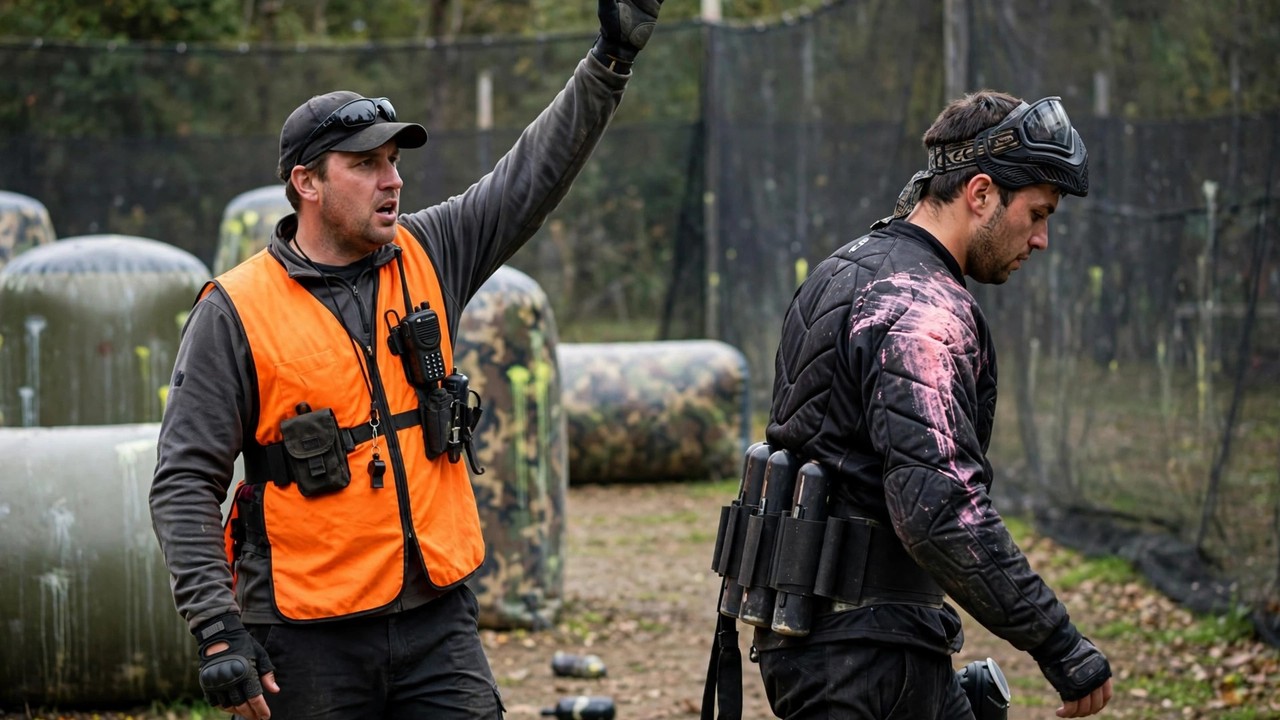
Wiping means removing paint from your body or gear so you can carry on playing after being hit. It is the single worst thing you can do on a paintball field, and it is treated as cheating rather than as a minor infraction.
The reason it is taken so seriously is that the entire sport runs on an honour system. Nobody can verify every hit, so the game only works if players call themselves out. A player who wipes is not bending a rule, they are removing the thing the whole format depends on. Get caught and you can expect to be ejected for the day, with no refund.
Overshooting
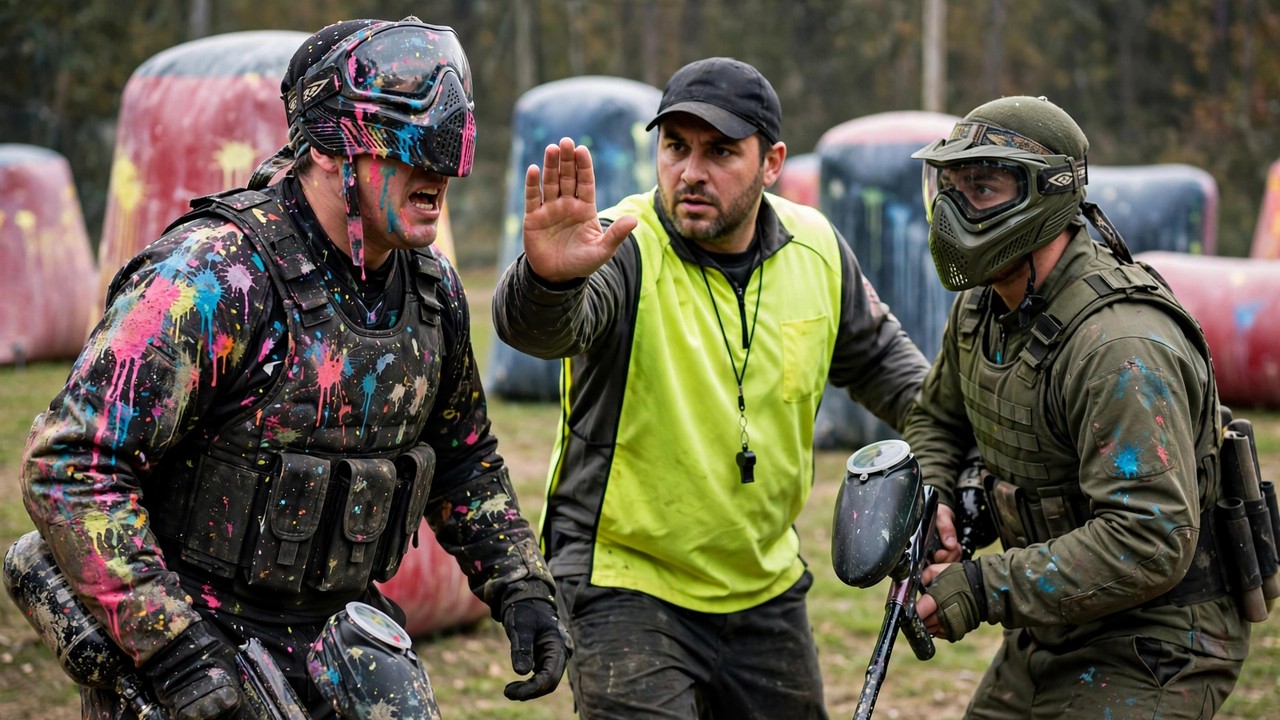
Overshooting is continuing to fire at a player who is clearly already out. It is the most common etiquette failure among newer players, and usually it is not malicious. It happens because a player is focused on a target and does not notice the hand going up.
The fix is simple: after you fire, look. If the player raises a hand or their marker, stop shooting immediately and move your attention elsewhere. Deliberately unloading on someone who has already called themselves out is unsportsmanlike, and it can get you sat out for several games.
Blind Firing
Blind firing means sticking your marker around or over a bunker and shooting without looking. Most fields prohibit it outright, and the reason is straightforward: if you cannot see, you cannot control where the paint goes.
The two risks are hitting someone at dangerously close range without knowing they are there, and putting paint outside the field boundaries where spectators or staff may be standing. It is also ineffective, which is the argument that tends to land with players who are not persuaded by the safety case.
Dealing With Marshals
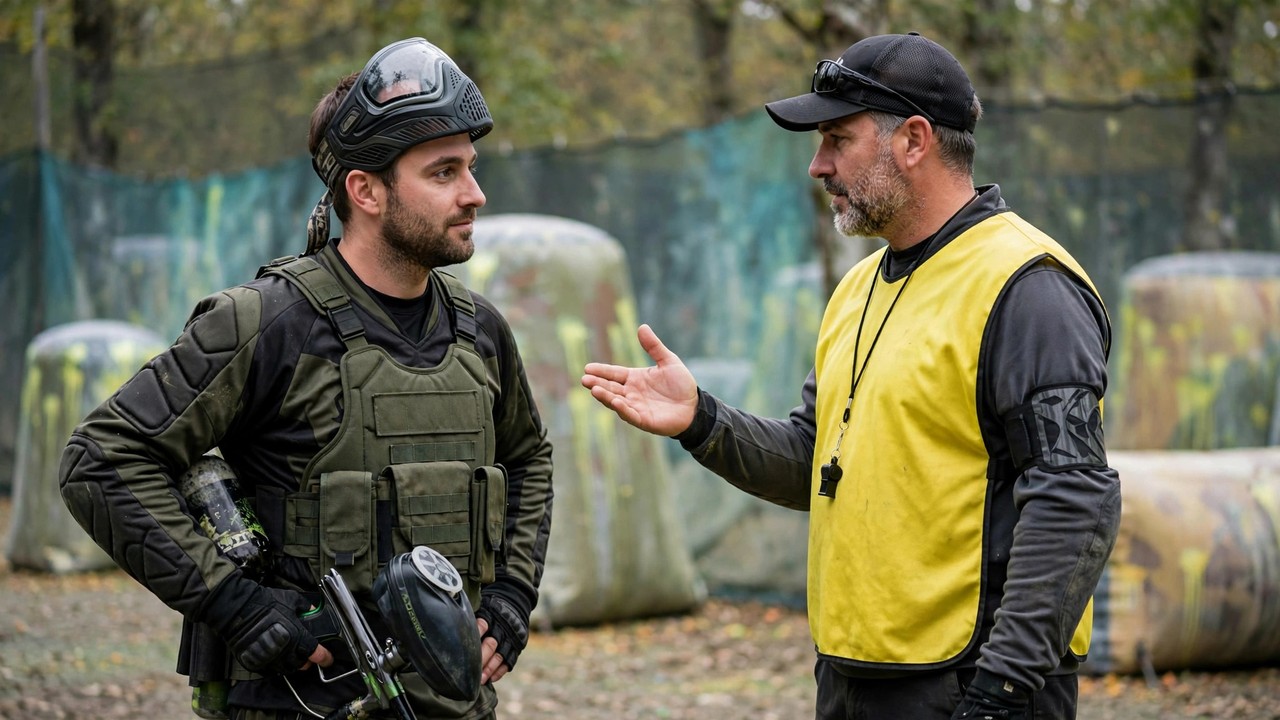
Marshals make judgement calls in real time with an incomplete view of the field, and they will sometimes get one wrong. Arguing about it counts as poor sportsmanship at almost every venue, and it rarely changes the decision.
If you genuinely think a call was wrong, raise it calmly between games rather than shouting across the field mid-point. Marshals are far more receptive to that, and you keep the goodwill you will want later when a marginal call goes your way.
How to Behave Around New Players
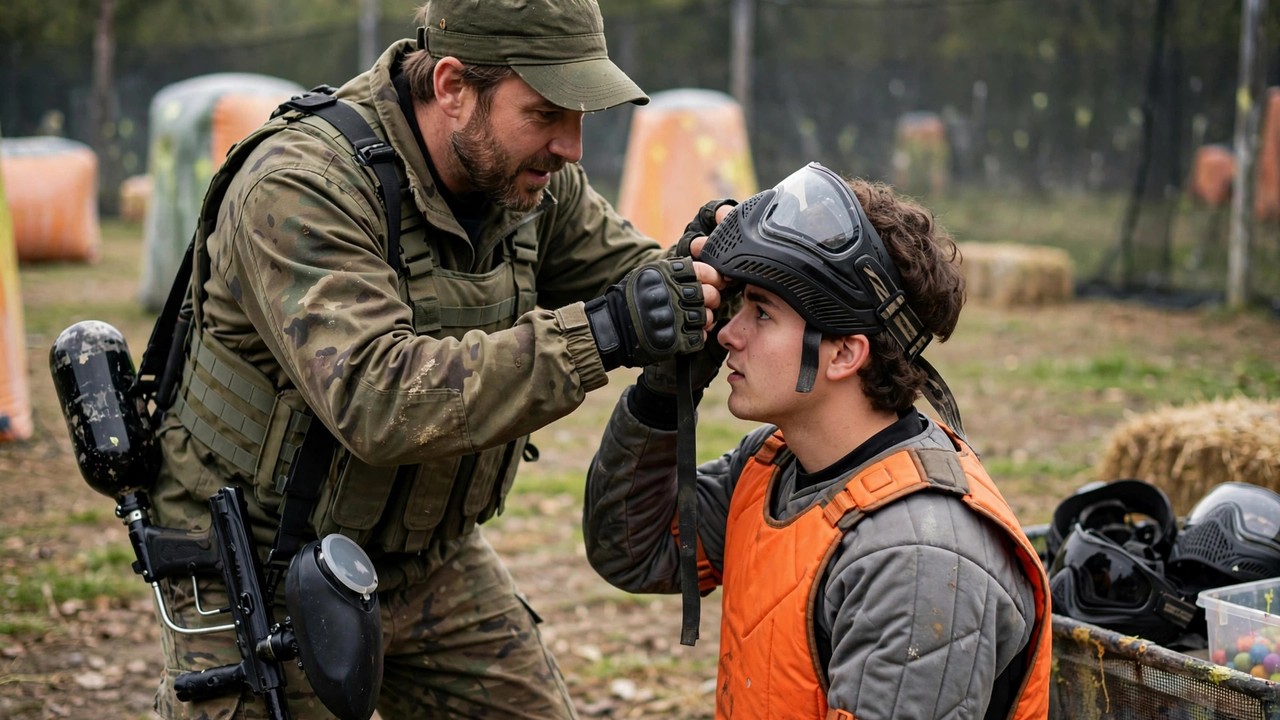
Rec ball fields mix experienced players with people holding a marker for the first time, and how the experienced players behave determines whether the newcomers come back.
- Offer the surrender. Especially to someone who clearly has not seen you. It costs you nothing and it is the difference between a good first day and a bad one.
- Do not target the obvious beginner repeatedly. Eliminating the same nervous player every game is not a demonstration of skill.
- Explain rather than correct. If someone misses a hit, a quiet word beats a public accusation, and they usually did not notice.
- Skip the trash talk. Taunting reads very differently to someone who has played once than to your regular teammates.
If you are the new player here, our guides on what to expect on a rec ball day and how badly paintballs hurt will remove most of the uncertainty before you arrive.
The Small Courtesies
- Call your own hits promptly. Not after checking whether anyone saw.
- Walk off with your barrel covered and your hand up, by the shortest safe route.
- Stay quiet once you are out. Shouting positions to your team after elimination is cheating in a different costume.
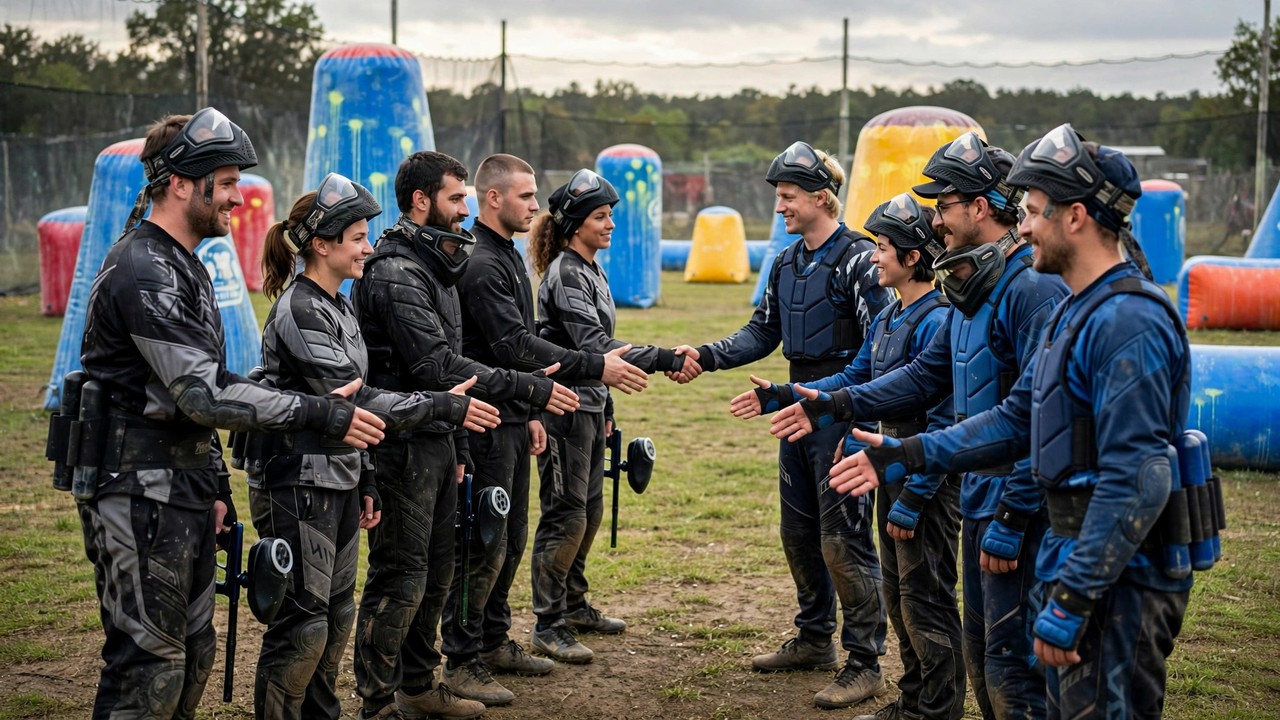
- Say good game. A handshake or a word at the end costs nothing and it is what keeps a field pleasant to play at.
That last one matters more than it sounds. Paintball is a small scene in most areas, and you will meet the same faces repeatedly.
Etiquette in Tournament Play
At recreational level, etiquette failures are handled with a word or a sit-out. In tournaments they are formal penalties, and they are considerably harsher, because the outcome matters. A team can lose players from the field or forfeit entire points for infractions that a rec ball marshal would deal with informally.
If you are moving toward competitive play, read the specific ruleset for the series you are entering. Our guide to what speedball is covers how tournament matches are structured, and the types of paintball explains where each format sits.
Frequently Asked Questions
Wiping paint to stay in the game, overshooting players who are already out, blind firing over a bunker, arguing with marshals, and taunting other players. Wiping and overshooting are the two that will get you removed from a field.
Paintball runs on an honour system because no marshal can see every exchange. A player who wipes is not bending a rule, they are removing the thing the whole format depends on, which is why fields treat it as cheating and eject people for it.
Overshooting is continuing to fire at a player who has already been hit and called themselves out. It is usually accidental among new players, and the fix is to look after you shoot and stop as soon as a hand goes up.
Because you cannot aim what you cannot see. Blind firing risks hitting someone at dangerously close range and putting paint outside the field boundaries. Most fields prohibit it outright, and it is ineffective anyway.
Yes. Offering the surrender to a player who has not seen you costs you nothing and is often the difference between someone enjoying their first day and never coming back.