Last updated on September 28th, 2026 at 08:39 pm
A backyard paintball field is a weekend project: with roughly 80 by 120 feet of usable ground, a stack of pallets, and purpose-made barrier netting, most builders put together a genuinely playable field for a few hundred dollars in materials. The build is the easy half. The other half is doing it legally and safely, which is why the first step happens at your desk, not in the yard.
Step Zero: Legality and Neighbors
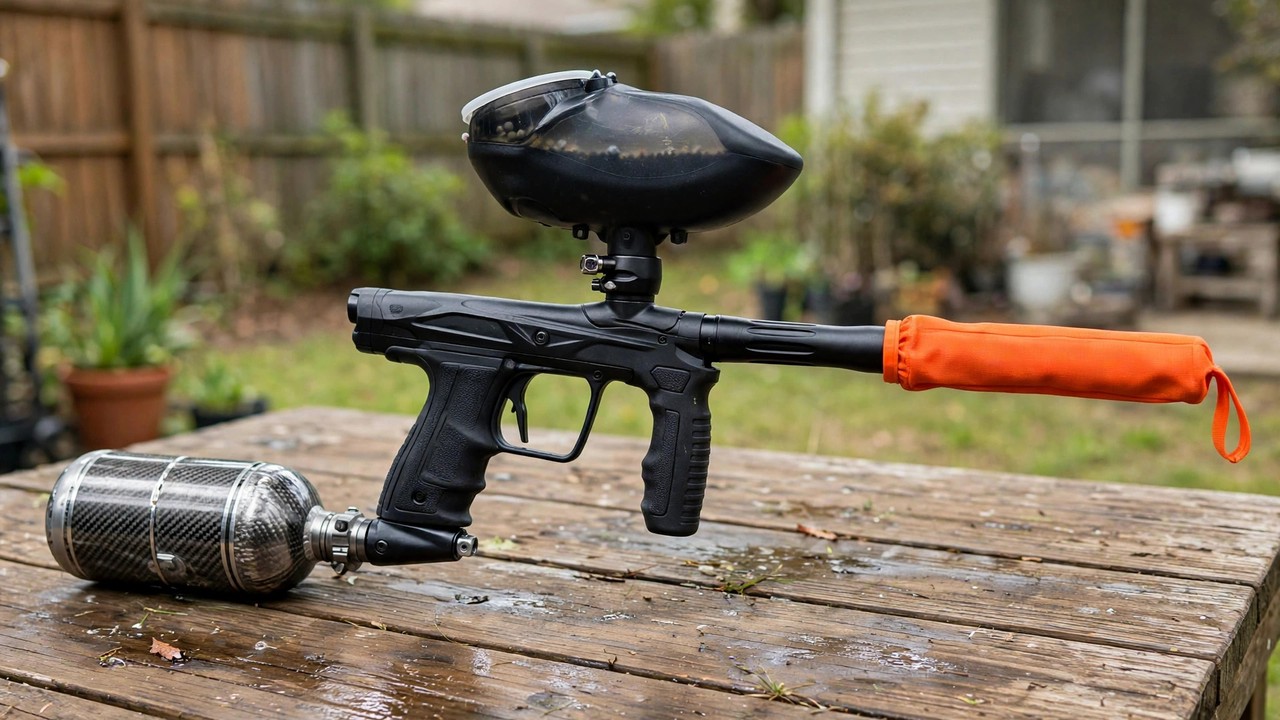
Before buying a single pallet, confirm your city or county allows discharging air guns on private property, because many incorporated towns prohibit it outright. How to check your municipal code, and the netting, insurance, and neighbor considerations that follow, are covered in our guide to whether you can play paintball in your backyard. This article assumes you have cleared that hurdle and covers the actual build.
Sizing and Shaping the Field
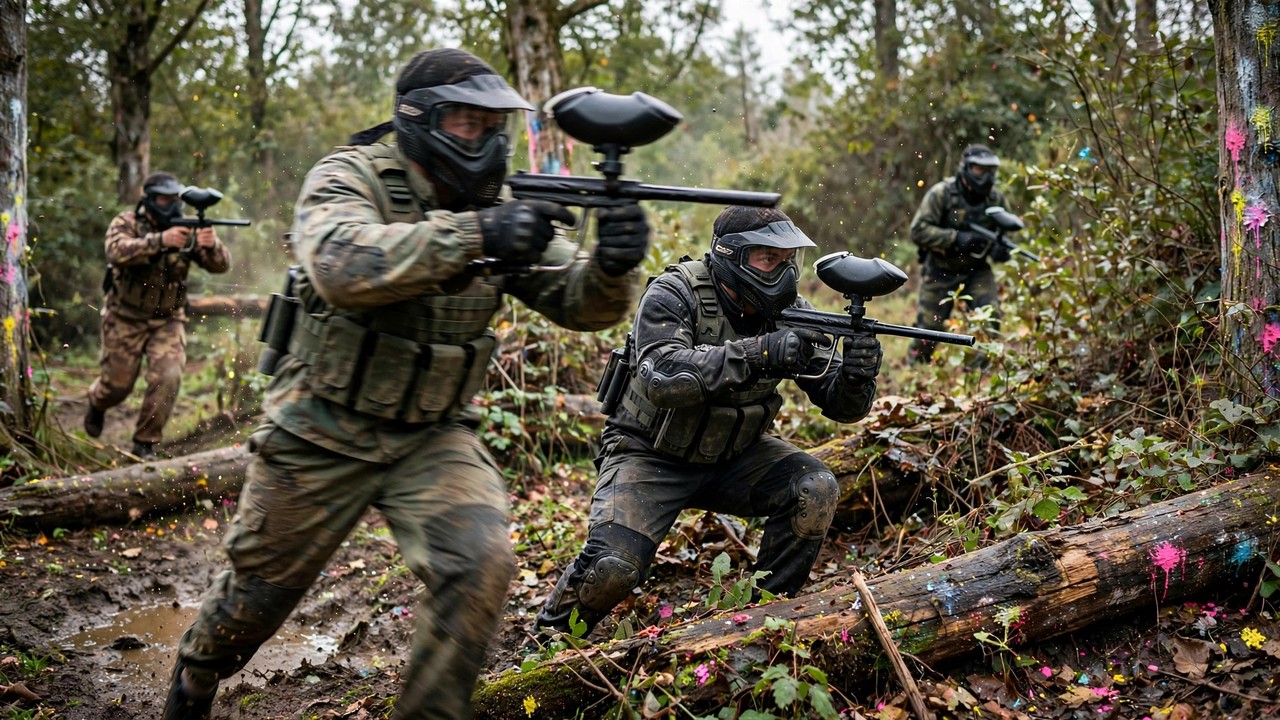
A compact speedball-style layout plays well from about 80 by 120 feet, while a looser woods-style game wants 100 by 150 feet or more; for reference against commercial and tournament dimensions, see our guide to how big paintball fields are. Whatever the footprint, leave a buffer zone beyond the boundaries on every side, and put your staging area, where masks come off and markers get barrel covers, well behind netting or a solid structure, never on an open sideline.
Lay the field out mirror-symmetric the way tournament courts are: a start station at each end, matching cover down both sides, and a strong center piece worth fighting for. Symmetry keeps games fair, and it teaches the same lane discipline real fields do. Two spacing rules prevent the classic backyard failures: no bunker should leave a player exposed for more than a short sprint from the previous one, or nobody will ever move, and no lane should run wall to wall unbroken, or the first player set up on it locks the whole field.
Building Bunkers From What You Can Get
Wood pallets are the backyard builder’s inflatable: free or cheap, movable, and paint-absorbent. Stand them upright and screw two or three into L and T shapes so they self-brace, and cap exposed nail heads and splinters with a rasp or a sacrificial board. Food-grade 55-gallon drums make excellent standups, cable spools make natural center pieces, deadfall logs stack into woodsball-style barricades, and a tarp stretched over a simple frame turns into a car-wash-style arch. For inspiration on shapes and placement, the standard shapes in our guide to paintball bunkers translate directly, a pallet T is a dorito, a drum is a can, and a low pallet run along one tape line makes a fine snake.
Build more cover than feels necessary. Sparse fields produce static games; a dozen pieces on a small footprint keeps everyone moving, and you can always thin out later.
Netting: The One Thing Not to Improvise
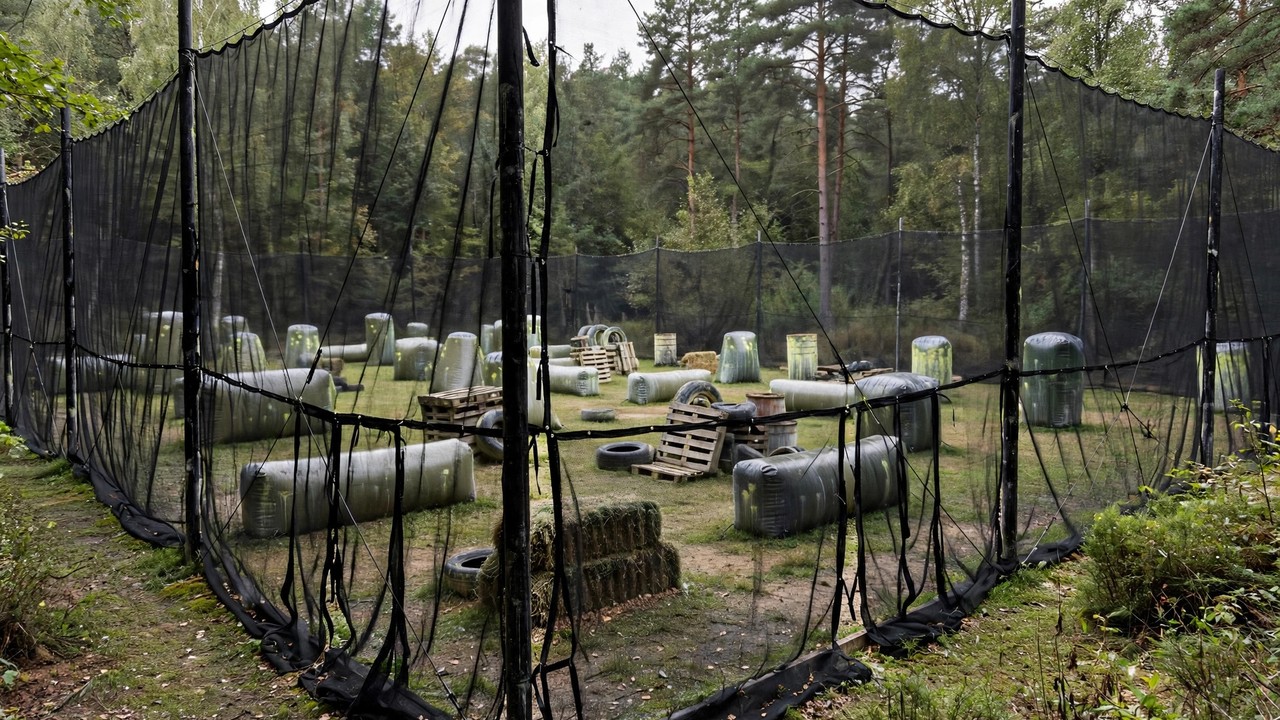
Buy purpose-made paintball barrier netting rather than bird netting, shade cloth, or hope. Paintball netting is rated to stop balls at field velocities; substitutes are not, and the entire legal and neighborly case for your field rests on paint staying inside it. Run it tall on every line a ball could leave the property, mount it on posts or trees with slack so it absorbs rather than trampolines, and walk it before every play day looking for holes and sags. Where terrain gives you a natural backstop, a dense treeline, a hillside, a barn wall, netting budget can concentrate on the open sides.
The Safety Infrastructure Commercial Fields Get Right
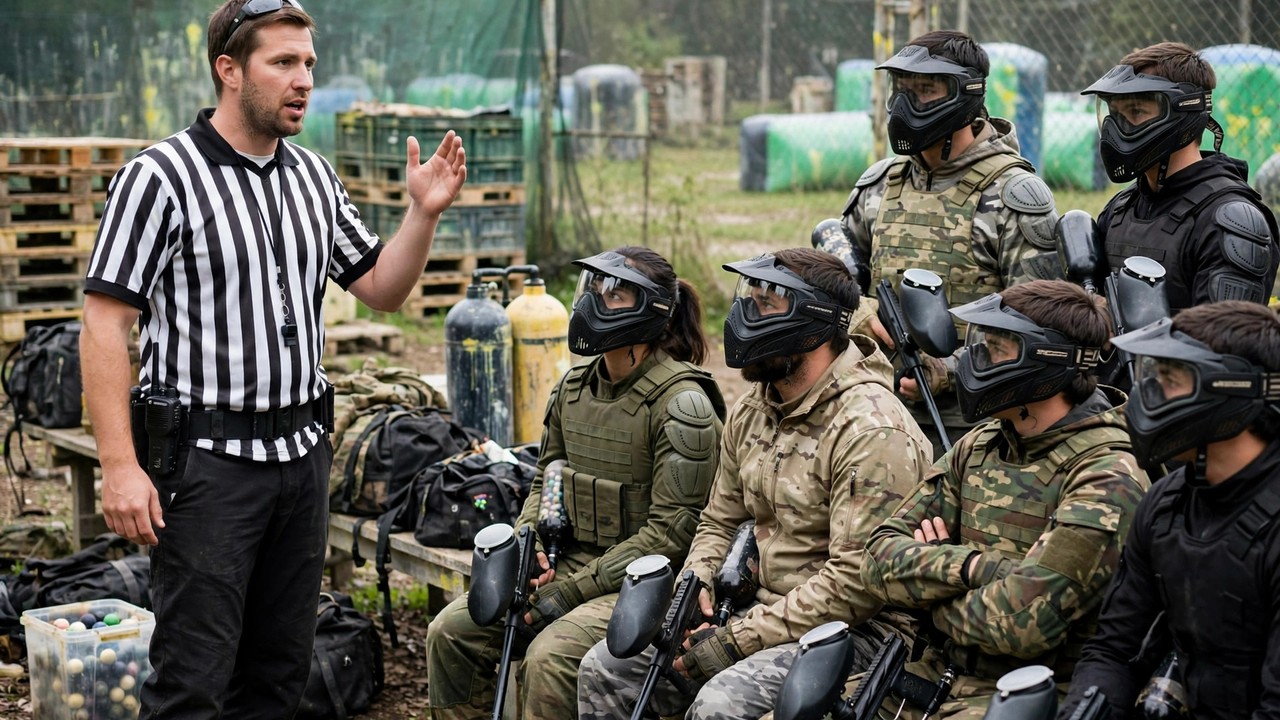
Copy the systems, not just the bunkers. That means a chronograph and a house velocity cap at or under commercial norms, explained in our guide to FPS in paintball, masks on for players and spectators anywhere near the field, barrel covers in staging, an agreed ceasefire word, and one person per game acting as referee rather than playing. Write the rules down, brief every new guest like a field briefs walk-ons, and hold the line on masks with zero exceptions. A backyard field earns its keep over years, and it does that by being boringly disciplined about the same short list every commercial operation lives by.
Maintenance and the Long Game
Plan for upkeep from the start. Hose paint off structures the same day so shells and fill do not bake in, check pallet bunkers each season for rot and wasp nests before someone dives behind one, restack what winter knocks over, and rotate the layout a few times a year, which is the cheapest way to make an old field feel new. Fresh paint stored properly, covered in our guide to storing paintballs, rounds out the home setup. Budget-wise, most builders land in the few-hundred-dollar range for a first field, spent mostly on netting, and everything else improves incrementally, one salvaged drum at a time.
Frequently Asked Questions
A compact speedball-style field plays well from about 80 by 120 feet, and a looser woods-style layout wants 100 by 150 feet or more, plus buffer space beyond every boundary.
Wood pallets screwed into L and T shapes, food-grade 55-gallon drums, cable spools, stacked deadfall, and tarps over simple frames. Pallets are the workhorse: cheap, movable, and paint-absorbent.
Purpose-made paintball barrier netting rated to stop balls at field velocities. Bird netting and shade cloth are not substitutes, and containment is the foundation of the field's legality.
Most DIY builds land in the few-hundred-dollar range, with netting as the biggest line item and bunkers built from free or salvaged materials.
Yes, informally: one person per game should sit out and run it, calling hits, watching boundaries, and enforcing masks, the same jobs referees do at commercial fields.