Last updated on September 29th, 2026 at 04:57 am
Paintball is not one game. The word covers several distinct formats, and they play so differently that a strong speedball player can feel lost in the woods, while a woodsball veteran can get picked apart on an open tournament field. The format you choose decides almost everything about your day: the size of the field, the gear you carry, how fast the action moves, how much paint you burn through, and even how old you need to be to play.
This guide breaks down every major type of paintball, what makes each one different, and how to work out which fits you. If you have never played at all, start with our first-timer guide to playing paintball, then come back here to pick a direction.
Which Type of Paintball Fits You?
Five quick questions, matched against the formats in this guide.
1. Where do you picture yourself playing?
2. What pace sounds like fun?
3. How much paint do you want to shoot?
4. What gear style appeals most?
5. Who are you playing with?
The Two Main Branches: Woodsball and Speedball
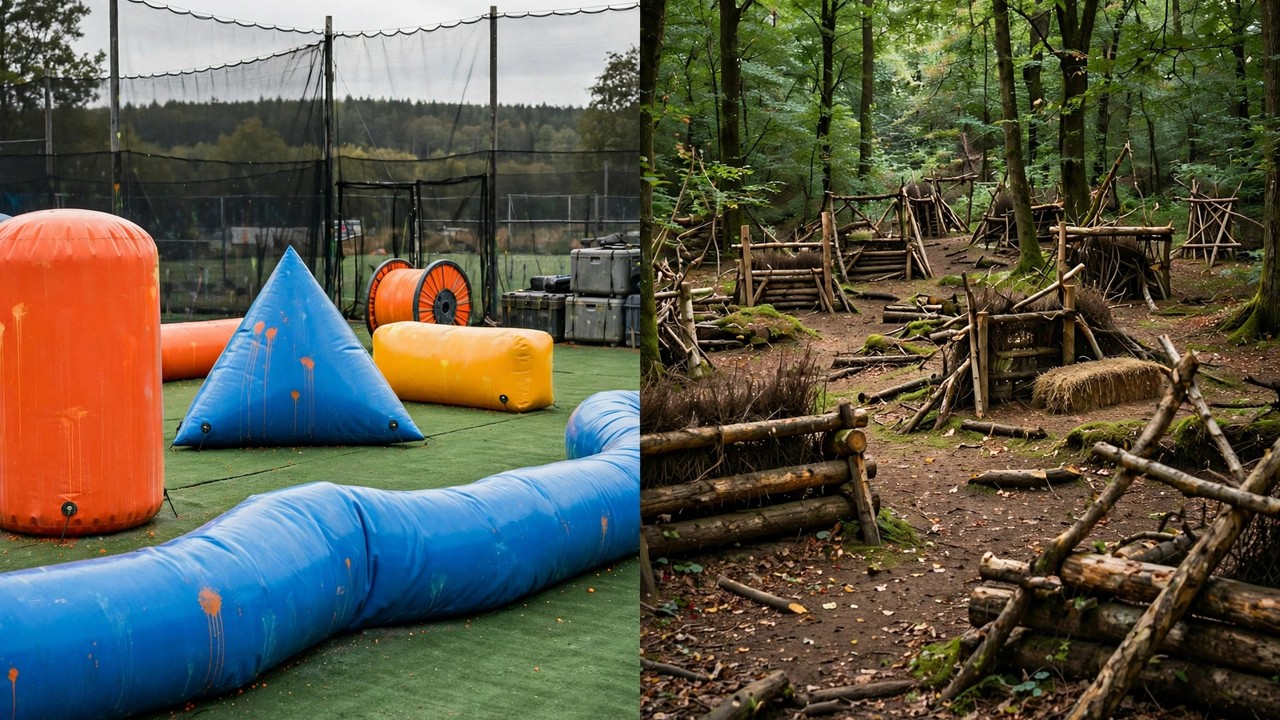
Almost every format grows out of one of two styles. Speedball is the fast, competitive, arena style, played on a small flat symmetrical field dotted with inflatable bunkers. Woodsball is the tactical, terrain-based style, played across natural ground on larger fields with longer games.
| Speedball | Woodsball | |
|---|---|---|
| Field | Small, flat, symmetrical | Large, natural terrain |
| Cover | Inflatable bunkers | Trees, ditches, hills, structures |
| Game length | Short points, often 2 to 5 minutes | Longer, 15 minutes to over an hour |
| Team size | Small, commonly 3 or 5 a side | Larger, sometimes dozens a side |
| Pace | Very fast, high rate of fire | Slower, movement and stealth matter |
| Typical marker | Lightweight electronic | Rugged, milsim-style, often magfed |
Most other formats below are variations on these two, or a specific way of setting up gear and objectives on top of them.
Speedball
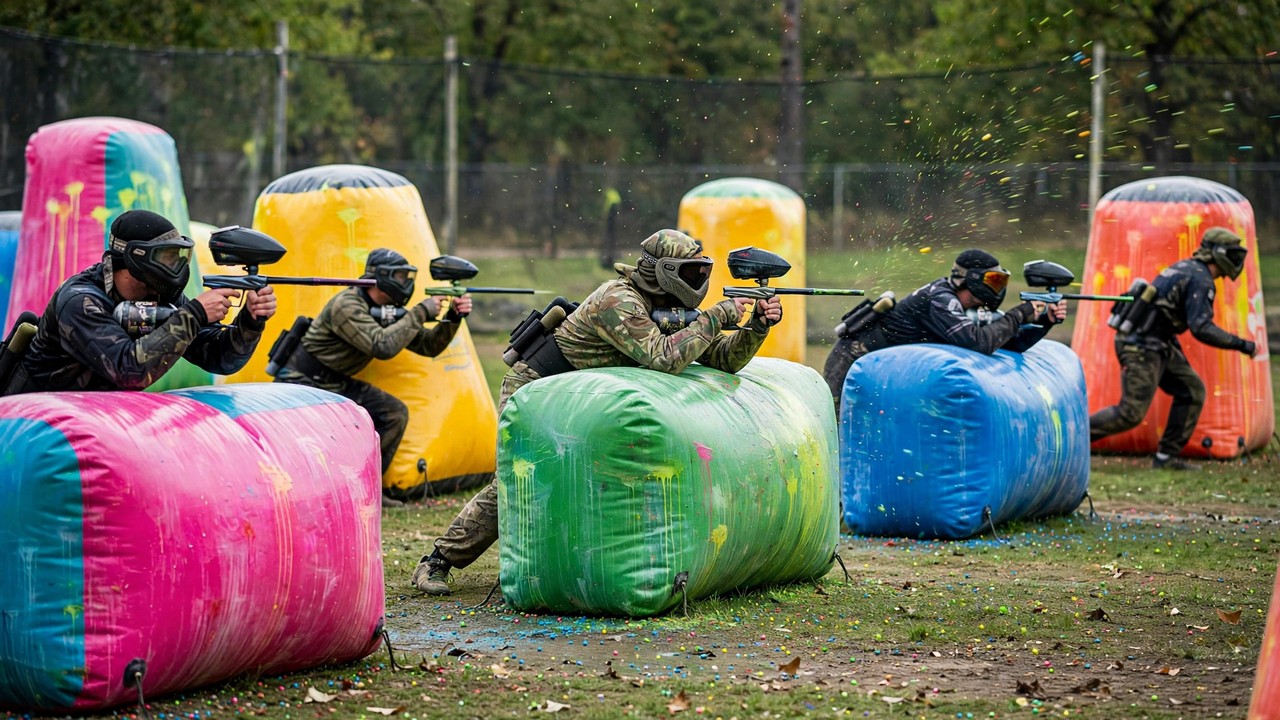
Speedball is the format you see in tournaments. The field is compact and identical on both sides, so neither team gets a terrain advantage, and it is filled with air-filled bunkers in recognisable shapes. The wedge-shaped bunkers are called Doritos, and the long low bunker players crawl along the edge of the field is the snake.
Because the field is small and open, points are decided quickly. Individual points often last only two to five minutes, and players put an enormous amount of paint downrange in that short window. The competitive scene in the United States runs largely under the NXL banner, whose standard fields measure roughly 150 feet wide by 120 feet long, with 5-on-5 matches played as timed races to a set number of points.
Speedball rewards fast reflexes, accurate snap shooting and constant communication. The gear reflects that, favouring lightweight high-rate-of-fire markers and fast-feeding loaders. If this is your direction, start with our roundups of the best electronic paintball guns and the best paintball hoppers.
For the field layout, bunker names, the five positions and how a match is scored, see our full guide to what speedball is.
Woodsball
Woodsball moves the game outdoors onto natural ground. Instead of symmetrical bunkers, your cover is whatever the landscape gives you: tree lines, fallen logs, dips in the terrain and sometimes built structures. Fields are bigger and less predictable, so the game slows down and shifts toward flanking, holding position and moving quietly rather than winning a pure firefight.
Games run much longer than speedball points, and team sizes can be far larger. Woodsball is where a lot of casual groups and rental players spend their day, because the format is forgiving and the pace suits mixed skill levels. The gear leans rugged rather than featherweight. See our picks for the best woodsball paintball guns and the best masks for woodsball if you plan to play this style regularly.
For terrain, gear choices and the tactics that actually work on a large natural field, see our full guide to what woodsball is.
Recreational Paintball (Rec Ball)
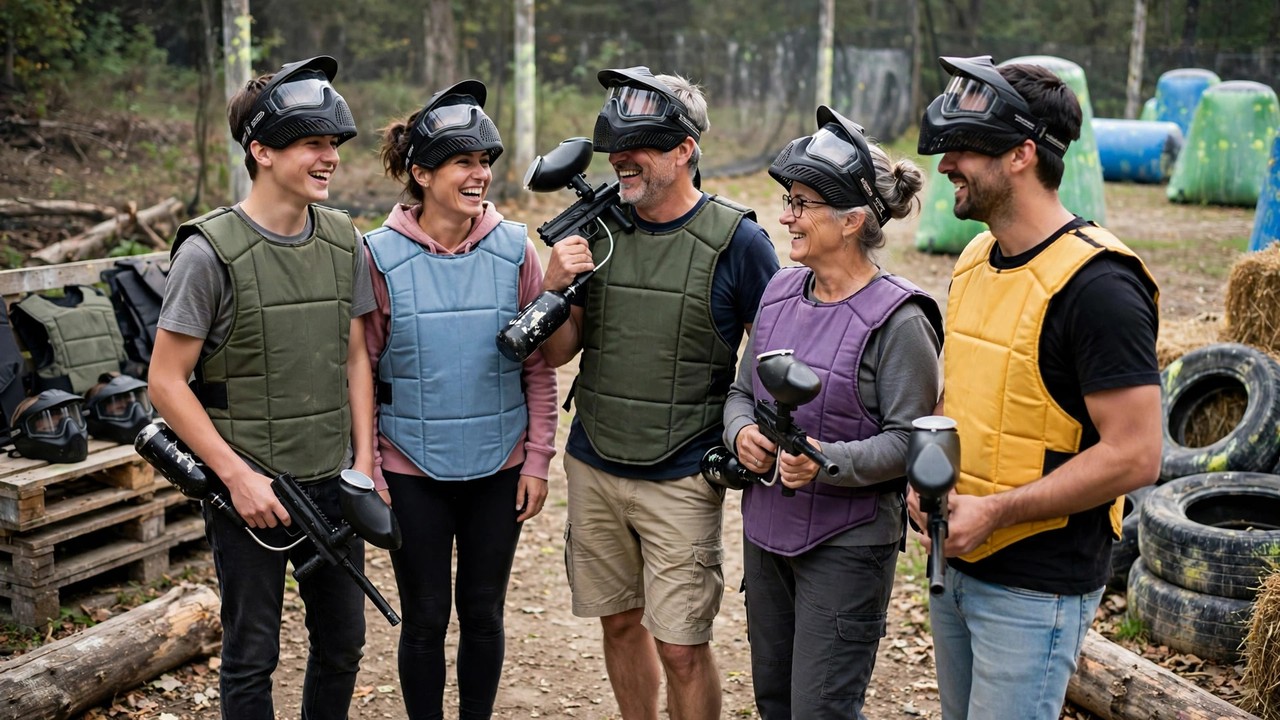
Recreational paintball, usually shortened to rec ball, is the walk-on, show-up-and-play version of the sport. It normally happens on woodsball-style fields with rental gear, mixed groups and a marshal running simple games. There is no tournament structure and no storyline, just teams, an objective and a horn to start the point.
This is where most people begin. It is the cheapest, lowest-commitment way to try paintball, and it is the standard setup for birthday parties and corporate days. If you are gauging the price of a first outing, our breakdown of what a day of paintball costs covers rentals, paint and air, and what to bring for paintball covers the rest.
Scenario Paintball and Big Games
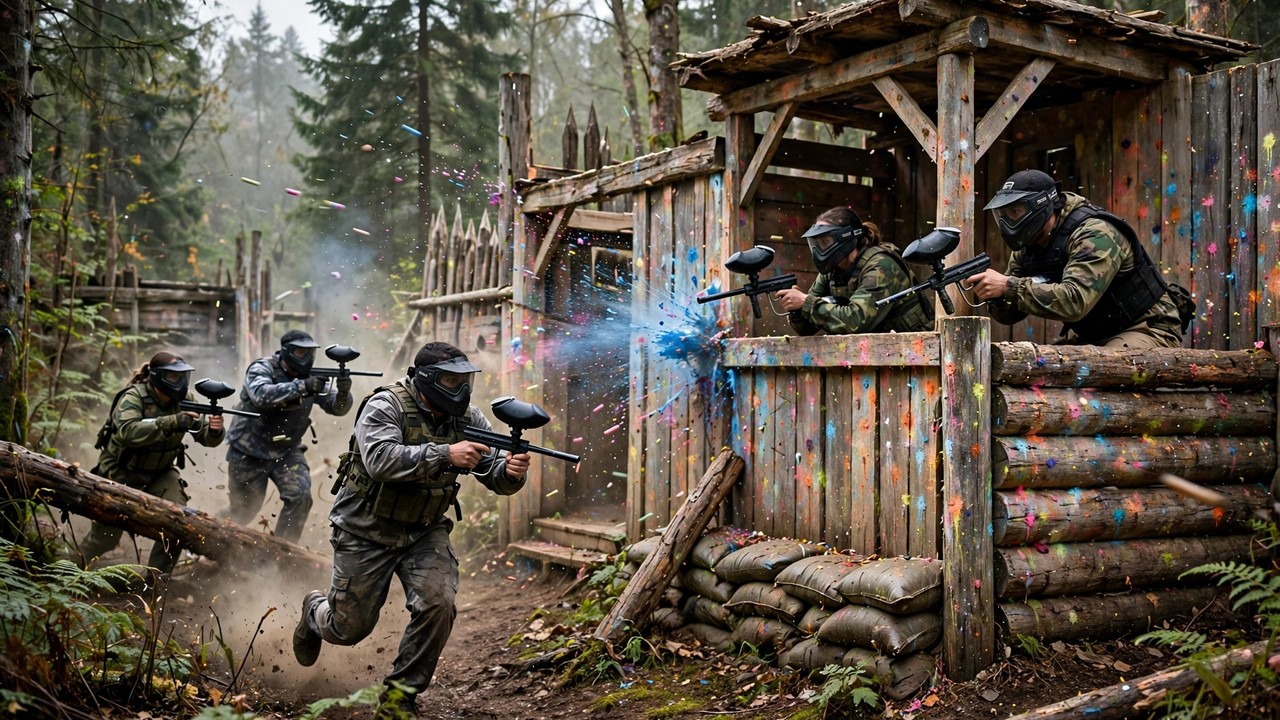
Scenario paintball wraps the sport in a story. Instead of a single short point, players join factions and work through missions across a full day or an entire weekend: capturing territory, escorting a VIP, holding a position or recovering objects hidden on the field. Games are refereed against a plot, points accumulate toward the storyline, and the scale can be enormous.
The best-known example is Oklahoma D-Day, widely described as the world largest scenario game. Held every June in Wyandotte, Oklahoma, it recreates the Normandy landings across a 740-acre park and draws around 4,000 players a year, with attendance climbing past 4,100 at its peak. It even brings drivable tanks and other period vehicles onto the field alongside standard markers.
You do not need a 740-acre battlefield to enjoy the format. Plenty of fields run smaller weekend scenario games with a couple of hundred players. Smoke and props are common tools for setting the scene, so if you are gearing up for one, look at the best paintball smoke grenades and how paintball grenades work.
MilSim (Military Simulation)
MilSim is scenario play pushed toward realism. It emphasises military-style tactics, a genuine chain of command, mission briefings and limited resources. Players often wear matching camouflage or faction uniforms, follow structured objectives modelled on real operations, and accept restrictions that make the game harder and more immersive.
One of those restrictions is ammunition. Many MilSim events require or strongly encourage magazine-fed markers, so that players cannot simply hold the trigger and flood a position with paint. That single constraint changes how you move, when you shoot and how much you lean on your team.
Magfed Paintball
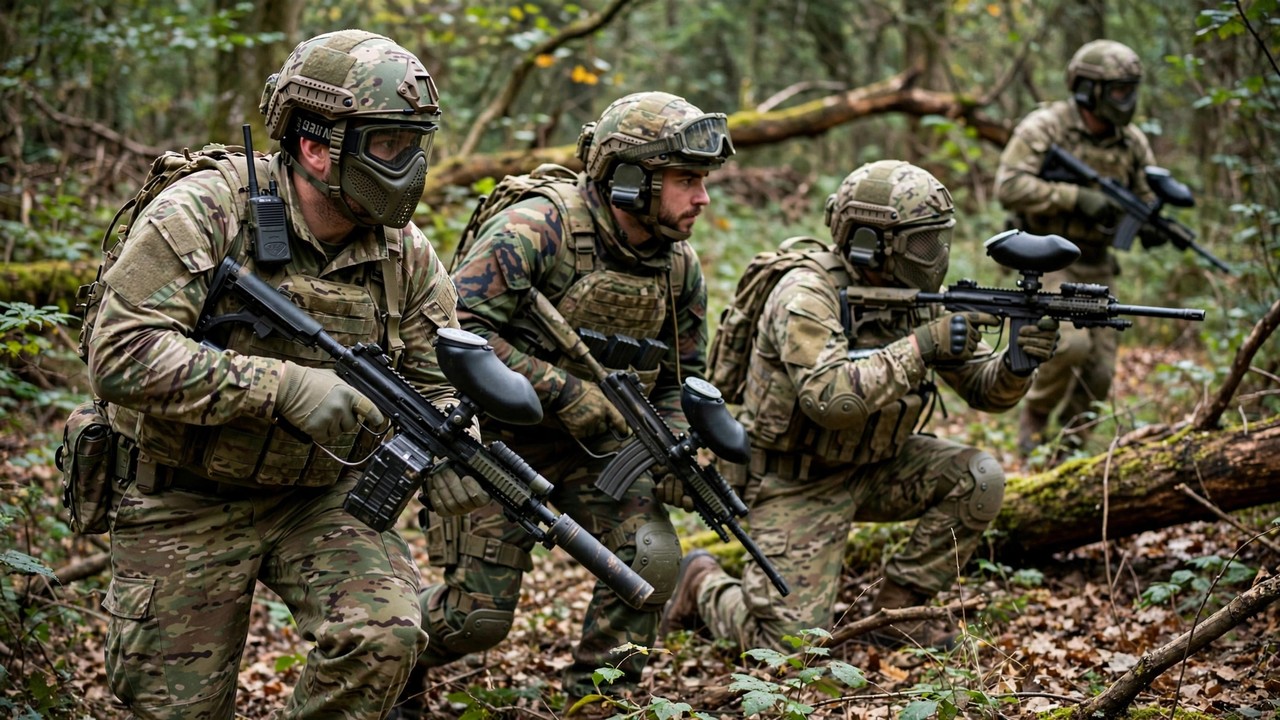
Magfed is a gear style rather than a separate arena, but it defines its own way of playing. Magfed markers feed paint from a detachable magazine instead of a gravity or force-fed hopper, which caps how many balls you carry into a push. Reloading becomes part of the game, and every shot counts for more.
That limited capacity naturally pulls play toward the tactical end, which is why magfed shows up so often in MilSim and tactical woodsball. It is worth being clear that magfed and MilSim are not the same thing. Magfed describes how the marker is fed, while MilSim describes a style of event. You can play magfed in a casual woodsball game, and you can run a MilSim without it, though the two pair naturally. Our explainer on how a paintball gun works covers the feeding and firing mechanics.
Pump and Stock-Class Paintball
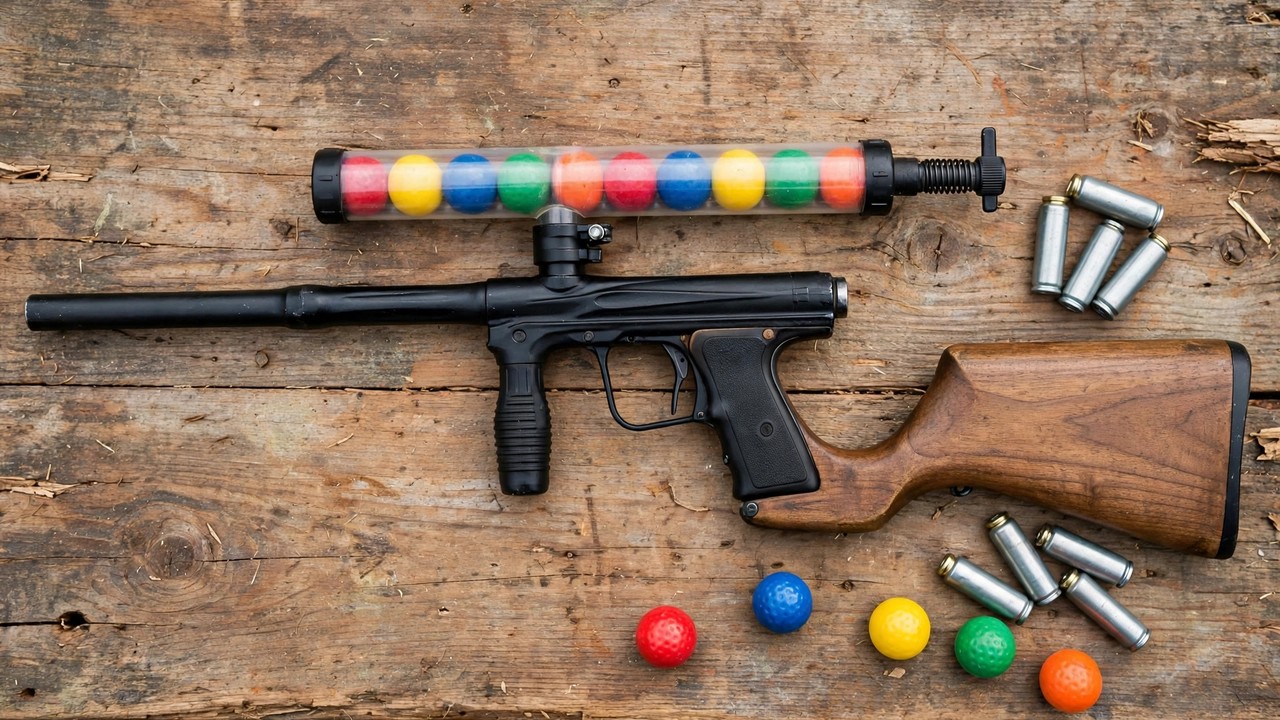
Pump paintball is the sport played on its original technology. A pump marker must be manually cocked after every shot, so there is no spraying and no rate-of-fire advantage. One pump, one ball, one chance to make it count.
Players choose pump for the challenge and the discipline it forces. Going up against electronic markers with a single deliberate shot puts a premium on positioning, patience and accuracy, and many experienced players treat it as the purest form of the game. If that appeals, start with the best pump paintball guns.
Low-Impact Paintball
Low-impact paintball exists to lower the barrier to entry, especially for children and nervous first-timers. It uses smaller .50 caliber paintballs instead of the standard .68 caliber, fired at a reduced velocity, so hits sting far less.
The numbers explain why it works. A .50 caliber ball is roughly 30 percent smaller and lighter than a .68, and it is typically fired at about 200 to 250 feet per second rather than the 280 to 300 fps common in standard play. Combined, the smaller mass and lower speed cut impact energy dramatically, which is why fields market it as a near-painless introduction. That gentler impact also lowers the age requirement. Standard .68 caliber play usually starts at age 10, while many fields open low-impact play to children as young as 7 or 8. Policies vary by field, so confirm locally and see our guide to how old you have to be to play paintball.
| Standard (.68 cal) | Low-impact (.50 cal) | |
|---|---|---|
| Ball size | About 17 mm | About 13 mm |
| Typical velocity | 280 to 300 fps | 200 to 250 fps |
| Sting on impact | Firm | Much lighter |
| Common minimum age | Around 10 | As young as 7 to 8 (varies) |
| Best for | Standard play, ages 10 and up | Kids, parties, first-timers |
Common Game Modes Played Across Formats
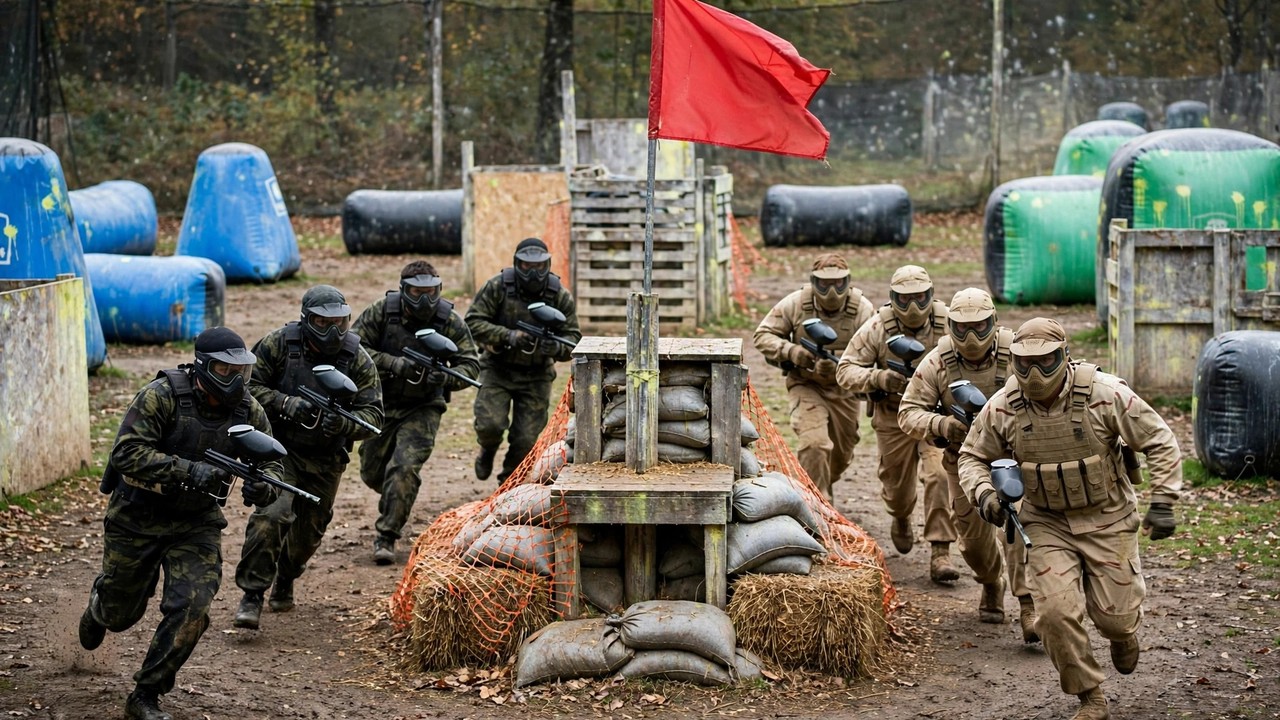
Format sets the stage. Game modes are the rules of the individual point, and most can be run in either woodsball or speedball.
- Elimination: the simplest mode. Tag every opposing player to win. With no respawns it is often called total elimination or last player standing.
- Capture the flag: grab the opposing flag, or a central flag, and carry it to a target point. This is the classic paintball objective and comes in one-flag and two-flag versions.
- King of the hill or zone control: hold a marked area for a set time. Control, not elimination, decides the winner.
- Attack and defend: one team defends a position while the other tries to take it, then the teams usually swap roles.
- VIP or escort: one player is the protected target. Attackers win by tagging the VIP, defenders win by getting them safely across the field.
Rules vary from field to field, so listen to the marshal briefing before each point. If you want to actually win them, our guide on how to win at paintball goes deeper on tactics.
Which Type of Paintball Should You Play?
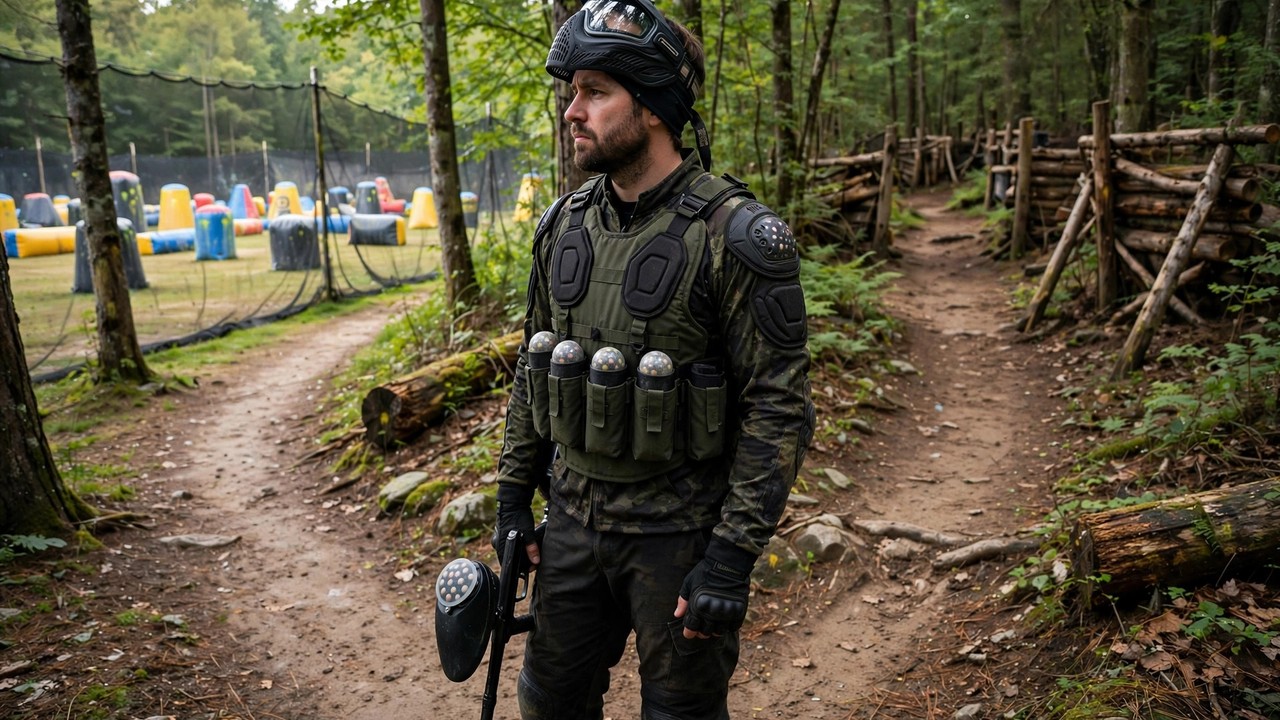
- Total beginner, children or a party: start with recreational play, and choose low-impact if young children are involved.
- You want fast, competitive, athletic games: speedball is your format.
- You like tactics, stealth and bigger battles: woodsball, scenario and MilSim reward that mindset.
- You want a skill challenge: pump strips the game back to positioning and accuracy.
Whichever way you lean, the marker matters. Browse our best paintball guns roundup once you know the style you want to play, because a speedball setup and a woodsball setup pull in very different directions.
Torn between the two big formats? Our speedball vs woodsball comparison puts them side by side so you can pick a first game with confidence.
Frequently Asked Questions
Recreational woodsball-style play is the most common, because it is what fields run for walk-on customers, parties and groups using rental gear. Speedball is the most visible format competitively, but most people play rec ball far more often.
Speedball is played on a small, flat, symmetrical field with inflatable bunkers and very short, fast points. Woodsball is played across large natural terrain with longer games that reward stealth and positioning.
Recreational play with rental gear is the easiest entry point. Low-impact .50 caliber paintball is the better choice for children or anyone worried about the sting, since it hits far softer than standard .68 caliber.
No. Magfed describes how the marker is fed, using detachable magazines instead of a hopper. MilSim describes a style of event built around realistic tactics. They pair well and often appear together, but you can have either without the other.
Yes, up to a point. Speedball favours lightweight electronic markers with a high rate of fire, woodsball and MilSim favour rugged tactical markers that are often magfed, and pump play uses manual pump markers. A rental marker will get you through a first recreational day in any of them.
It depends entirely on the format, from two to five minute speedball points, to woodsball games that run well over an hour, up to scenario events that span a full weekend.