Last updated on August 28th, 2026 at 06:29 pm
Ramping is an electronic firing mode that lets a marker fire faster than your trigger finger alone. Once you’re pulling the trigger quickly enough to cross a set threshold, the marker “ramps up” and adds shots to reach a capped rate of fire, often 10.5 to 15 balls per second. It’s a tournament feature, not a cheat: ramping is sanctioned in specific competitive formats and banned in others, so whether you can use it depends entirely on where you play.
- What it is: an electronic mode that boosts your rate of fire up to a capped limit.
- Needs: an electronic marker with a circuit board (mechanical markers can’t ramp).
- Legal? Format-dependent, allowed in certain leagues, banned at most rec fields.
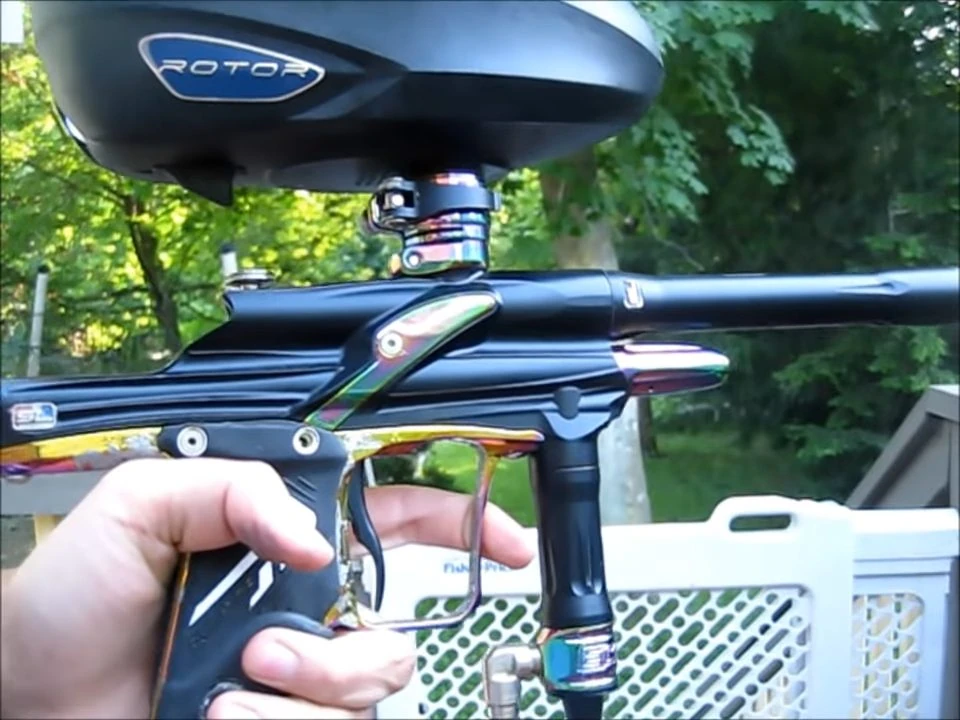
How Ramping Works
On an electronic marker, the board watches how fast you’re pulling the trigger. Once you reach an activation point, usually a few quick pulls at a set rate, the marker starts adding shots on top of your pulls to reach a preset maximum rate of fire, as long as you keep the trigger moving fast enough. Ease off, and it drops back to matching your finger. The result is a high, consistent rate of fire that a human couldn’t sustain by hand.
Ramping vs Semi-Auto vs Full-Auto
- Semi-automatic, one shot per trigger pull. The standard mode, allowed almost everywhere.
- Ramping, boosts output above your pull rate up to a capped limit, but only once you’re actively pulling fast. Used in tournaments.
- Full-automatic, holds down to fire continuously. Uncapped full-auto is banned in sanctioned play and at most fields.
Different Ramping Modes
Competitive leagues each define their own ramping rules and rate caps. Formats like NXL/PSP-style ramping and the European Millennium ramping set different activation requirements and maximum rates, commonly capped around 10.5, 12.5, or 15 BPS. Tournament markers include these modes in their board settings so players can match the ruleset of the event they’re shooting.
Is Ramping Legal?
It depends on the format. In sanctioned tournament play, specific ramping modes are perfectly legal within the league’s rate cap, it’s an official, refereed part of the game. At most recreational and woodsball fields, though, markers must be set to semi-auto only, and ramping isn’t allowed. So ramping isn’t “illegal” as such, it’s a mode that’s sanctioned in some settings and disallowed in others. The debate around it is about skill and fairness, not legality: always set your marker to whatever the field or event you’re at requires.
Ramping Caps by League
Every league that allows ramping also caps how fast it can go, and that cap is the whole point, it keeps rates of fire fair and safe. Depending on the format, the ceiling is commonly set around 10.5, 12.5, or 15 balls per second, alongside rules for how many quick pulls activate the ramp and how you must keep pulling to sustain it. Because the cap and activation rules differ between formats, tournament players set their markers specifically to match the event they’re shooting.
How to Set Ramping on Your Marker
On an electronic marker, ramping lives in the board settings, usually as selectable firing profiles. You choose the mode that matches your league, then confirm the marker behaves within the cap on a rate-of-fire station or chronograph before play. Reputable fields and tournaments check markers at the chrono station, so setting the correct legal mode ahead of time saves you being turned away, and running an illegal, uncapped mode is a fast way to be disqualified.
The Debate Around Ramping
Ramping divides players. Purists argue that pure semi-auto, one shot per genuine trigger pull, is the truest test of skill, while supporters say capped ramping levels the playing field between different trigger fingers and is itself a skill to control. Both views are valid, and the sport accommodates them by allowing ramping in some formats and banning it in others. Whichever camp you’re in, the only rule that matters day to day is to shoot the mode your field or event requires.
Ramping and Your Local Field
For most players, the practical takeaway is simple: the majority of recreational and woodsball fields require markers to be set to semi-automatic only, so ramping rarely comes into everyday play. It becomes relevant mainly if you start entering sanctioned tournaments, where a specific ramping mode is part of the format. If you’re unsure, ask the field before you play, running a ramping or full-auto mode where only semi is allowed can get you pulled off the field, so it always pays to match your marker’s settings to the rules of the exact place you’re shooting that day.
Conclusion
Ramping is a capped, electronic rate-of-fire boost that activates once you’re pulling the trigger fast enough, a legitimate tournament feature rather than a cheat. Whether you can use it comes down to the format: sanctioned in certain leagues, banned at most rec fields. Know your marker’s modes, know the ruleset where you’re playing, and set it accordingly.
FAQs
It depends on where you play. Ramping is legal and sanctioned in specific tournament formats within their rate caps, but most recreational and woodsball fields require semi-auto only. It’s a mode that’s allowed in some settings and banned in others, not universally illegal.
Ramping only boosts your fire rate while you’re actively pulling the trigger fast enough, and it’s capped at a set rate. Full-auto fires continuously as long as you hold the trigger. Uncapped full-auto is banned in sanctioned play; capped ramping is allowed in certain formats.
Yes. Ramping is controlled by a marker’s electronic circuit board, so only electronic (electropneumatic) markers can ramp. Purely mechanical markers fire one shot per trigger pull and have no ramping mode.