Last updated on September 28th, 2026 at 08:59 pm
Laning is shooting a controlled line of paint at a specific gap, bunker edge or corridor so that an opponent cannot move through that space without being hit. When you shoot a lane you are not necessarily trying to hit anyone. You are denying ground, and the eliminations arrive as a consequence.
It is the least glamorous skill in paintball and one of the most valuable, because good laning wins points before they properly start. This guide covers where lanes live, how to shoot one well, and the mistakes that make a lane useless.
What a Lane Actually Is
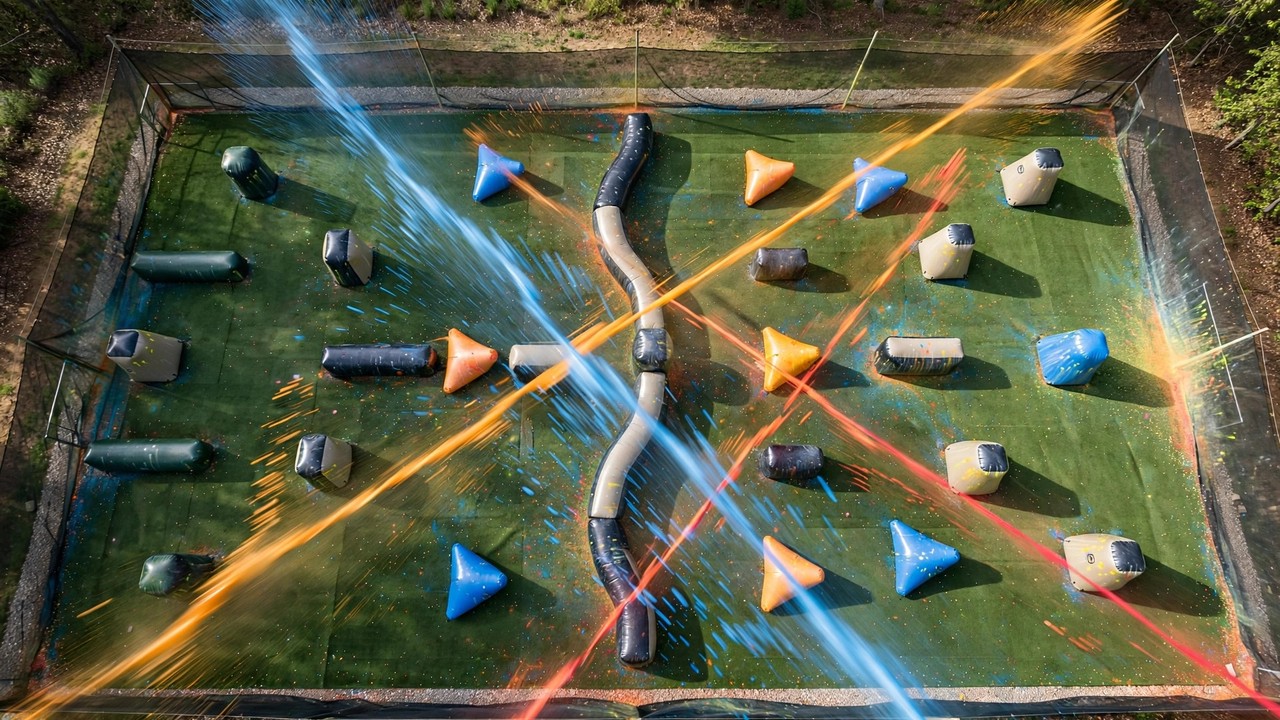
Think of the field as a set of corridors players must cross to reach useful bunkers. A lane is your paint occupying one of those corridors. The classic example is the breakout: back players put streams of paint across the paths to the snake and the Doritos, and any runner who commits to those paths runs into it. Off the break in tournament play, this is the back player’s primary job.
Lanes exist mid-point too. Any time an opponent must cross open ground to improve their position, there is a lane to be shot, and holding it can freeze half a team in place.
Consistency Beats Volume
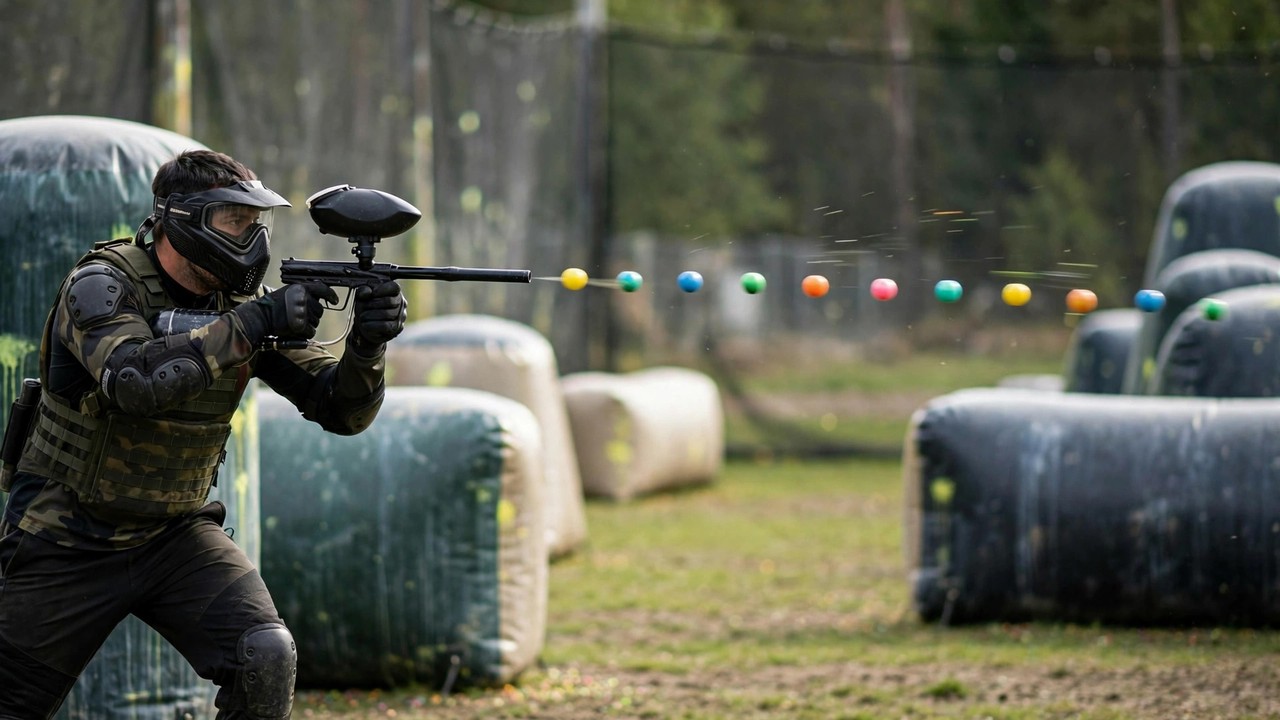
The instinct is to hose the gap with everything the loader can feed. The technique is calmer: place a ball roughly every half second exactly where a body would need to cross, and hold that placement steady. A consistent lane at moderate speed catches runners; a wild burst at maximum speed mostly decorates the netting.
Watch the runner, not your own paint. The stream is aimed at where they are going to be, which means your eyes belong on the body while your hands keep the paint arriving at the crossing point. Players who watch their own stream stop adjusting and shoot behind every runner.
Choosing Which Lane to Shoot
- Lane the path they need, not the path they might take. Every field has one or two bunkers the opposing team must fill for their game to work, usually the snake entry and the far Dorito. Deny those first.
- Shoot the exit edge of the gap. Paint at the far edge of a corridor meets the runner at full commitment, when they can no longer stop or turn back.
- Pick lanes you can hold from cover. A lane that requires you to stand fully exposed trades your body for theirs at best.
- Change lanes deliberately. Holding one corridor for the whole point lets everyone else move free. Deny the priority lane, then rotate to the next threat.
Laning Off the Break
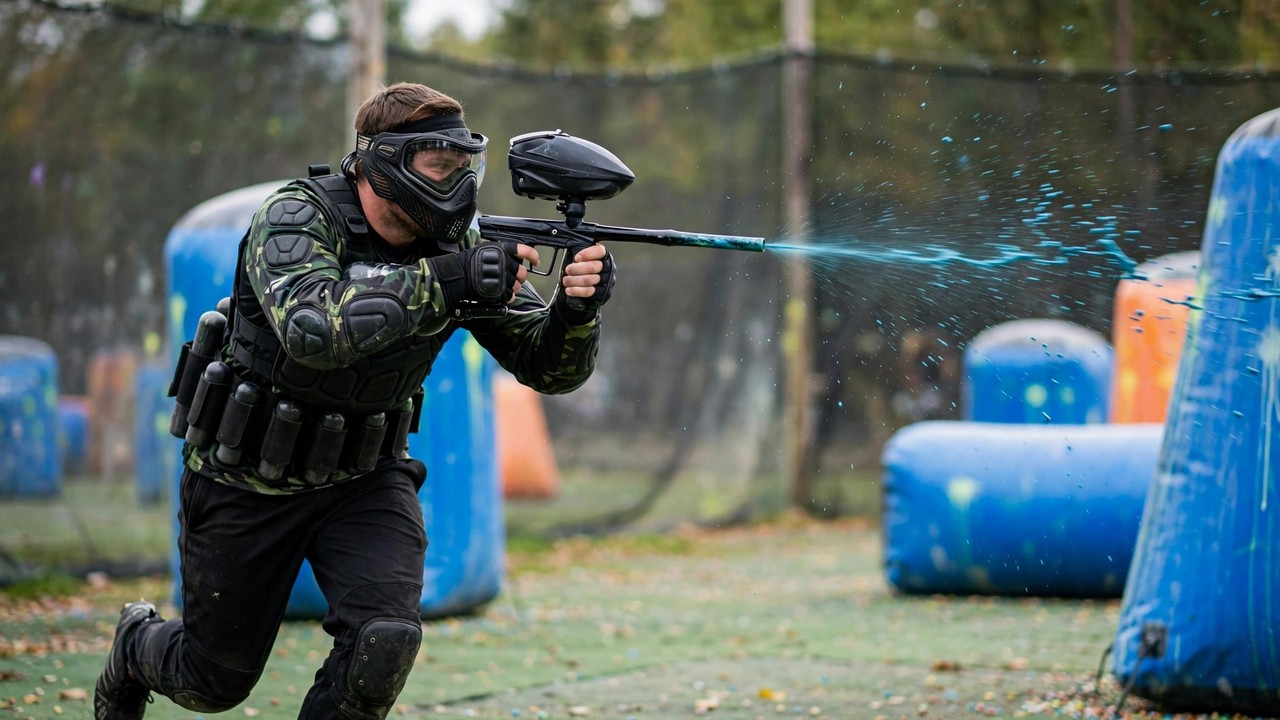
The breakout is where lanes matter most, because every opponent is out of cover at once. The mechanics are specific: be shooting as the horn sounds, from a spot a step off the gate rather than in it, with the marker already level and the stream landing in the corridor before the runner arrives. The lane exists for about two seconds, and then everyone left alive is behind a bunker.
The full context of those opening seconds, including primaries and blind spots, is covered in the paintball breakout.
The Gear Side of Laning
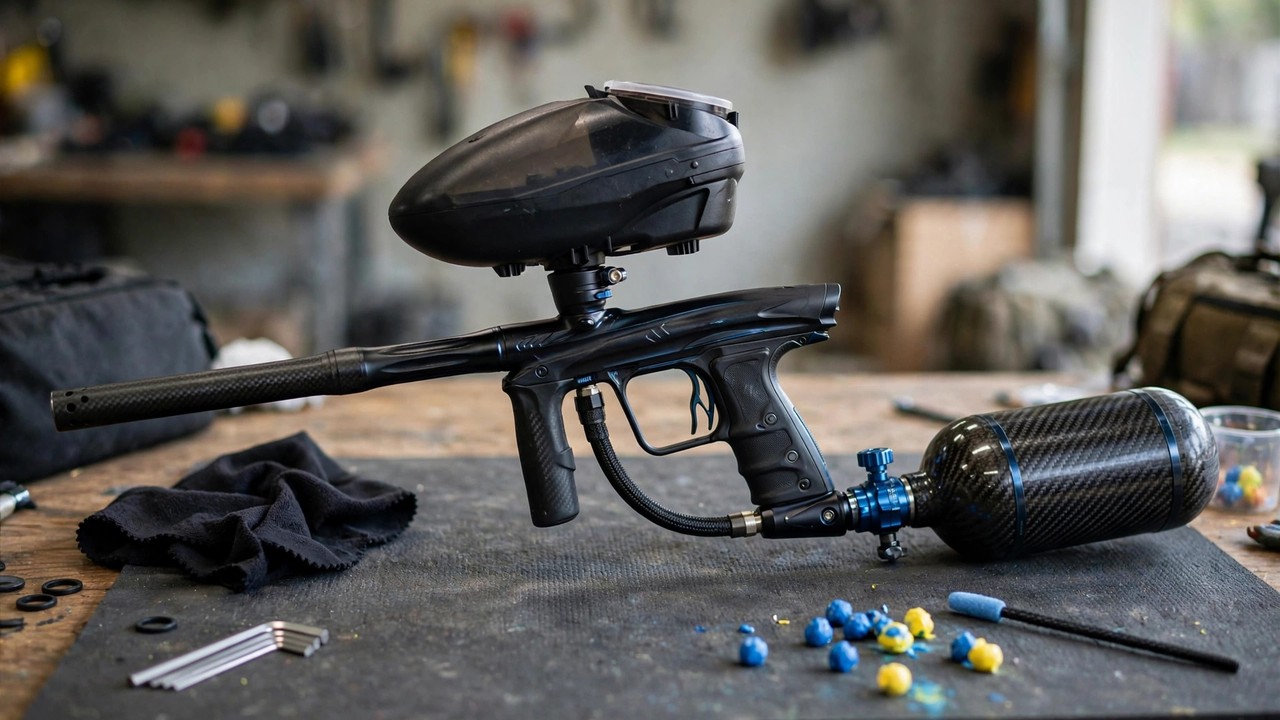
Laning is one of the few skills where equipment genuinely matters. A consistent lane needs a marker that shoots the same velocity ball after ball and a loader that never starves it mid-stream, which is why tournament back players run electronic markers with force-fed loaders. And a lane is only as good as its straightness, so paint-to-barrel fit matters more here than anywhere else. See the best electronic paintball guns, the best paintball hoppers and how to make a paintball gun more accurate.
Rate of fire helps at the margin, and fields cap it anyway. If you want the finger-speed side, that is covered in walking the trigger.
How to Practise Lanes Cheaply
Lane practice needs no opponent. Pick a gap on a field, place a target or a pod at the exit edge, walk back to a realistic shooting position and score yourself on how quickly your stream lands on the mark and how steadily it stays there. Ten minutes of this per session builds the exact muscle memory the breakout uses, at a fraction of the paint a scrimmage burns. For where laning fits among the rest of the skills, see how to win at paintball.
Frequently Asked Questions
Laning is shooting a controlled line of paint at a specific gap, bunker edge or corridor so an opponent cannot move through that space without being hit. The point is denying ground; eliminations follow as a consequence.
Steadily rather than flat out. Place a ball roughly every half second exactly where a body would cross and hold that placement. A consistent lane at moderate speed catches runners; a wild burst mostly misses.
At the exit edge of the gap, so the paint meets the runner at full commitment when they can no longer stop or turn back. Watch the runner, not your own stream, and adjust to the body.
Primarily the back players. Off the break their job is putting paint across the corridors the opposing runners must cross, before rotating into support and communication for the rest of the point.
Yes. Put a target at the exit edge of a gap, shoot from a realistic position, and score how fast your stream lands on the mark and how steadily it stays. No opponent required.