Last updated on August 28th, 2026 at 06:48 pm
A paintball hopper, also called a loader, is the container on top of your marker that feeds paintballs into the firing chamber. In short, the hopper stores your paintballs and drops or drives them into the breech one at a time so the marker can fire them. How quickly and reliably it does that depends on which of the three loader types you have. Here’s how each one works and which suits your game.
What a Paintball Hopper Does
Every shot needs a fresh paintball sitting in the breech before the marker fires. The hopper’s job is to keep that breech fed. Feed speed is measured in balls per second (BPS), and a hopper that can’t keep up with your trigger causes two problems: dry-firing (the marker fires with no ball loaded) and, worse, chopping, the bolt catches a half-seated ball and breaks it inside the marker. A loader that feeds faster than you shoot prevents both. Most hoppers hold roughly 180–220 paintballs.
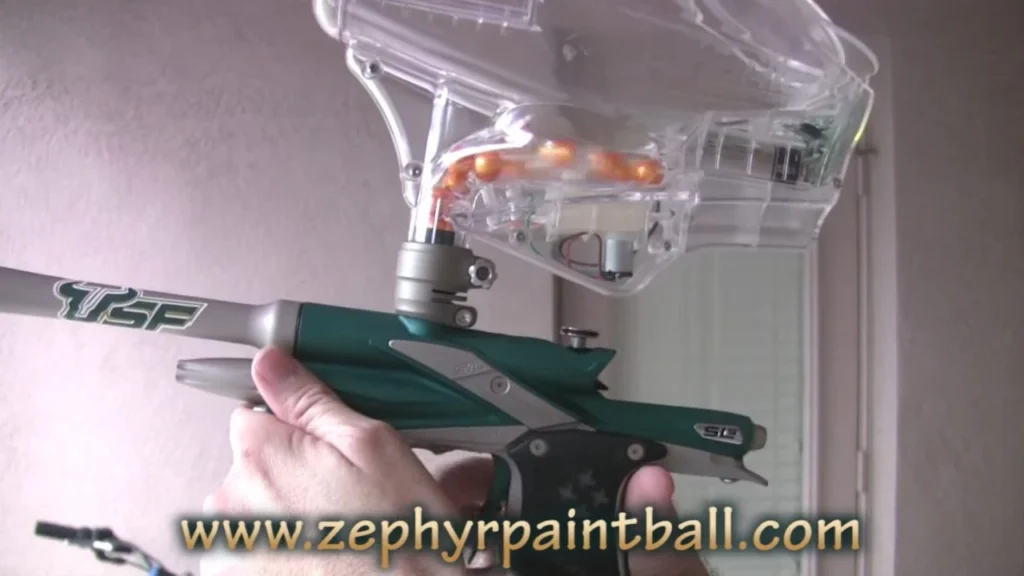
The 3 Types of Paintball Hopper
1. Gravity-Fed Hoppers
The simplest and cheapest type. Balls fall into the breech under their own weight through a feed neck. Gravity loaders work fine for slow, casual play but have two weaknesses: they feed slowly (around 6–8 BPS), and balls can jam or “double-feed” at the neck, so you sometimes have to shake the marker to clear them. They’re a common starting point for brand-new players and rental setups.
2. Agitating (Electronic) Hoppers
An agitating loader adds a battery-powered paddle that gently stirs the paintballs so they keep dropping into the feed neck instead of jamming. This roughly doubles reliable feed speed to about 12–15 BPS. Some older or budget agitators are sound-activated, a small microphone hears each shot and triggers the paddle, while most modern ones use an eye or timer. Agitators are the sweet spot for most recreational and woodsball players.
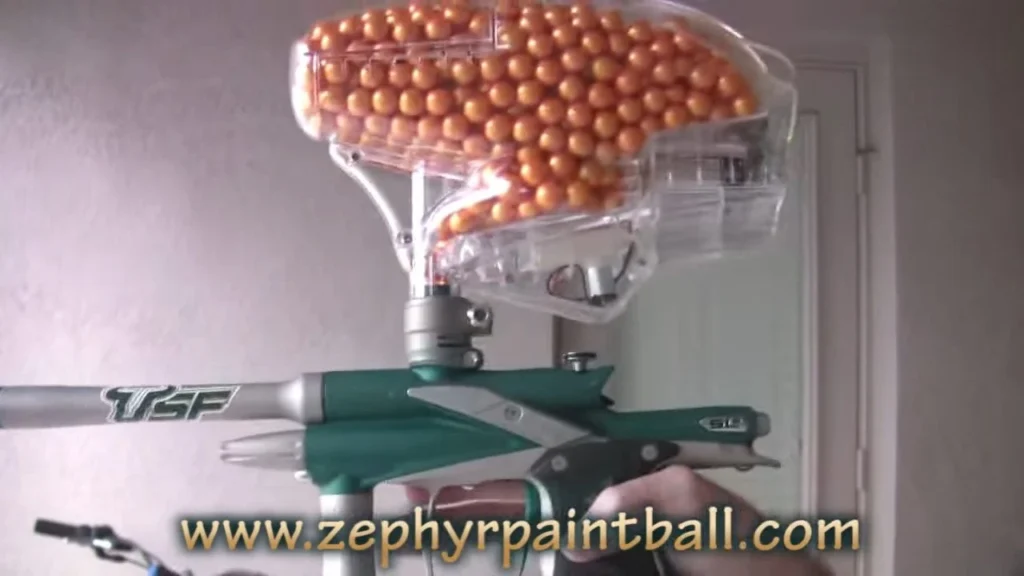
3. Force-Fed Hoppers
The fastest and most reliable type, used by tournament and speedball players. Instead of waiting for gravity, a force-fed loader actively drives each ball into the breech with a spring-tensioned or motor-driven system, so it keeps up with the fastest markers, 20+ BPS, and virtually eliminates chops. They cost more and use a rechargeable battery, but for high rates of fire they’re the only type that truly keeps pace. Browse options in our guide to the best paintball hoppers.
Which Hopper Should You Choose?
- Casual / occasional play, a gravity or entry-level agitating hopper is plenty.
- Regular recreational, woodsball or scenario, an agitating loader (12–15 BPS) is the best value.
- Speedball or tournament, a force-fed loader to match a fast electronic marker.
Match your loader to your marker’s rate of fire: a fast marker fed by a slow hopper just chops paint, while a force-fed loader on a slow mechanical marker is wasted money. If you’re still setting up, our guide on dialing in your marker pairs well with picking the right loader.
How to Choose a Hopper for Your Marker
The golden rule is to match your loader’s feed rate to your marker’s rate of fire. A slow gravity hopper on a fast electronic marker just causes chops, while a pricey force-fed loader on a slow mechanical marker is money wasted. Casual and woodsball players are well served by a gravity or agitating hopper; speedball and tournament players need a force-fed loader to keep pace with a fast marker.
Preventing Jams and Chops
Most feeding problems come down to a few avoidable things. Keep the hopper and breech clean and clear any broken paint immediately, use fresh, round paint that hasn’t swelled with moisture, and don’t let a gravity loader run so full that balls bind at the neck. If you regularly out-shoot your loader, dry-firing or chopping paint, it’s a sign you’ve outgrown it and need a faster feed type.
Do Hoppers Need Batteries?
It depends on the type. Gravity hoppers are entirely mechanical and need no power at all, which is part of their appeal for beginners. Agitating and force-fed loaders, however, run on batteries to drive their motors, a good one lasts many games on a charge, but it is worth carrying spares so a dead battery never slows your feed rate in the middle of a match.
Loader Capacity and Carrying Spare Paint
A hopper’s on-board capacity, usually around 180 to 220 rounds, is only part of the picture. In a longer game you’ll carry spare paint in pods on a harness and top the loader up from behind cover, so your real ammunition supply is the hopper plus however many pods you carry. Matching a reliable, fast-enough loader with enough pods for your play style means you spend the game shooting rather than scrambling to reload.
Conclusion
A paintball hopper feeds paintballs into your marker’s breech, and the type you choose sets how fast and how reliably it does that: gravity loaders are cheap but slow and jam-prone, agitating loaders keep up with most recreational play, and force-fed loaders match tournament-speed markers without chopping paint. Pick the one that matches how you play, and you’ll spend more time shooting and less time clearing jams.
FAQs
Most standard hoppers hold about 180–220 paintballs. Larger loaders exist, but that range covers the great majority of gravity, agitating, and force-fed models.
A gravity hopper simply lets balls fall into the breech, feeding slowly (about 6–8 BPS) and occasionally jamming. An electronic (agitating) hopper adds a powered paddle that stirs the balls to feed faster and more reliably, around 12–15 BPS.
Only if you shoot fast. Force-fed loaders (20+ BPS) matter for speedball and tournament play with electronic markers. For casual or woodsball play, a gravity or agitating hopper is more than enough.
Chopping usually means the loader can’t feed as fast as you’re firing, so the bolt catches a half-loaded ball. Feeding faster, an agitating or force-fed loader, or slowing your rate of fire fixes it.