Last updated on September 28th, 2026 at 08:57 pm
Yes, you can fly with a paintball gun in the United States, but only in checked baggage, and the air tank is the part that trips people up. TSA allows paintball markers in checked bags, does not allow them in carry-on, and only accepts a compressed gas cylinder if the regulator is completely disconnected so an officer can see inside an open, empty bottle.
Get those three details right and flying with gear is routine. Get the tank wrong and it will be pulled from your bag. Here is the whole picture, rule by rule.
The Marker: Checked Baggage Only
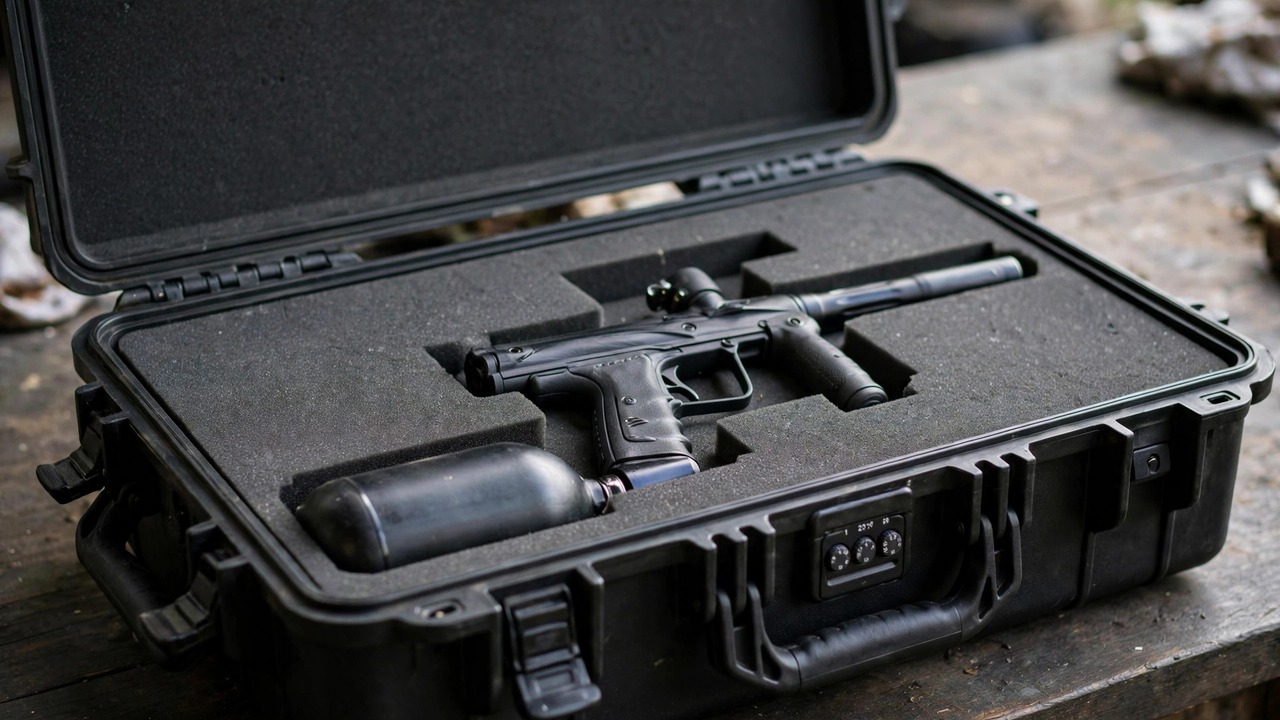
TSA lists compressed air guns, which includes paintball markers, as prohibited in carry-on and allowed in checked baggage without the compressed air cylinder attached. A paintball marker is not classified as a firearm under federal law, so the mandatory firearm declaration process does not legally apply to it.
Even so, seasoned travelers treat it like one anyway: a hard-sided, lockable case protects an expensive marker from baggage handling, looks professional if a bag inspection happens, and sidesteps any confusion at the counter. Airline policies can be stricter than TSA, and some ask you to declare air guns at check-in, so read your carrier’s sporting goods policy before you pack. When in doubt, tell the agent what is in the case and let them apply their own procedure.
The Tank: Empty, Open, and Regulator Off
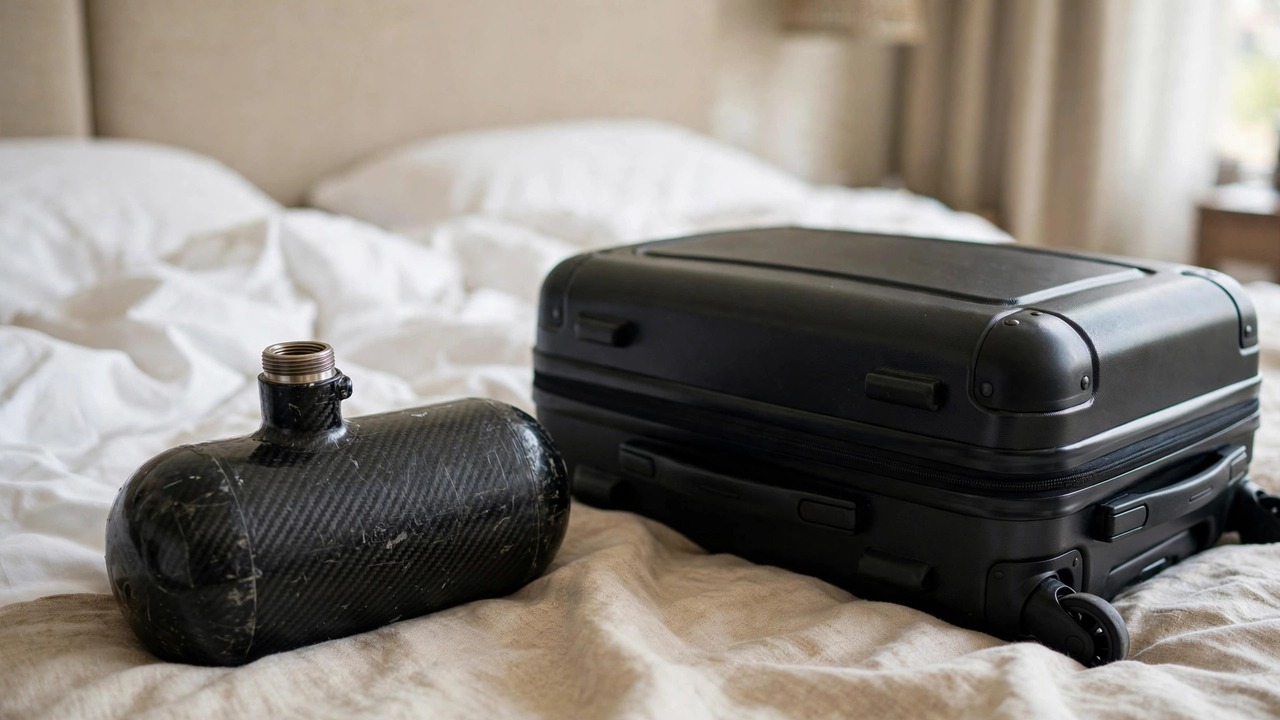
This is the rule that catches almost everyone. It is not enough for your HPA or CO2 tank to read zero on the gauge. TSA requires the regulator valve to be completely disconnected from the cylinder so the bottle has an open end and an officer can visually confirm it is empty and holds nothing else. A sealed cylinder is prohibited in both carry-on and checked baggage regardless of what the pressure gauge says, and officers will not remove the regulator for you.
That creates a practical problem: unscrewing the regulator from an HPA bottle is not a casual job. It should be done, and later reinstalled and leak-checked, by someone who knows tank work, because the regulator seals against high pressure. Many traveling players skip the problem entirely: they fly with the marker only and rent or borrow a tank at the destination field, or they ship the tank ahead. If you do fly with a bottle, degas it completely first, and remember that a tank must also be within its hydro test date for any field to fill it when you land.
Small CO2 cartridges are compressed gas too, and the FAA’s hazardous materials rules are unfriendly to them in passenger baggage. The clean solution is the same one: buy consumables at your destination, and if you are retiring an old cylinder before a trip, our guide to disposing of CO2 tanks covers doing it safely.
Paintballs, Masks, and the Rest of the Bag
Paintballs themselves are allowed and are not hazardous, but they are a poor traveler: pressure changes do not bother them much, heat and crushing do. A case of paint in a checked bag arrives dimpled and out of round often enough that most players simply buy paint at the destination field, which many fields require anyway. Masks, jerseys, pads, and the rest of your loadout fly like any other sports equipment, though your mask deserves hard protection so the lens is not scratched or flexed under a pile of luggage.
A Pre-Flight Checklist
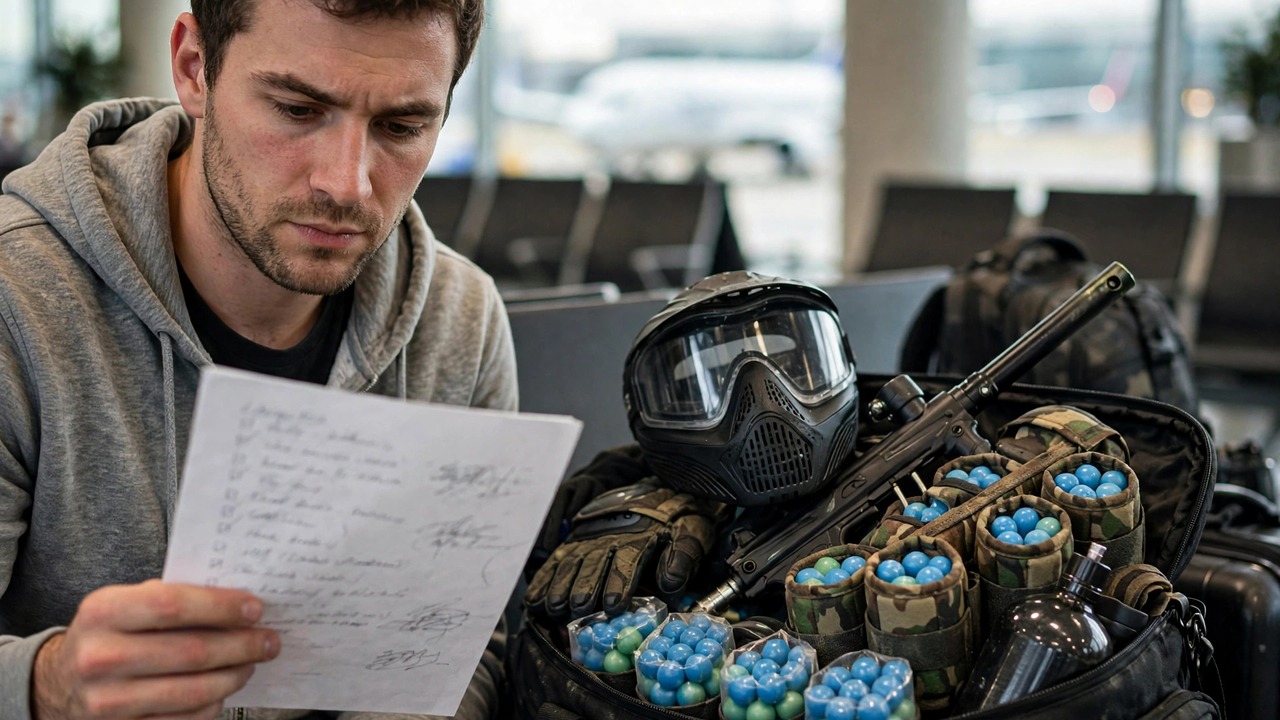
- Marker in a locked hard case, inside checked baggage, never carry-on
- Tank fully degassed, regulator completely removed, open end visible
- No loose CO2 cartridges in either bag
- Check the airline’s sporting equipment policy the day you book
- Plan to buy or rent paint and air at the destination
- Arrive early in case the bag is opened for inspection
International Flights Are a Different Game
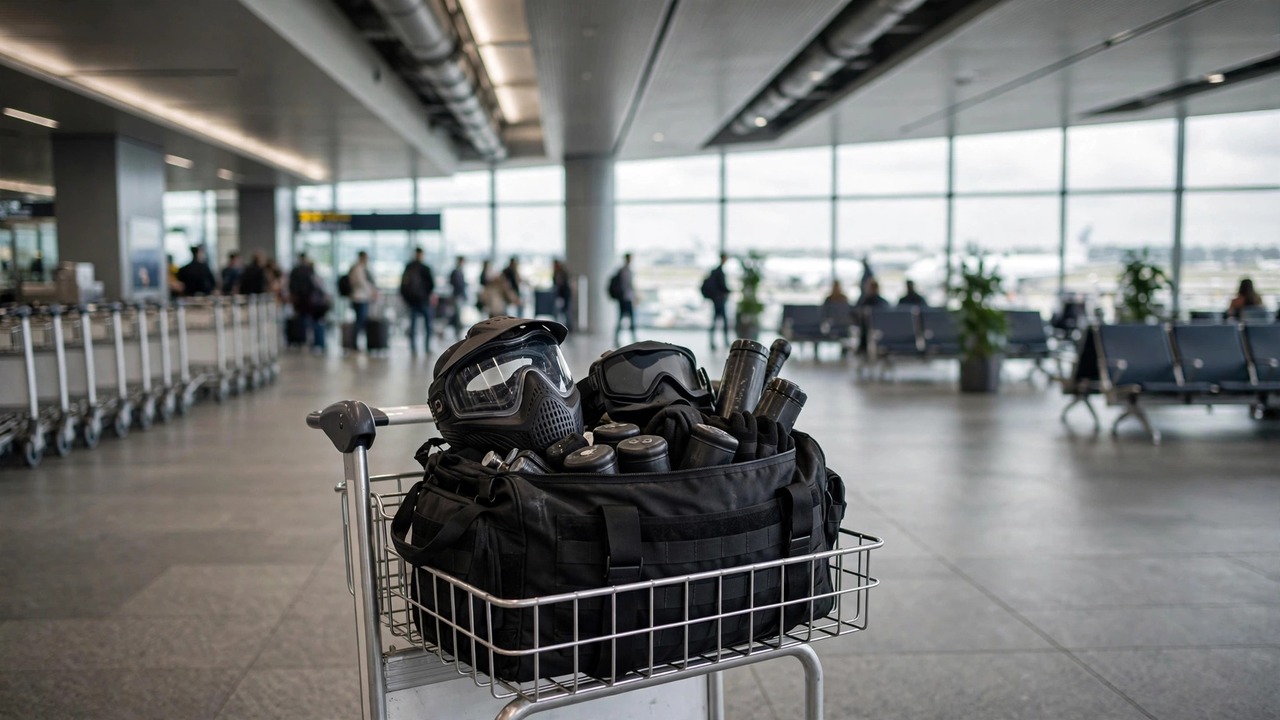
Everything above is the United States picture. Other countries regulate paintball markers very differently, sometimes as controlled items requiring permits, and security agencies abroad apply their own compressed gas rules. Before an international trip, check both the destination country’s import rules and the legal status of paintball markers where you are headed, then check the airline again for that specific route. For driving trips and everything that happens before you reach the airport, our guide to traveling with paintball gear picks up where this one ends.
Frequently Asked Questions
No. TSA prohibits compressed air guns, including paintball markers, in carry-on. They are allowed in checked baggage without a compressed air cylinder attached.
No. Paintball markers are not classified as firearms under federal law, so the firearm declaration process does not legally apply. Many travelers still use a locked hard case and follow airline declaration procedures anyway.
The regulator must be completely disconnected so the cylinder has an open end and screeners can see it is empty. A sealed tank is prohibited even if the gauge reads zero, and officers will not remove the regulator for you.
Yes, paintballs are allowed in checked baggage, but heat and crushing leave them dimpled and out of round. Most traveling players buy paint at the destination field instead.
Yes. Airline sporting goods policies can be stricter than TSA and some require air guns to be declared at check-in, so check your carrier's policy for the specific route before you pack.