Last updated on September 28th, 2026 at 08:59 pm
Paintball is statistically one of the safer sports you can play, and that answer surprises almost everyone who asks. The commonly cited industry figure puts it at roughly 0.2 injuries per 1,000 player exposures, which is far below contact sports; reported youth football injury rates, for comparison, run from about 8.5 to 43 per 1,000 exposures.
That is the honest, well-supported headline, and the numbers behind it are collected on our paintball statistics page. The equally honest fine print is that paintball’s risk is not spread out evenly: it concentrates almost entirely in one place, the eyes, and overwhelmingly among the people who take their mask off. This guide covers both halves of that story properly.
What the Injury Numbers Actually Say

Day to day, paintball injuries are mundane: bruises from hits, plus the twisted ankles, scrapes and strains that come from running and diving on uneven ground, the same profile as any running sport. A paintball hit itself feels like a firm snap, closer to a rubber band than to anything alarming, and it fades to a welt at worst. Our guides on how badly paintballs hurt and treating paintball bruises cover that side.
The exception in the data is the eye. In a 2016 study of sports-related eye injuries presenting to an emergency department, paintball accounted for about 10 percent of the injuries but carried the greatest odds of impaired vision of any sport in the study, about a quarter of all impaired-vision cases. An unprotected eye and a paintball are a genuinely serious combination.
The Mask Is the Whole Story
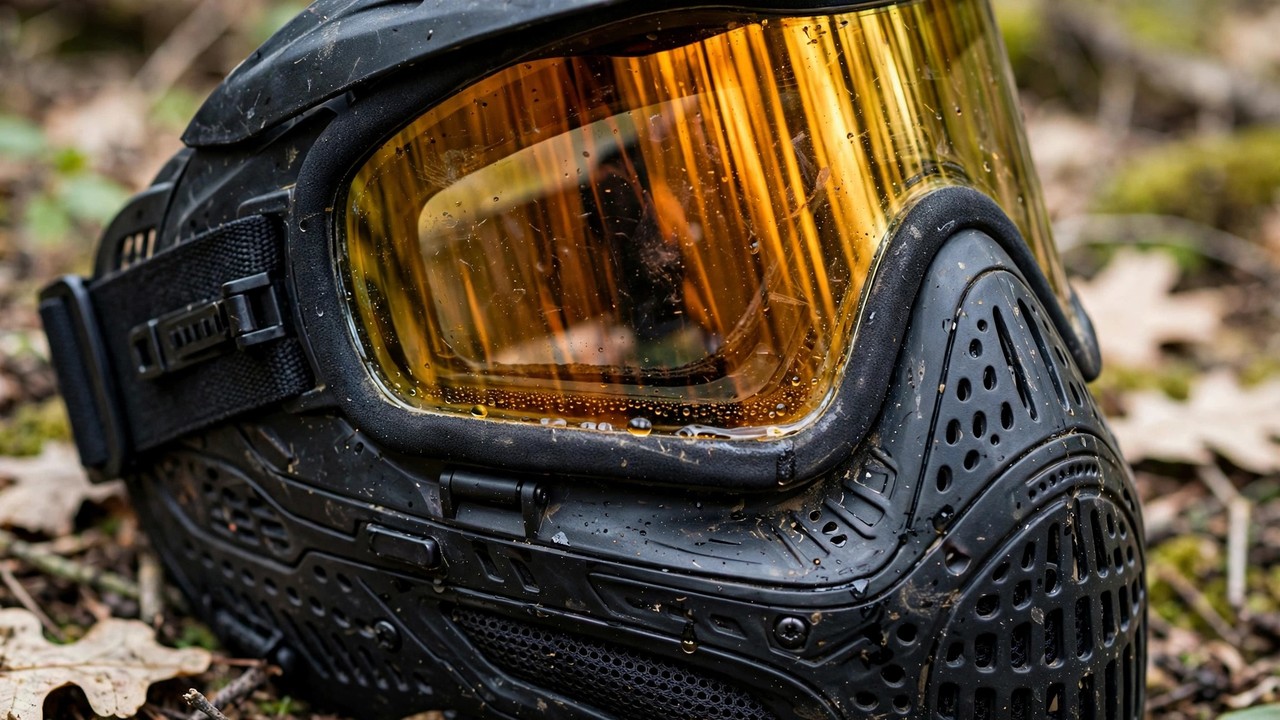
Here is the finding that should shape how you think about paintball safety: in studies of paintball eye injuries, nearly all severe cases happened to people who were not wearing a proper mask, and researchers estimate that up to 97 percent of paintball eye injuries are preventable with correct eyewear. Players in masks built to the paintball standard essentially do not suffer penetrating eye injuries.
That standard is ASTM F1776, the specification written specifically for paintball eye protection, and it is why fields refuse ski goggles, safety glasses and anything else however sturdy it looks. It is also why the one unbreakable rule of the sport exists: the mask never comes off on the field, not to wipe fog, not for a second. Our mask roundup covers the standard in detail, and the rules of paintball covers how fields enforce it.
How Fields Engineer the Risk Down
- Velocity limits. Every marker is chronographed under a cap, usually 280 feet per second, before play.
- Minimum engagement distances and surrender rules prevent point-blank hits, the ones that genuinely hurt.
- Barrel covers off-field and marshals on-field handle the moments when markers and unmasked people share space.
- Waivers and briefings mean nobody plays without hearing the rules that matter.
This is why the commercial-field version of the sport produces such a low injury rate. The serious incidents in the record cluster around informal backyard games with no chrono, no marshal and no mask discipline.
Is It Safe for Children?
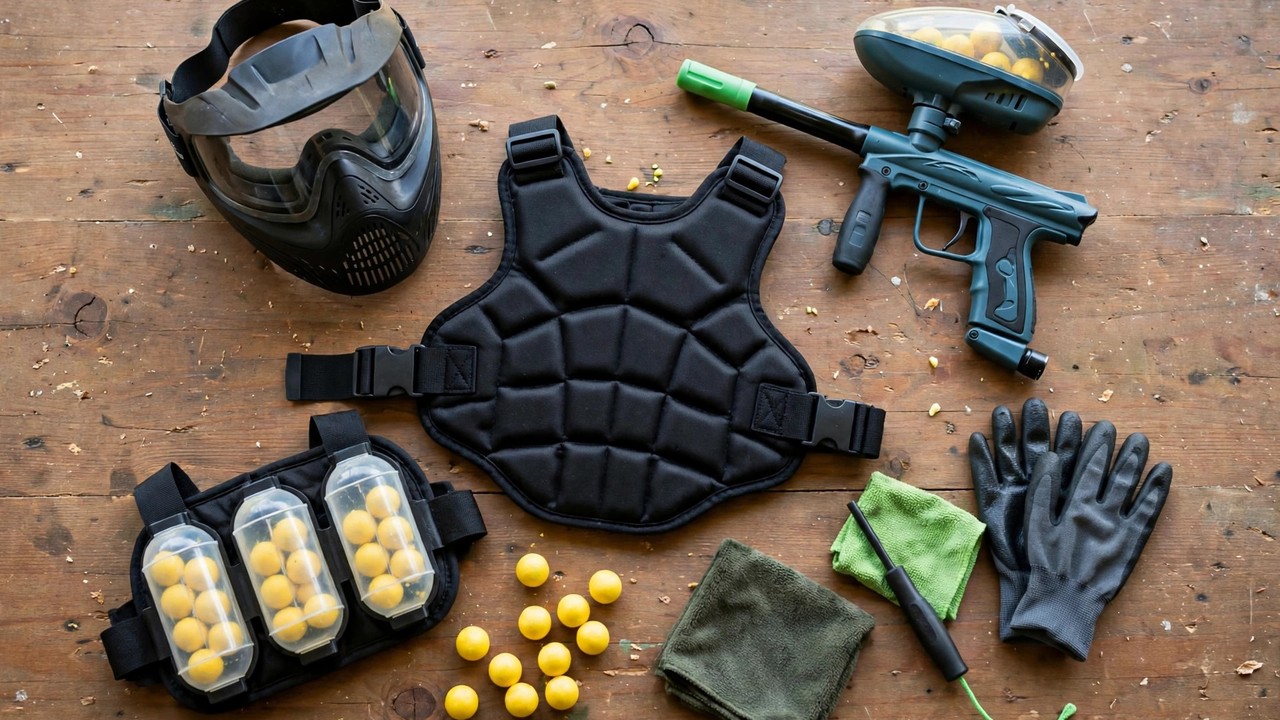
At a proper field, yes, within the age structure the industry has built. Standard .68 caliber play typically starts around age 10 with a parent-signed waiver, and low-impact .50 caliber play, which cuts impact energy by roughly two thirds, opens the sport to children around 7 or 8. The details live in paintball for kids and low-impact paintball.
What You Control
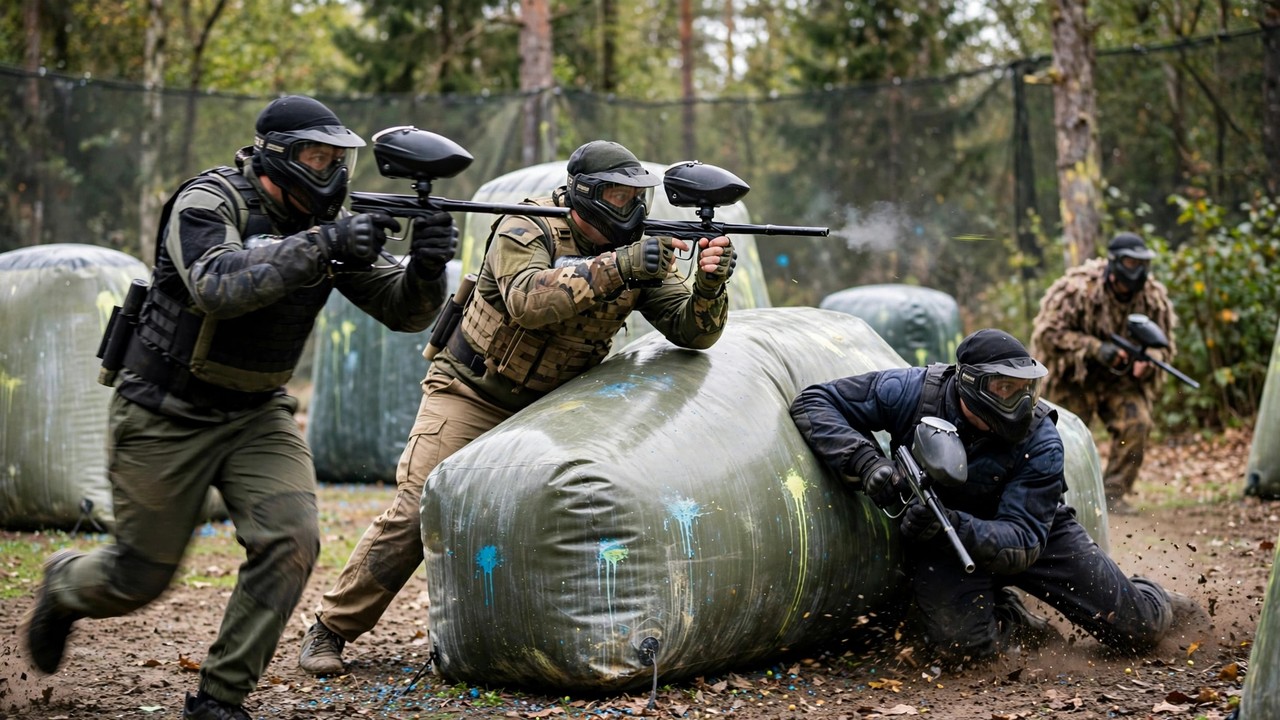
- Keep the mask on. The single behaviour that removes nearly all serious risk.
- Dress for it. Long sleeves, long trousers and covered skin turn stings into taps; see how to dress for paintball.
- Play fields, not backyards. The chrono, the marshal and the rules are the safety system.
- Respect the close-range rules. Offer the surrender instead of shooting at three feet.
- Watch your footing. The most likely injury at a paintball field is the same ankle roll you could get on any trail.
Put plainly: played at a commercial field with the mask rule respected, paintball’s real risk profile is bruises and the occasional turned ankle. The frightening injuries in the statistics belong overwhelmingly to games played without the system. If you are new and weighing it up, start with paintball for beginners.
How Paintball Compares With Other Activities
Context makes the numbers easier to weigh. Contact team sports carry injury rates many times higher than paintball’s, largely because collisions between bodies are the mechanism of play rather than an accident. Paintball’s mechanism of play, being struck by the ball itself, is engineered to be survivable: the velocity cap exists precisely so that a hit on protected or clothed skin ends in a bruise, not a wound. What is left over is the ordinary risk of running around outdoors, shared with hiking and pickup soccer, plus the one specialised risk the mask eliminates. That is an unusual and rather fortunate risk profile: the sport’s single serious hazard has a single, simple, fully effective countermeasure that is also mandatory everywhere the sport is formally played.
Frequently Asked Questions
No. The commonly cited industry figure is roughly 0.2 injuries per 1,000 player exposures, far below contact sports; reported youth football rates run from about 8.5 to 43 per 1,000. Typical paintball injuries are bruises and turned ankles.
Eye injury, and it is almost entirely a behaviour problem rather than a sport problem. In studies, nearly all severe eye injuries happened to people not wearing a proper mask, and up to 97 percent are considered preventable with correct eyewear.
Because paintball masks are built to ASTM F1776, a standard written specifically for paintball impacts, covering the lens, coverage area and retention. Ordinary eyewear is not tested against paintballs and fields will not allow it.
It is where the serious injuries cluster. Commercial fields enforce chronographed velocity limits, masks, marshals and engagement distances; informal games typically have none of those, and the injury record reflects it.
Chronograph checks under a velocity cap, usually 280 fps, mandatory masks with marshals enforcing them, minimum engagement distances with surrender rules, and barrel covers whenever markers leave the field.