Last updated on September 28th, 2026 at 08:39 pm
Indoor and outdoor paintball are the same sport in genuinely different packages. Indoor means a climate-controlled arena, a compact field, close engagements, and games that run all year regardless of weather or daylight. Outdoor means space, terrain, longer sightlines, and the variety that comes from woods, forts, and full-size speedball courts. Neither is better; they reward different things, and most players end up wanting both for different reasons.
Size and Pace: The Core Difference
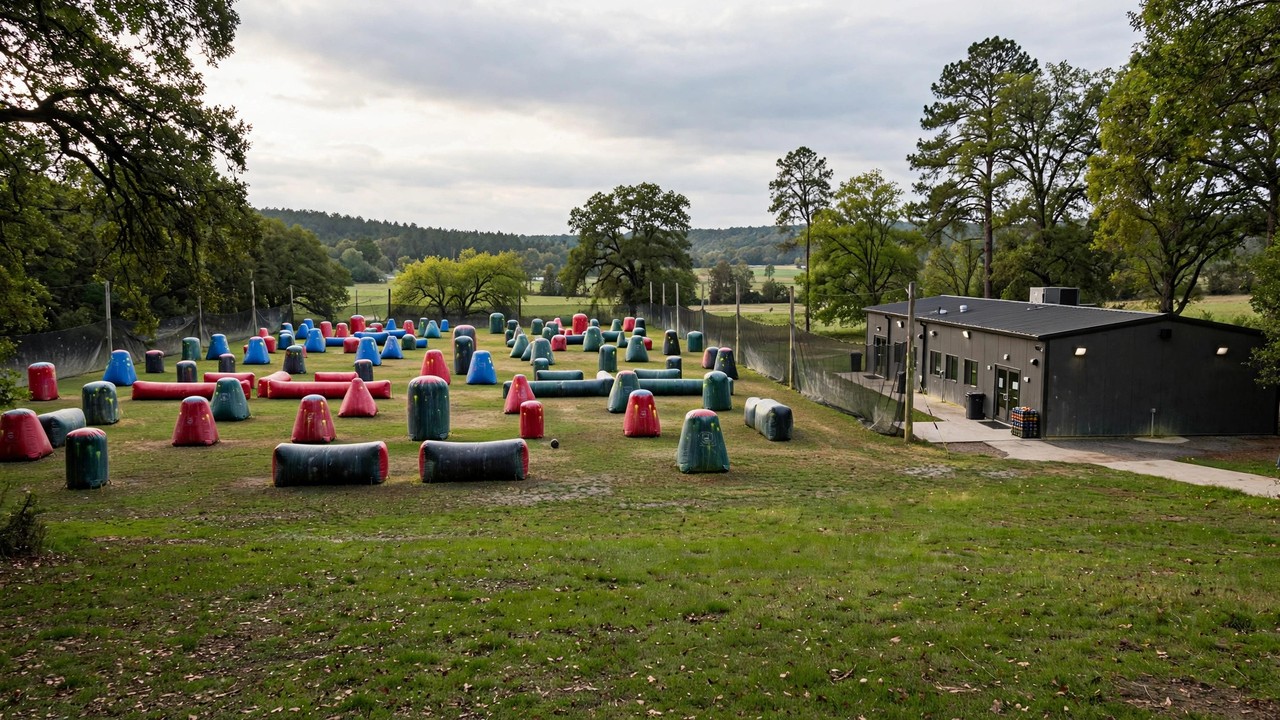
Everything else flows from square footage. Indoor arenas typically occupy warehouse spaces in the range of ten to thirty thousand square feet, which puts opponents close from the first second and keeps games short and intense. Outdoor parks measure their space in acres, from regulation speedball courts up to woods fields you can genuinely flank through over ten minutes. Our guide to how big paintball fields are puts numbers on the whole range.
The practical consequence: indoors, reaction time and tight bunker play dominate, and you will be shot from close range more often. Outdoors, movement, positioning, and patience matter more, and engagement distances stretch toward the edge of a paintball’s effective range. If you want to sharpen gunfighting fundamentals fast, indoor reps are unmatched. If you want the ambush-and-flank version of the sport, that only exists outside, in the world our guides to speedball and woodsball map out.
Weather, Seasons, and Scheduling
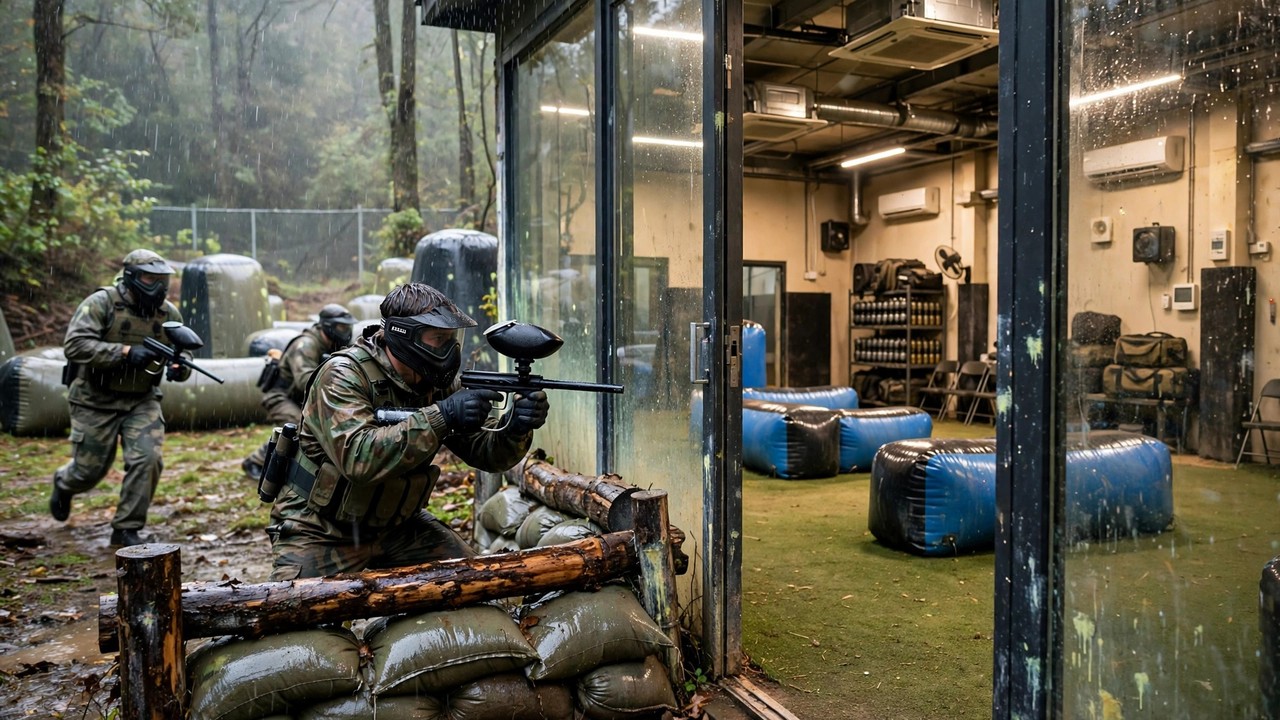
Indoor paintball’s biggest advantage is the calendar. Rain, snow, heat waves, and early winter sunsets take no games off the schedule, and evening sessions under lights are standard, which is why indoor arenas own the sport’s weeknights and cold months. Outdoor fields counter with the experience itself: natural terrain, real distances, and air that does not taste like a warehouse. Summer heat is the outdoor season’s honest tax, and our guide to dressing for summer paintball is the survival manual. Winter outdoor play is possible and quieter, with brittle paint and heavier clothing changing the game in ways regulars enjoy.
Velocity, Paint, and House Rules
Because engagements are closer, indoor arenas commonly run lower velocity caps, often in the 250 to 280 fps range against the 280 to 300 typical outdoors, and some run low-impact .50 caliber gear entirely, especially for youth sessions. The full story on those numbers is in our guide to FPS in paintball. Indoor arenas are also more likely to be field-paint-only and stricter about barrel covers and mask discipline in tight walkways, simply because everything is closer together. Expect the same core rules in both settings, enforced by referees either way.
Surfaces differ too. Indoor floors are turf, rubber, or sealed concrete, which means consistent footing, no mud, and clean gear at the end of the night. Outdoor fields trade that for grass, dirt, roots, and weather-dependent traction, which is character when it is dry and laundry when it is not.
Cost and Convenience
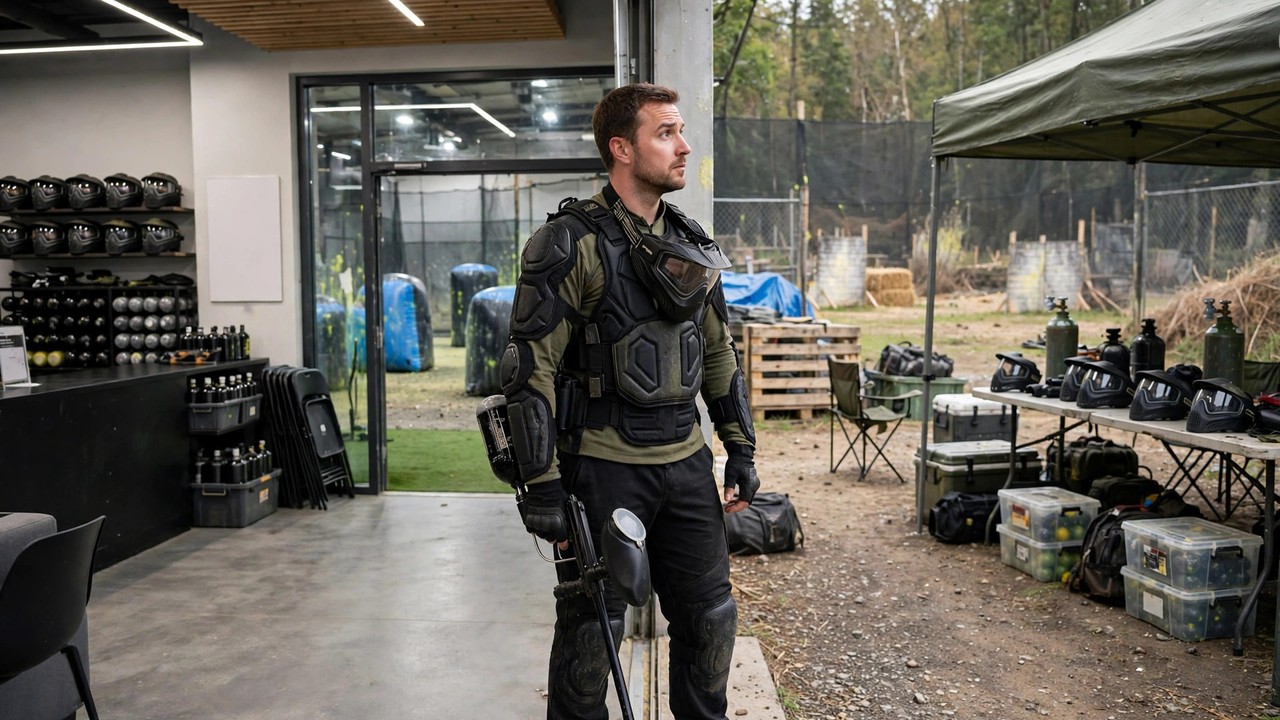
Pricing structures are similar, entry plus rental plus paint, and neither setting is reliably cheaper. Indoor sessions are often sold in shorter blocks, which suits weeknight budgets, while outdoor fields sell longer days where the per-hour math improves if you have the stamina. City dwellers usually find indoor arenas closer to home, while outdoor parks reward the drive with more field variety per visit.
Which One Should You Pick?
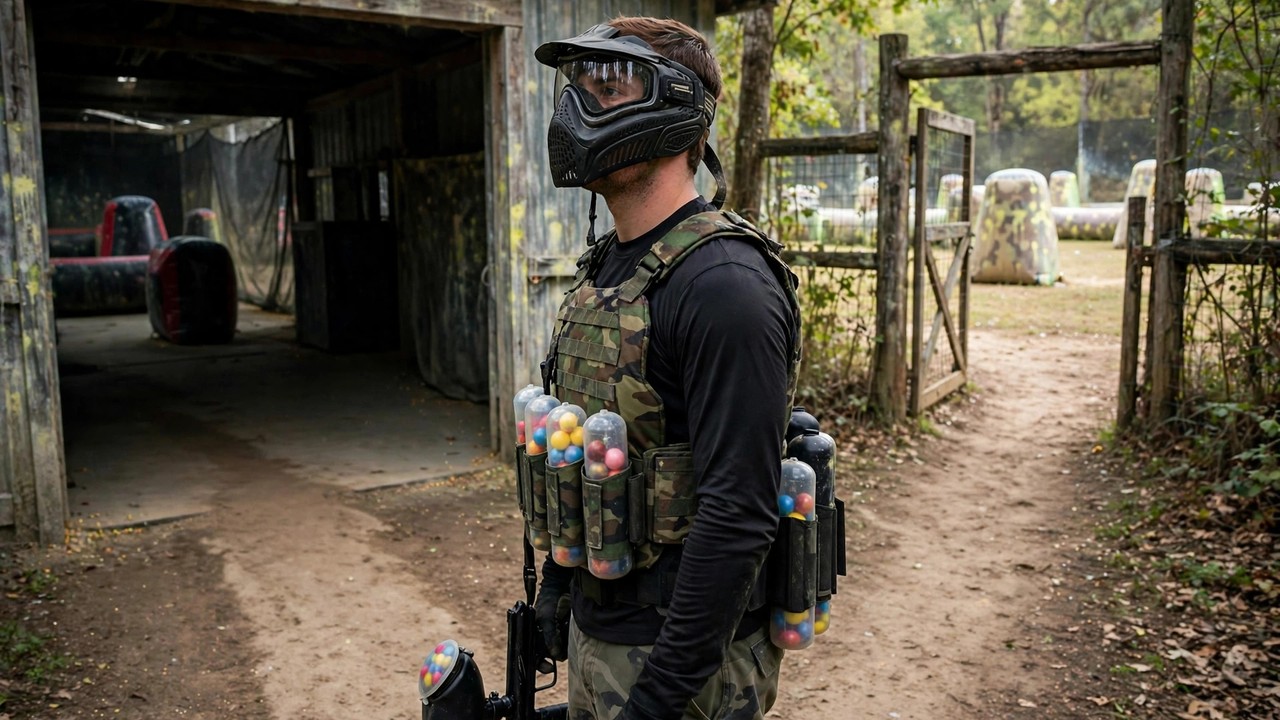
For a first game, either works, and the honest tiebreaker is logistics: the well-reviewed field you can actually get to beats the theoretically better one. Choose indoor when weather or daylight is against you, when your group wants short intense games, or when you want repetitions that build skill quickly. Choose outdoor when you want the full version of the sport, varied fields, longer games, room to move, and the woods experience that made paintball what it is. Players who fall in love with the game typically settle into a rhythm of outdoor weekends and indoor winters, which is less a compromise than the best of both calendars.
The Hybrid Options in Between
The line between the two keeps blurring. Many outdoor parks now run a covered, lit speedball court that plays like an indoor arena on a rainy evening, and some urban facilities squeeze several themed arenas under one roof to fake outdoor variety. Two sensory notes complete the picture for first-timers: indoor arenas are louder, since marker fire echoes off walls and concrete in a way open air never produces, and the closed environment concentrates the smell of paint and compressor oil that outdoor fields disperse. Neither is a problem; both are part of knowing what you are walking into before you pick a venue for a group.
Frequently Asked Questions
Space. Indoor arenas run compact fields with close, fast engagements, while outdoor parks range from speedball courts to woods measured in acres, which changes pace, tactics, and feel.
Engagements are closer, but indoor arenas compensate with lower velocity caps, often 250 to 280 fps, and some run low-impact .50 caliber gear. In practice the sting is comparable.
Yes. Indoor arenas run all year regardless of weather, and outdoor winter play is possible too, with brittle paint and heavier clothing changing the game somewhat.
Both are beginner-friendly at a well-run field. Indoor offers consistency and quick skill-building repetitions, while outdoor offers the classic experience with more room to move.
Not reliably. Pricing is entry plus rental plus paint in both settings; indoor sells shorter blocks suited to weeknights, while outdoor sells longer days with better per-hour math.