Last updated on September 28th, 2026 at 08:45 pm
Paintball bunkers are the cover pieces that define a field, and in modern tournament-style play they have names every player is expected to know: the snake, the dorito, the can, and a supporting cast of bricks, temples, and carwashes. The names are not slang for its own sake. They are the coordinate system for team communication, because a call like two in the snake only works if everyone knows what and where the snake is.
Here is the standard vocabulary, what each bunker is like to play, and how they fit together into a field layout.
The Inflatable Bunker Vocabulary
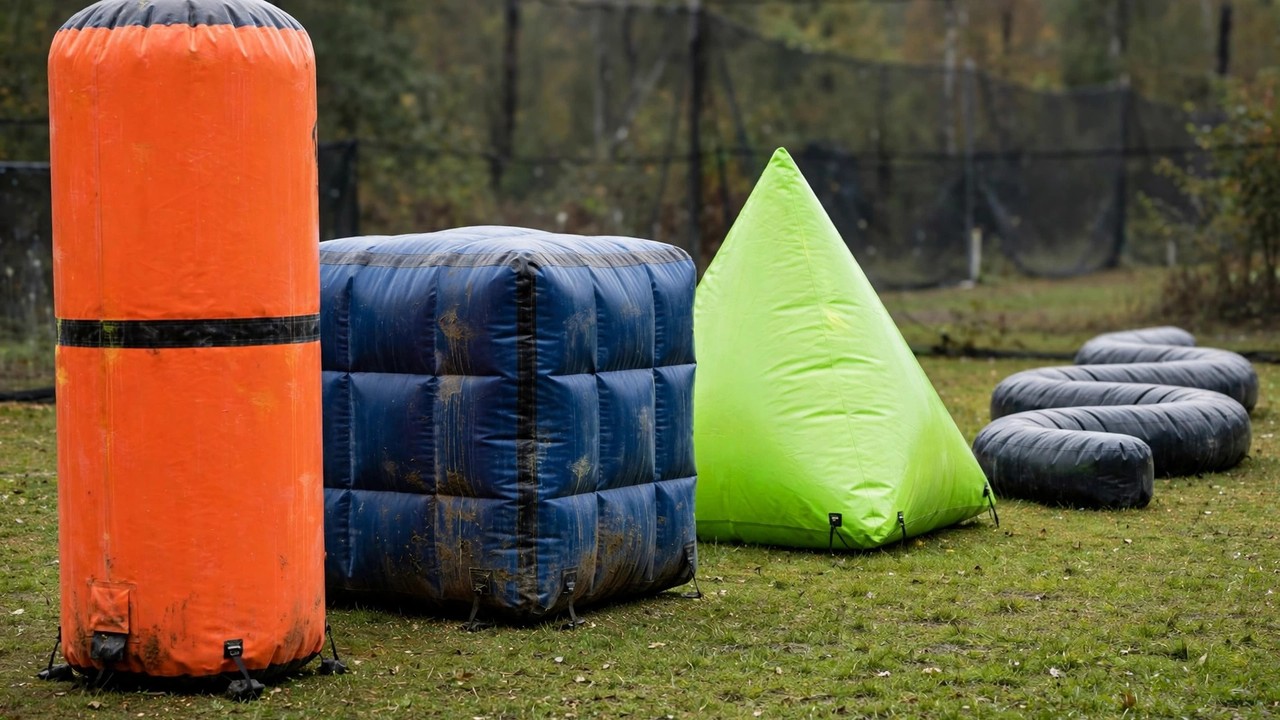
Modern speedball and tournament fields use inflatable bunkers, tough vinyl shapes staked to turf, and the shapes are standardized:
- Snake: a chain of long, low sections running along one sideline. Played lying down or crawling, it lets a player move up the field while staying under most shooting lanes. It is the most technical real estate on the field.
- Dorito: a three-sided wedge, named for the chip it resembles, usually forming a column of cover on the opposite sideline from the snake.
- Can: an upright cylinder big enough to stand behind, common in the middle of the field. Large lying-down cylinders are rollies.
- Brick: a low rectangular box, played kneeling.
- Temple and X: larger multi-faced center structures that anchor mid-field fights.
- Carwash: an arch you can shoot through or move under, and A-Frame: a peaked tent shape, both common center-line pieces.
- Home or Back Center: the large bunker at each team’s starting end, the anchor for back players.
Tournament fields are laid out mirror-symmetric so neither team starts with an advantage, with the snake down one tape line and the doritos down the other. That geometry is why positions in paintball are named after bunkers: the snake player and the dorito player literally live in those pieces, while mid and back players rotate through cans, bricks, and home.
How Different Bunkers Are Played
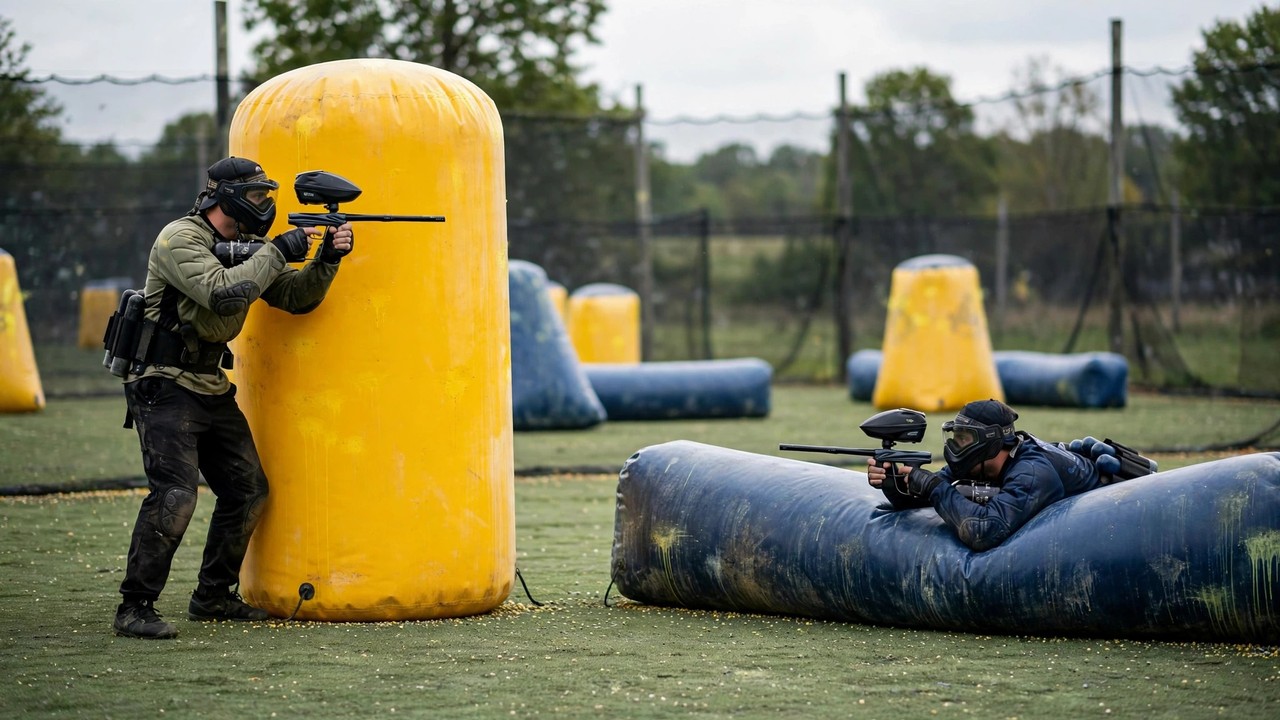
Each shape teaches a different skill. Low bunkers like the snake and bricks are about profile control, staying small, popping up for half-second looks, and snap shooting from unpredictable spots along their length. Standups like cans and temples are about edging, playing the vertical edge of the bunker with as little body exposed as possible, and about denying the wrap, since a tall bunker can be attacked around either side. Arches and A-frames add a third dimension, with shooting lanes through and under them that low bunkers never offer.
Bunkers are also where the sport’s most aggressive move happens: the bunkering run, where a player sprints to an occupied bunker and shoots the occupant at point-blank range over or around it. We cover that play, when it works and when it is suicide, in our guide to bunkering in paintball.
One practical note that surprises new players: inflatable bunkers are soft. Sliding into one or shouldering through a gap hurts far less than hitting a tree, which is part of why speedball can be played at full sprint. The bunkers are kept firmly inflated so they hold their shape and do not flap in wind, and referees pause points when one deflates, since a sagging bunker changes every shooting lane around it.
Teams walk the field before a match and name every bunker, standard names plus positional tags like snake one, snake two for sections up the tape. During the point, information flows in those coordinates: one in the dorito side can, back center moving, snake corner clear. The whole system, including the counting conventions and how to keep talking under fire, is the subject of our paintball callouts guide. Learn the names first; the rest of field communication is built on them.
Woodsball Cover Is a Different Language
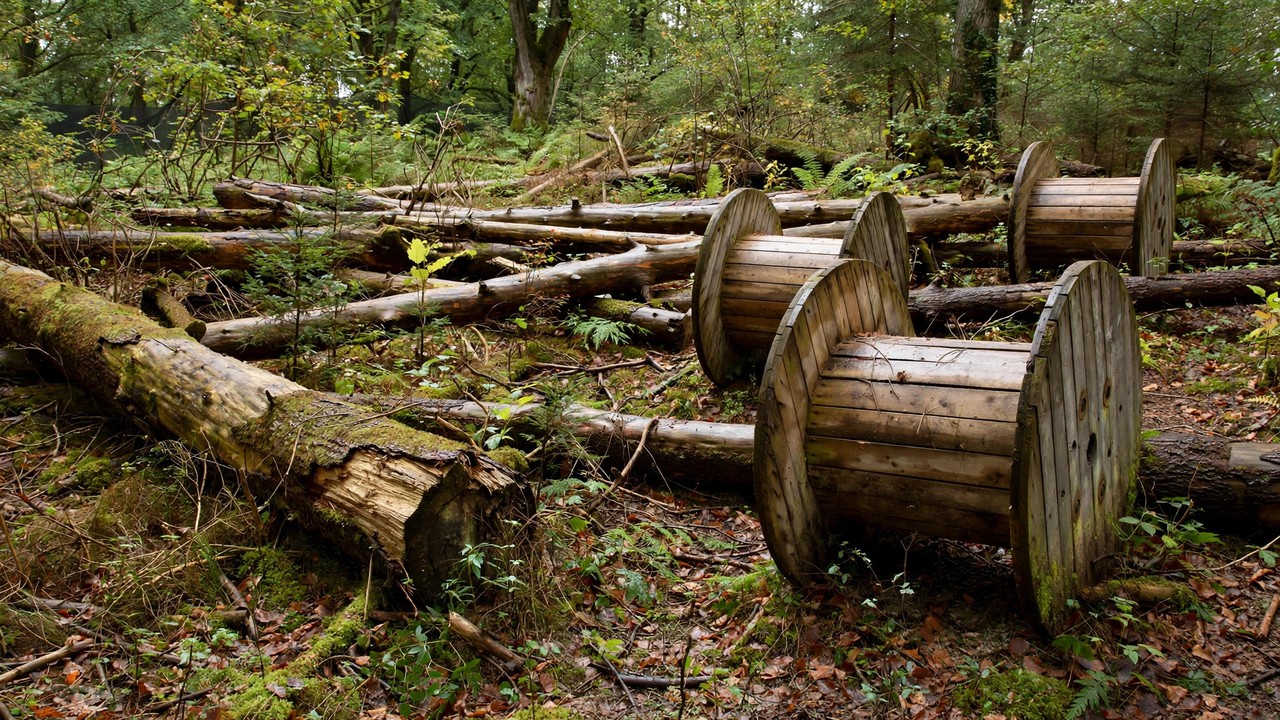
Outside the airball arena, cover goes back to nature and improvisation: trees, berms, creek beds, plywood forts, cable spools, and pallet walls at woodsball and scenario fields. The names get local and descriptive, the church, the crashed bus, the twin pines, and part of learning a woods field is learning its landmarks. The tactical principles transfer directly, though: low cover still rewards a small profile, tall cover still gets wrapped from both sides, and the team that shares a common map of the field still beats the team that plays it as strangers.
However the cover is shaped, remember that bunkers stop paintballs, not information. Staying tight behind one piece too long tells opponents exactly where you are, and the players who win points treat bunkers as waypoints in a plan of movement, not as homes. Our guides to the breakout and laning show how the first ten seconds of a point decide who gets which bunkers at all.
Frequently Asked Questions
A chain of long, low bunker sections along one sideline, played lying down or crawling. It lets a player advance under most shooting lanes and is considered the most technical position on the field.
The bunker is a three-sided wedge shaped like the tortilla chip. Doritos usually form a column of cover down the sideline opposite the snake.
Tournament bunkers are inflatable tough vinyl shapes staked to turf. Woodsball and scenario fields use natural and built cover such as trees, berms, plywood forts, and pallet walls.
Layouts are mirrored so neither team starts with a positional advantage. The snake runs down one tape line and the doritos down the other, which is why positions are named after them.
Teams walk the field before a match and agree on names and numbering, like snake one and snake two, then report opponents in those coordinates during the point.