Last updated on September 29th, 2026 at 04:53 am
Paintball has fewer rules than most people expect, and they come down to three things: keep everyone safe, play honestly, and do not be difficult to play with. Everything a marshal tells you in the safety briefing is a version of one of those.
This guide covers the rules you will actually meet at a field, in plain language, along with the numbers behind them. Specifics vary between venues, so treat this as the standard and let the local briefing override it. If you have not played at all yet, start with our guide on playing paintball for the first time.
The Safety Rules That Are Never Negotiable
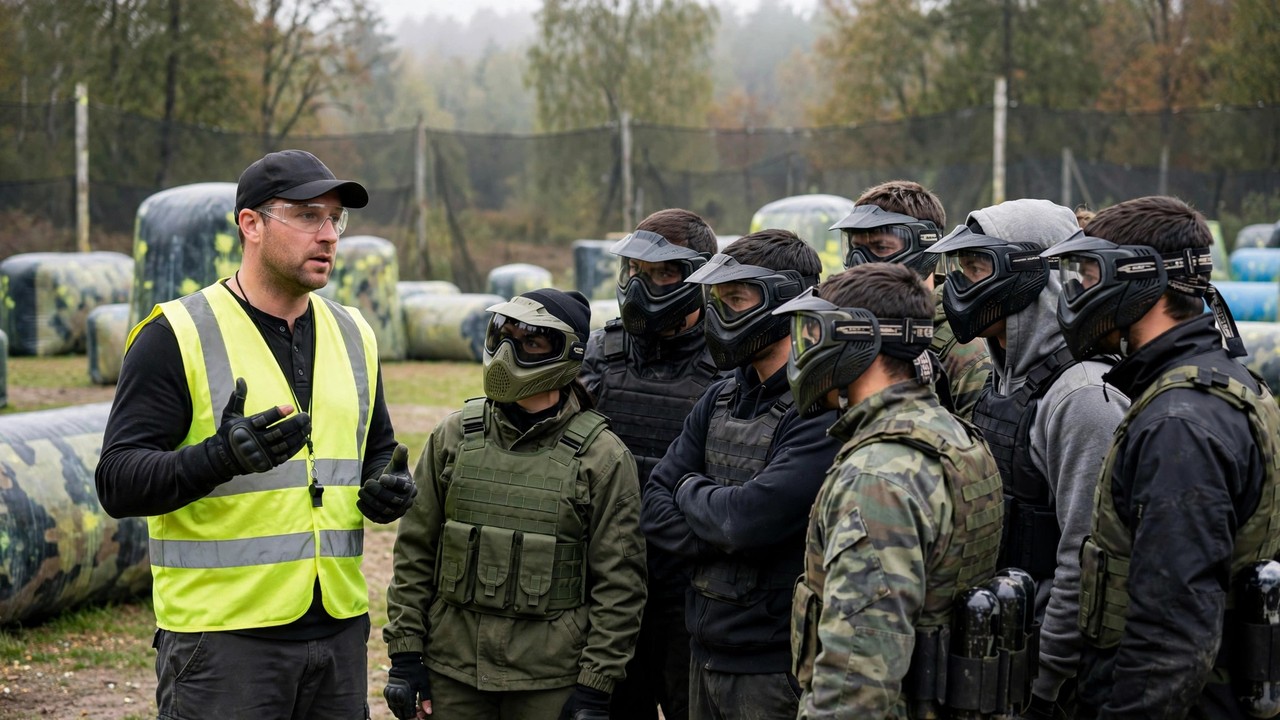
Three rules exist to prevent injury, and fields enforce them without discretion. Breaking any of them will get you removed from the field, usually without a refund.
- Your mask stays on. On the field, at all times, no exceptions. Not to wipe a fogged lens, not to scratch your face, not for a second. If you need to clear your mask, call a marshal and leave the playing area first.
- Barrel cover on when off the field. A barrel cover, sometimes called a barrel sock or plug, goes on your marker the moment you leave the playing area and stays on until you are back in it.
- Safety on in the staging area. Markers are treated as live at all times, even when you are certain they are not.
Eye protection is the one that matters most. Paintball masks are built to a standard that ordinary safety glasses do not meet, which is why fields will not let you substitute your own eyewear.
Velocity Limits and the Chronograph
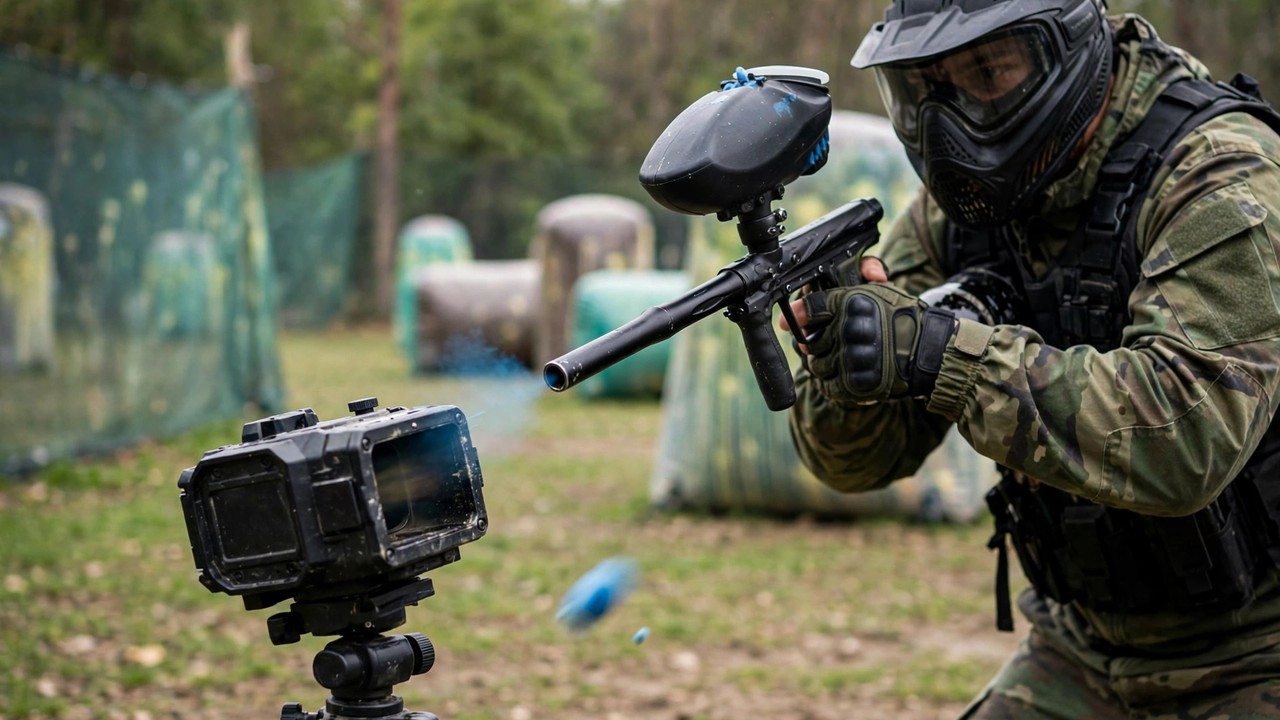
Every marker has to shoot below a set speed. Most fields cap muzzle velocity at 280 feet per second, and some indoor or close-quarters venues drop that to 250 fps because engagements happen at shorter range.
That number is not arbitrary. At around 280 fps a paintball still carries enough energy to break reliably on impact, which is what makes the honour system work, while keeping the impact within the range that properly protected players can absorb without serious injury.
Before you play, your marker is tested on a chronograph to confirm it is under the limit. Shooting over the cap is treated as a serious infraction rather than a technicality, and it can get you ejected. If you own your marker, expect to re-chrono whenever you change air systems or paint.
Minimum Engagement Distance and the Surrender Rule
Getting shot from across the field is fine. Getting shot from three feet away is not, because impact energy does not drop much over that distance. Fields deal with this by setting a minimum engagement distance, inside which you are expected to offer a surrender instead of firing.
| Field type | Typical minimum engagement distance |
|---|---|
| Indoor and close-quarters | Around 10 feet |
| Speedball | Around 15 feet, with specific bunkering rules |
| Woodsball | Around 20 feet |
Offering a surrender means calling out clearly, usually with a word like surrender or a barrel tag, and giving the other player the chance to declare themselves out. Most players take it. If they do not, and they turn on you, you are generally clear to shoot. The rule exists to protect people, not to hand out free eliminations, so do not use a surrender call as a way to sneak closer.
How You Get Out
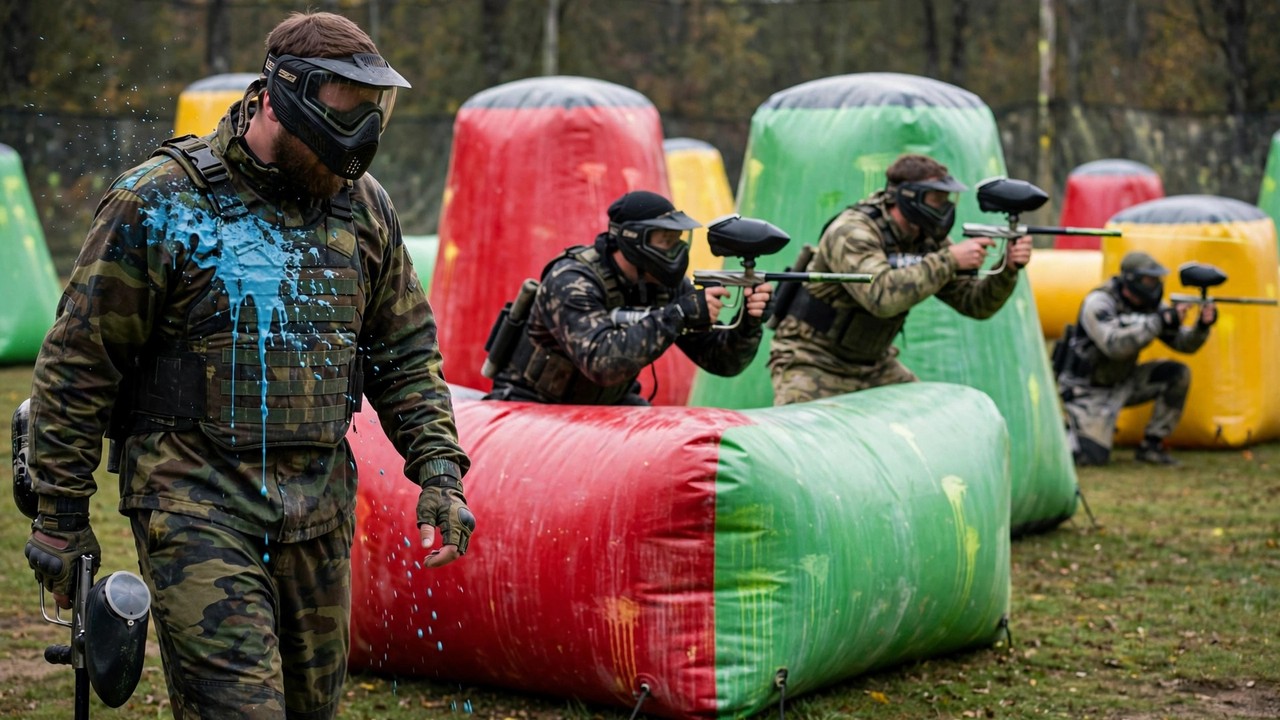
You are out when a paintball breaks on you and leaves a solid mark, roughly nickel-sized, anywhere on your body, clothing, gear or marker. A ball that bounces off without breaking does not count, and paint that lands on you after bursting on something nearby usually does not either unless it forms a solid mark.
When it happens, shout that you are hit, raise your marker or a hand so everyone can see you, and walk off the field by the shortest safe route with your barrel covered. Our dedicated guide on what happens when you get hit covers paint checks, splatter and the edge cases in detail.
Penalties and What Gets You Removed
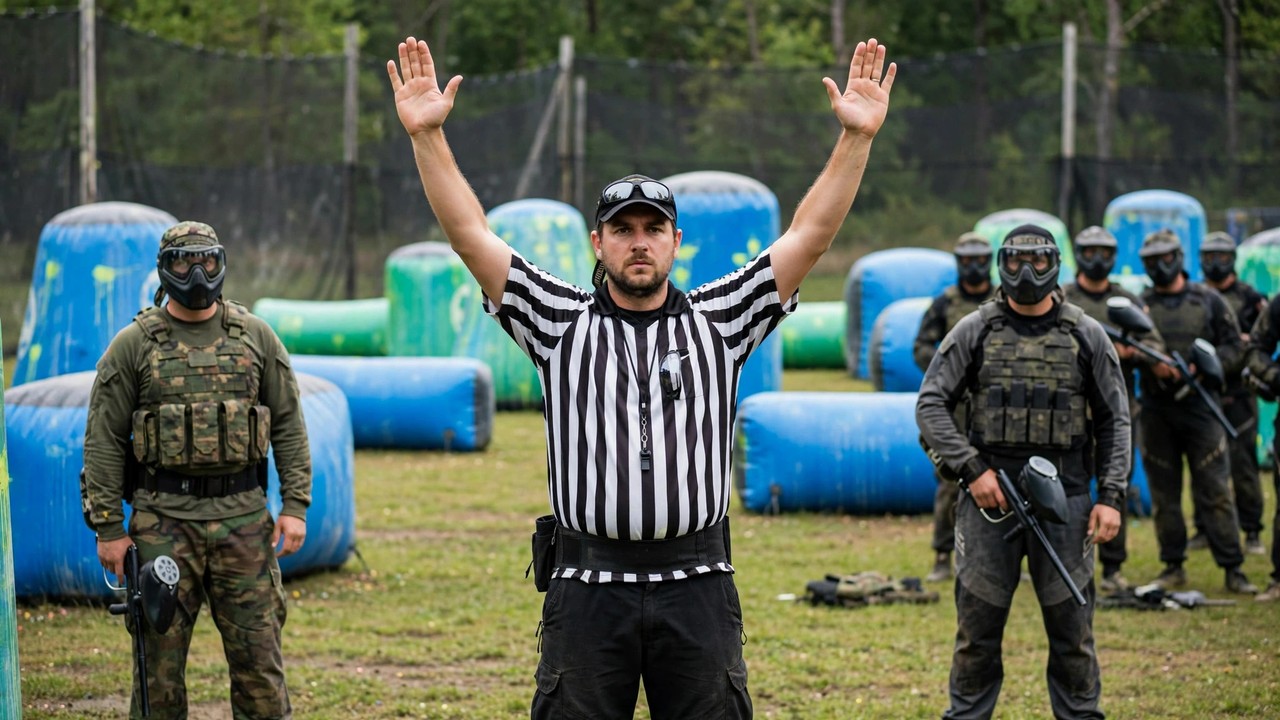
Recreational fields are relaxed about most things and unforgiving about a short list. Wiping paint off to stay in the game is cheating and is treated as such. Overshooting, meaning continuing to fire at a player who is clearly out, is the other reliable way to be sat down.
Repeat either and you can expect to be ejected for the day without a refund. In tournament play the penalties are structured rather than discretionary, and a team can lose players from the field or forfeit points outright. Our guide to paintball etiquette covers the unwritten side of this.
Rules That Change From Field to Field
Several rules are genuinely local, and assuming the version you played last time still applies is how people get into arguments.
- Whether gun hits count. Most fields and tournaments count a hit anywhere on you or your equipment, but some variations do not count marker hits.
- Whether splatter counts. Some fields count splatter from a ball bursting on a nearby object if the mark is quarter-sized or larger.
- Blind firing. Most fields prohibit shooting without looking, because you cannot control where the paint goes.
- Firing modes. Some fields restrict electronic markers to semi-automatic only.
- Age limits. Standard play usually starts around 10, with low-impact options for younger players. See how old you have to be to play.
Ask a marshal before the game rather than guessing during it. Nobody minds the question, and it is far better than discovering the local rule in the middle of a dispute. Our guides to paintball game modes and what to expect on a rec ball day cover what else varies between venues.
Frequently Asked Questions
Keep your mask on at all times on the field, keep a barrel cover on your marker off the field, shoot under the field velocity limit, call your own hits honestly, and offer a surrender instead of firing at very close range.
Most fields cap muzzle velocity at 280 feet per second, and some indoor or close-quarters venues use 250 fps. Your marker is tested on a chronograph before you play, and shooting over the cap can get you ejected.
It varies by field type. Indoor and close-quarters venues typically use around 10 feet, speedball fields around 15 feet with specific bunkering rules, and woodsball fields around 20 feet. Inside that distance you offer a surrender rather than shooting.
If you get close enough to an opponent that shooting would hurt unnecessarily, you call out a surrender or barrel tag and give them the chance to declare themselves out. Most players accept it. It exists to protect people, not to collect easy eliminations.
Removing your mask on the field, shooting over the velocity limit, wiping paint off to stay in the game, and overshooting players who are already out. Repeat offences usually mean ejection for the day without a refund.