Last updated on September 28th, 2026 at 08:45 pm
A commercial paintball field is a more organized place than most first-timers picture: a check-in desk with waivers, a staging area full of gear bags, an air station, a chronograph, and referees who run the day on a schedule. This guide is a tour of the facility itself, so the place feels familiar before you ever park. For the minute-by-minute of actually playing your first games, our guide to playing paintball for the first time is the companion piece.
Check-In: Waivers, Payment, and the Safety Briefing
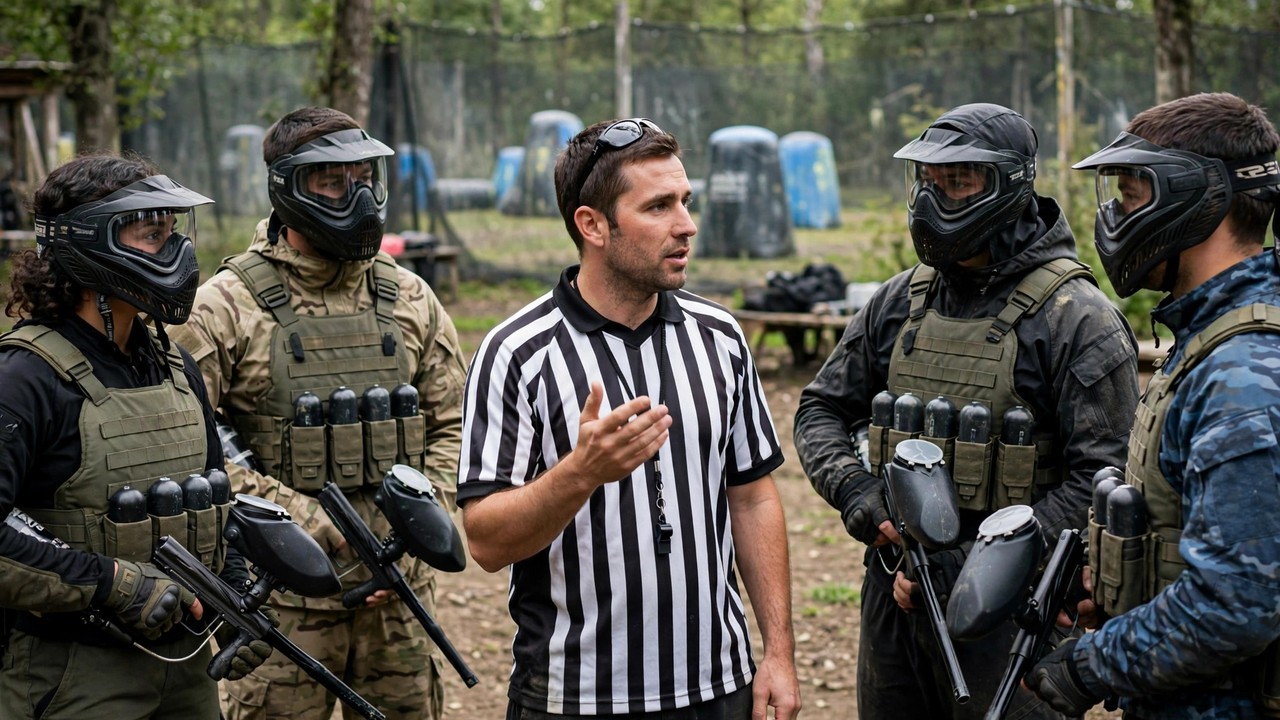
Every field starts you at a counter. You will sign a liability waiver, players under 18 need a parent or guardian’s signature, and pay for your entry, rental package, and paint. Arrive 20 to 30 minutes before your session, because the waiver line on a busy Saturday moves slower than you expect.
Before anyone plays, staff run a safety briefing. It covers the non-negotiables, masks on past the netting, barrel covers on outside the fields, no blind firing, surrender distances if the field uses them, and how referees call eliminations. Fields take this talk seriously, and so should you: it is the same set of rules that gives paintball its strong safety record.
The Staging Area: Home Base for the Day
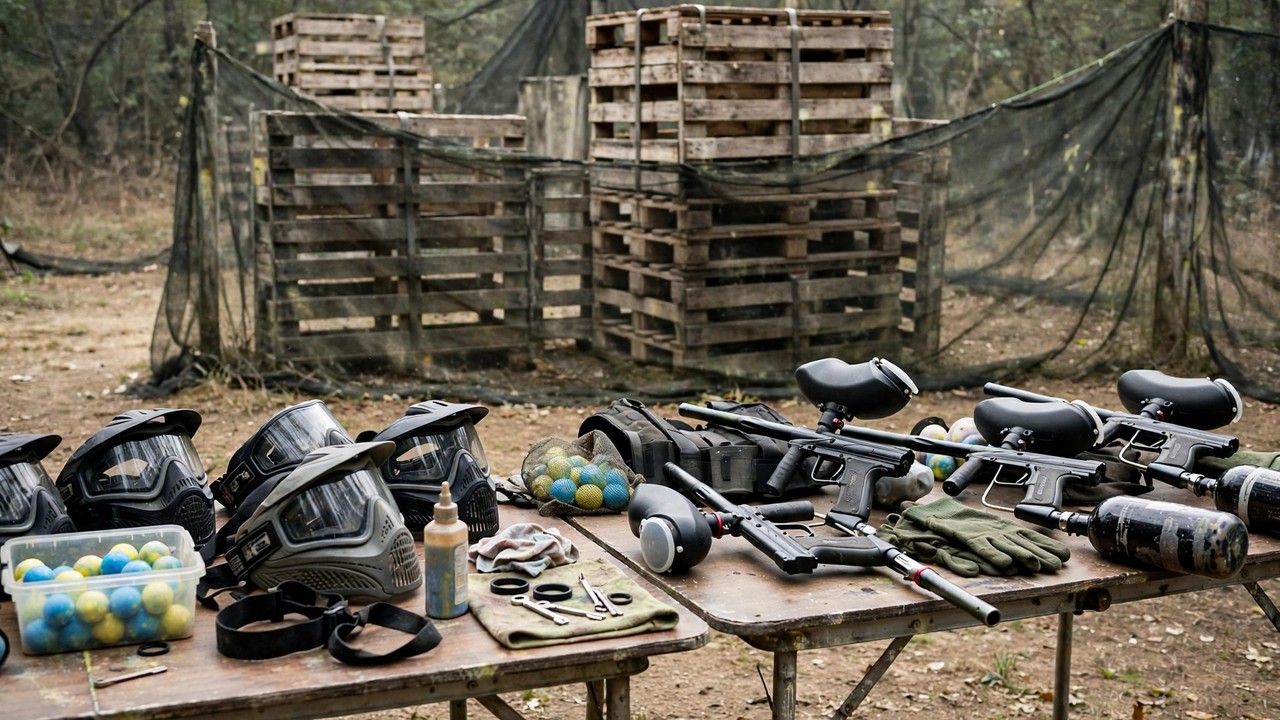
The staging area is the picnic-table zone behind the netting where everyone keeps their gear, reloads pods, eats, and swaps stories between games. It is the true social heart of the field. Claim a spot of table when you arrive, and note that masks can come off here, but barrel covers stay on and markers stay pointed down. You will see everything from rental groups to tournament teams prepping side by side, and watching the regulars is a free education in what gear is worth bringing.
Rentals, Air, and the Chronograph
The rental counter hands you a package that covers the essentials: a marker, a mask, a hopper, and an air tank, with paint usually sold separately by the bag or case. Field staff set rental velocities and handle any mid-day problems, so if your marker leaks or shoots oddly, walk it back and they will swap it without drama.
Two stations matter to players with their own gear. The air station fills HPA and CO2 tanks between games, typically included with entry or sold as all-day air. The chronograph is where every marker gets its velocity checked before play, and referees will re-chrono guns during the day. Watching your marker read under the field cap is your reassurance that the same discipline is being applied to everyone shooting at you.
The Fields Themselves
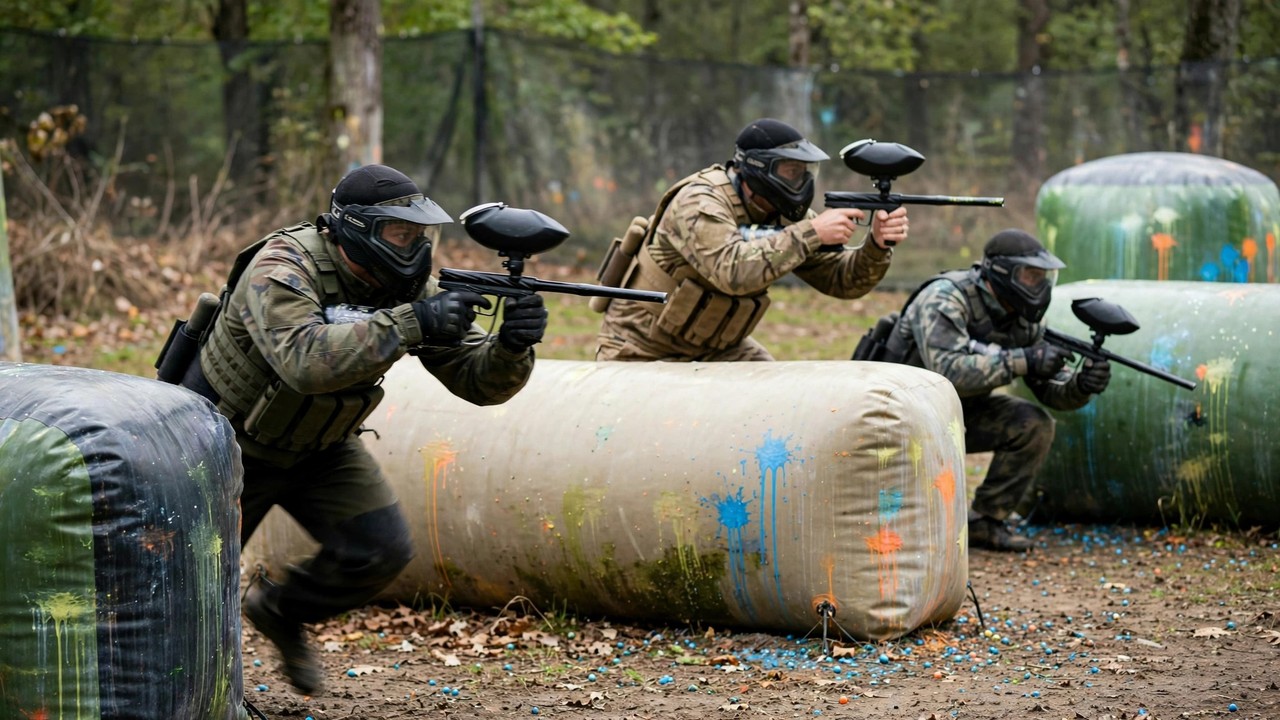
Most facilities run several distinct fields and rotate groups through them: an inflatable speedball court, a woods course, and often themed fields with forts, villages, or vehicles. Netting or tall mesh separates every field from the walkways, and each has marked entrances, boundary tape, and a netted deadbox where eliminated players wait out the game. Referees walk each field, start and end every game, and handle paint checks. A typical open-play day runs games of a few minutes each with breaks between, and how that rotation feels to play is exactly what our guide to rec ball describes.
The Pro Shop and the Snack Counter
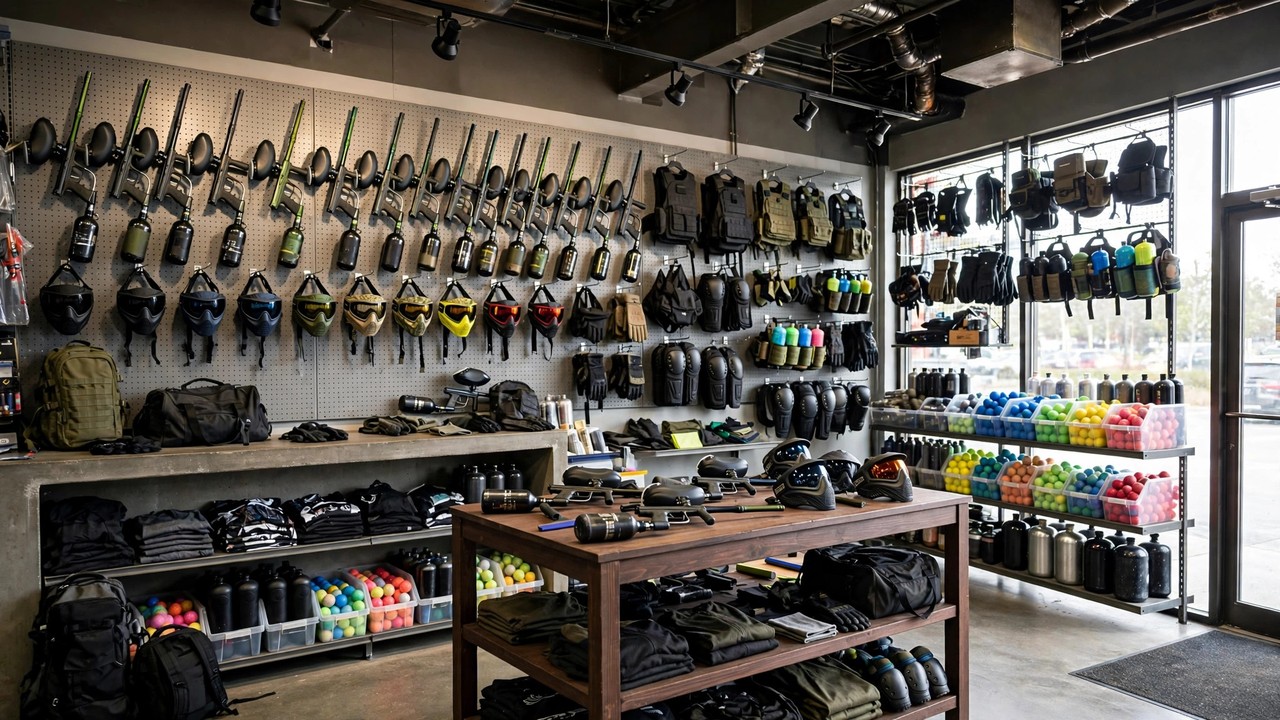
Most fields run a small shop stocked with paint, batteries, o-rings, squeegees, and a wall of gear, plus water and snacks. Two practical notes: many fields are field-paint-only, meaning you must buy paint there rather than bring your own, and staying hydrated matters more than people expect, because a day of sprinting in long sleeves is real exercise. Budget accordingly; our breakdown of what a paintball day costs shows where the money actually goes, and paint is the biggest variable.
The People: Referees, Regulars, and Rental Groups
A good field’s staff set its whole culture. Referees are safety officers first and rule-keepers second, and the good ones also coach first-timers mid-game, pointing out open bunkers and reminding new players to keep moving. The crowd is friendlier than the sport’s reputation suggests: regulars generally look after walk-ons, mixed groups are normal, and birthday parties and bachelor parties share the schedule with practicing teams. If a term flies past you in the staging area, our paintball glossary translates.
By the end of your first hour, the rhythm of the place makes sense: gear up in staging, chrono in, play a game, hydrate, reload, repeat until your paint or your legs run out. The facility is built to make that loop easy, and knowing the layout in advance means you spend your first visit playing instead of finding your footing.
Frequently Asked Questions
Walk-ons are welcome at most fields on open-play days, but booking guarantees a spot and groups should always reserve. Arrive 20 to 30 minutes early either way for waivers and gear.
The netted-off zone with tables where players keep gear, reload pods, eat, and rest between games. Masks can come off there, but barrel covers stay on.
Yes. Rental packages include a marker, full-face mask, hopper, and air tank, with paint sold separately. Fields also maintain and swap rentals that act up during the day.
Many fields are field-paint-only and require you to buy paint on site. Check the field's policy before you go, because outside paint can be turned away at the door.
Open-play sessions typically run a half day or full day, with individual games lasting a few minutes and breaks between them. Most players are pleasantly worn out after three to four hours.