Last updated on September 28th, 2026 at 08:59 pm
Every paintball player you will ever meet had a first day, and almost all of them will tell you the same two things about it: the day was less painful than they had feared, and considerably more fun than they had expected. This guide is the map for getting from curious to comfortable, what the sport actually is, what a day costs, what to wear, and the order to learn things in.
It links out to deeper guides at every step, so treat it as the front door rather than the whole house.
What You Are Actually Signing Up For
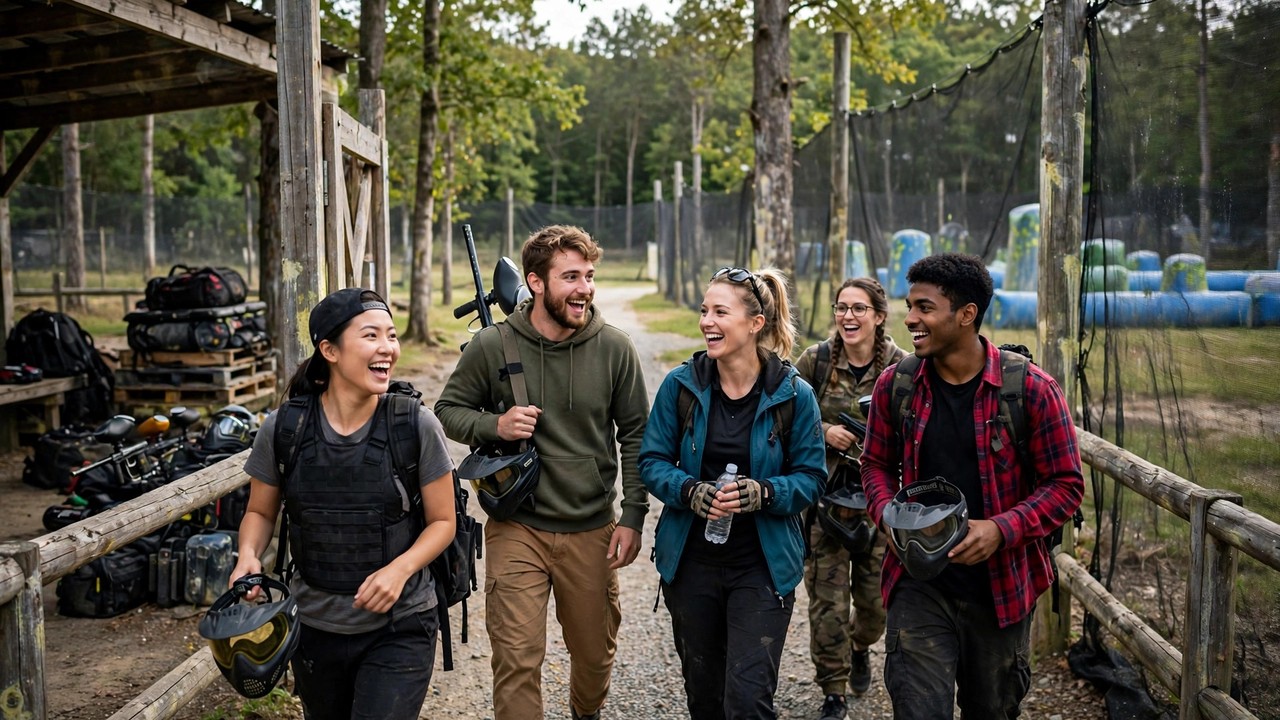
Recreational paintball is a series of short, refereed team games, ten to twenty minutes each, on a field of natural or artificial cover, with rental gear handed to you at check-in. Most first days happen on woodsball-style fields, and the walk-on format is called rec ball; the full rundown of a day is in what to expect on a rec ball day, and the wider menu of formats, from tournament speedball to story-driven scenario weekends, is in the types of paintball.
The Three Questions Everyone Asks First
- Does it hurt? Less than the stories. A hit through clothing is a firm snap that fades in minutes, distance and layers matter far more than toughness, and the details are in how bad do paintballs hurt. If even that gives you pause, low-impact paintball cuts the impact by roughly two thirds.
- Is it safe? Statistically safer than most ball sports, provided one rule is treated as sacred: the mask stays on. The evidence is laid out in is paintball safe.
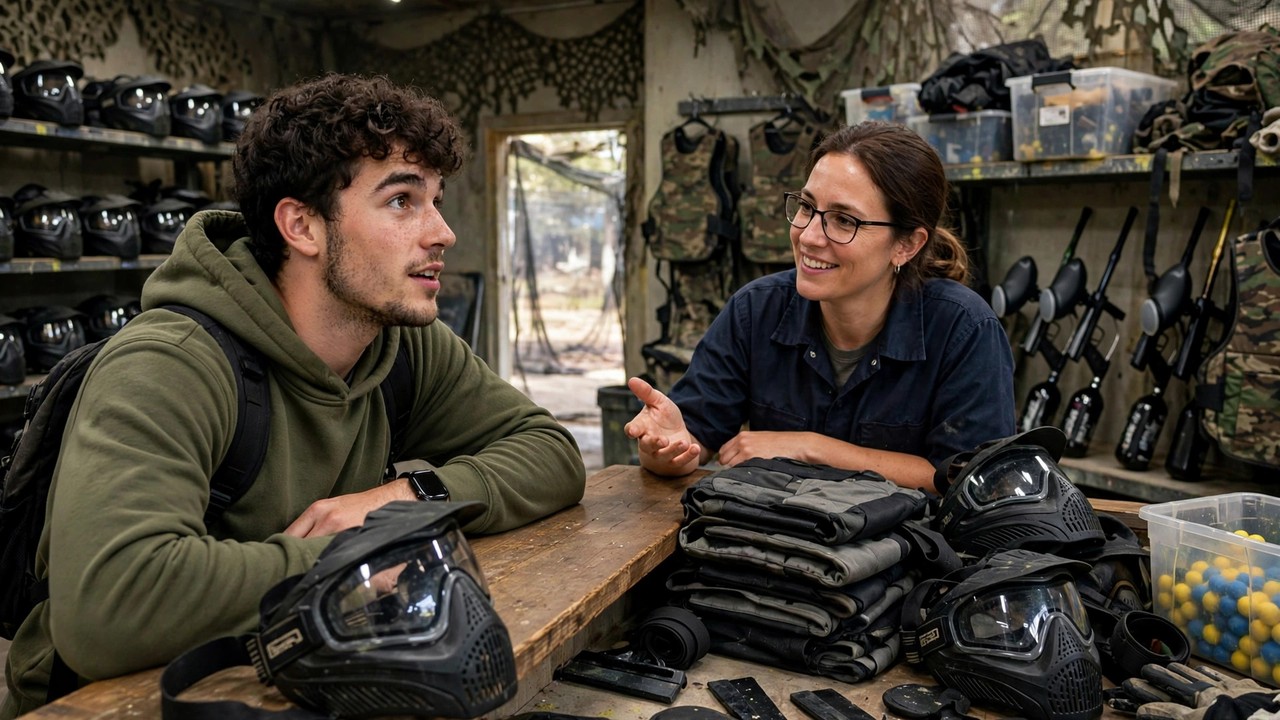
- What does it cost? A first rental day typically lands around 40 to 70 dollars with gear, air and starting paint, and paint is the variable that moves the bill. The breakdown is in how much paintball costs.
Before Your First Day
Three short reads cover the practical side. How to dress for paintball: long sleeves, long trousers, closed shoes, nothing you love. What to bring: water, a change of clothes, and very little else, because the field supplies the gear. And how to play paintball for the first time walks the whole first day from waiver to final whistle, including the chrono check and the briefing.
If anyone in your group is under 10, plan around the age tiers: standard play usually starts at 10, low-impact around 7 or 8. The specifics are in how old you have to be and paintball for kids.
The Rules You Need on Day One
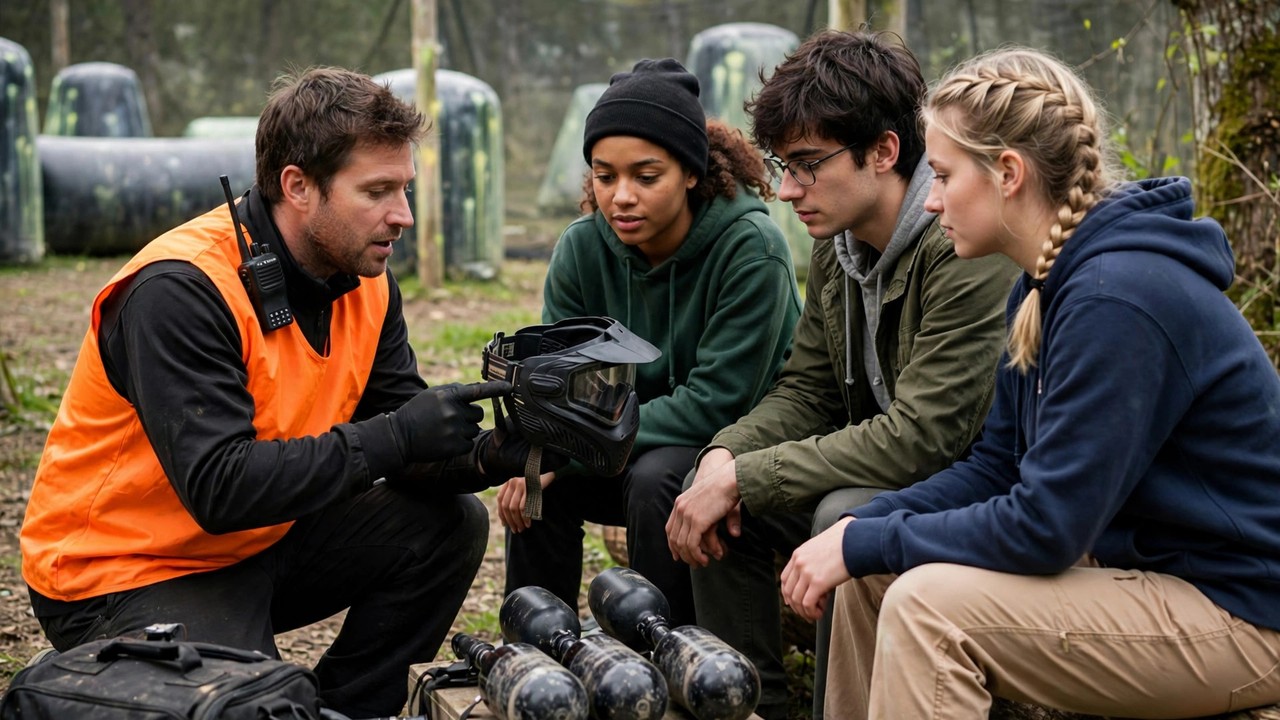
Only three carry real weight. The mask never comes off on the field. When paint breaks on you, you call yourself out, raise a hand, and walk off with your barrel covered; the etiquette of hits, bounces and paint checks is in what happens when you get hit. And inside close range, you offer a surrender rather than shooting. Everything else is local flavour, covered in the rules of paintball and the briefing your marshal gives.
Playing Your First Games Well

- Stay behind cover and move less than instinct says. The players eliminated first are the ones standing in the open.
- Talk. Calling what you see is the cheapest way to be useful before your shooting catches up; see communication and callouts.
- Shoot in short, aimed bursts rather than hosing; how to aim a paintball gun covers the both-eyes-open method.
- Pair up. Two beginners covering each other outlast four lone heroes.
After the First Day: The Sensible Path
Resist buying gear immediately. Play a few rental days first, learn which format you enjoy, and let the first purchase be a mask, because a comfortable thermal lens improves every game and rental masks are the weakest gear you will be handed; see the best paintball masks. Markers come later, chosen for the format you actually play, via the best paintball guns.
From there the skills ladder is waiting when you want it: how to win at paintball ties together the technique guides, from snap shooting to reading the field. Nobody needs any of it for a great first day. The mask, the three rules, and a willingness to get muddy are enough.
A Realistic First-Year Timeline
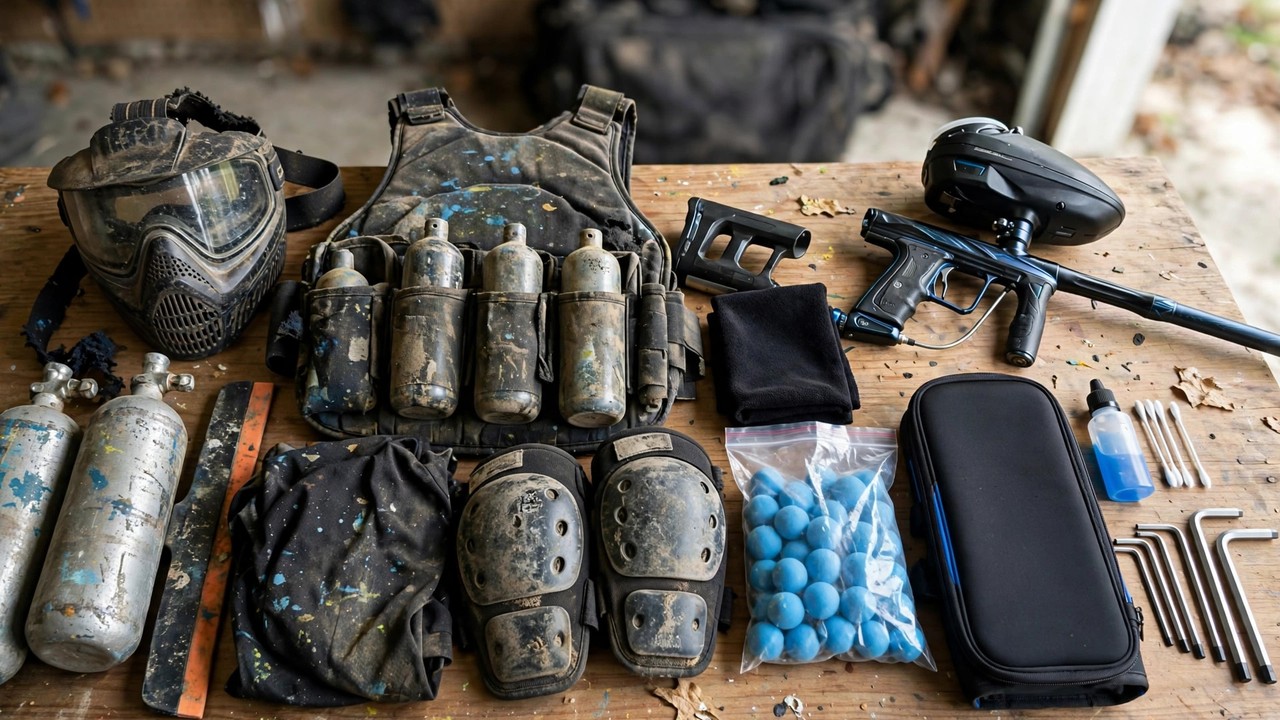
For most people the path looks like this. Games one to three: rental everything, woodsball fields, learning the rhythm of a point and discovering the sting was overrated. Games four to eight: your own mask, a preference forming between the woods and the arena, and the first time you talk during a game without being asked. After that, if the sport has hooked you, comes the first marker, chosen for the format you actually play rather than the one that looked coolest online, and maybe a look at the faster formats. There is no schedule and no pressure; plenty of happy players stay on rental gear for years. The point of the timeline is only this: spend money after experience, not before it.
Frequently Asked Questions
No. Rental gear, refereed games and simple modes mean a complete beginner is playing usefully within one game. The skills that take years, snap shooting and field reading, are optional depth, not entry requirements.
Nothing before a few rental days, and then a mask. A comfortable thermal-lens mask improves every game you ever play, while rental masks are the weakest gear fields hand out. Markers come later, chosen for the format you actually enjoy.
Typically around 40 to 70 dollars for entry, rental gear, air and a starting allocation of paint. Paint is the variable: shoot more, pay more.
Three: the mask never comes off on the field, call your own hits and walk off with a hand up, and offer a surrender instead of shooting at very close range. Everything else the marshal briefing covers.
Standard paintball usually starts around age 10 with a parent-signed waiver. Low-impact .50 caliber play opens the sport to children around 7 or 8, and at some fields 6.