Last updated on September 28th, 2026 at 08:59 pm
Yes, kids can play paintball, and the industry has quietly built a whole structure to make it work: age tiers, gentler equipment, and dedicated sessions. The version an eight-year-old plays at a birthday party is genuinely different from the one adults play, and knowing the tiers is most of what a parent needs.
This guide covers the ages, what low-impact paintball actually changes, what a typical kids’ session looks like, and the questions worth asking a local field before you book.
Kids Age & Format Finder
See what your child can play at their age, and what to ask the field.
The Age Tiers
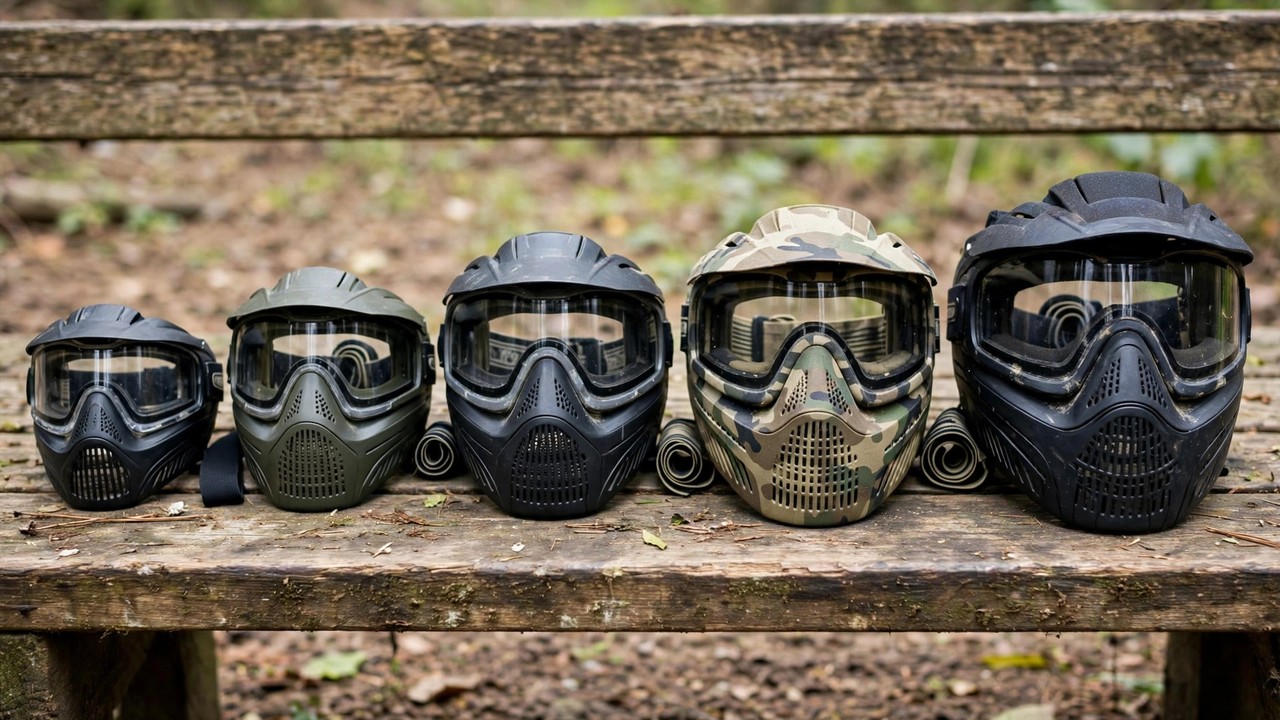
| Age | What is typically available |
|---|---|
| Under 6 | Generally too young for paintball; some venues offer gellyball-style alternatives |
| Around 6 to 8 | Low-impact .50 caliber at selected fields, some from age 6, most from 7 or 8 |
| 8 to 10 | Low-impact sessions widely available, often as dedicated kids' parties |
| 10 and up | Standard .68 caliber play at most fields, with a parent-signed waiver under 18 |
Every field sets its own lines, so treat the table as the pattern rather than a promise, and confirm locally. The full age breakdown, including buying versus renting rules, is in how old you have to be to play paintball.
What Low-Impact Changes
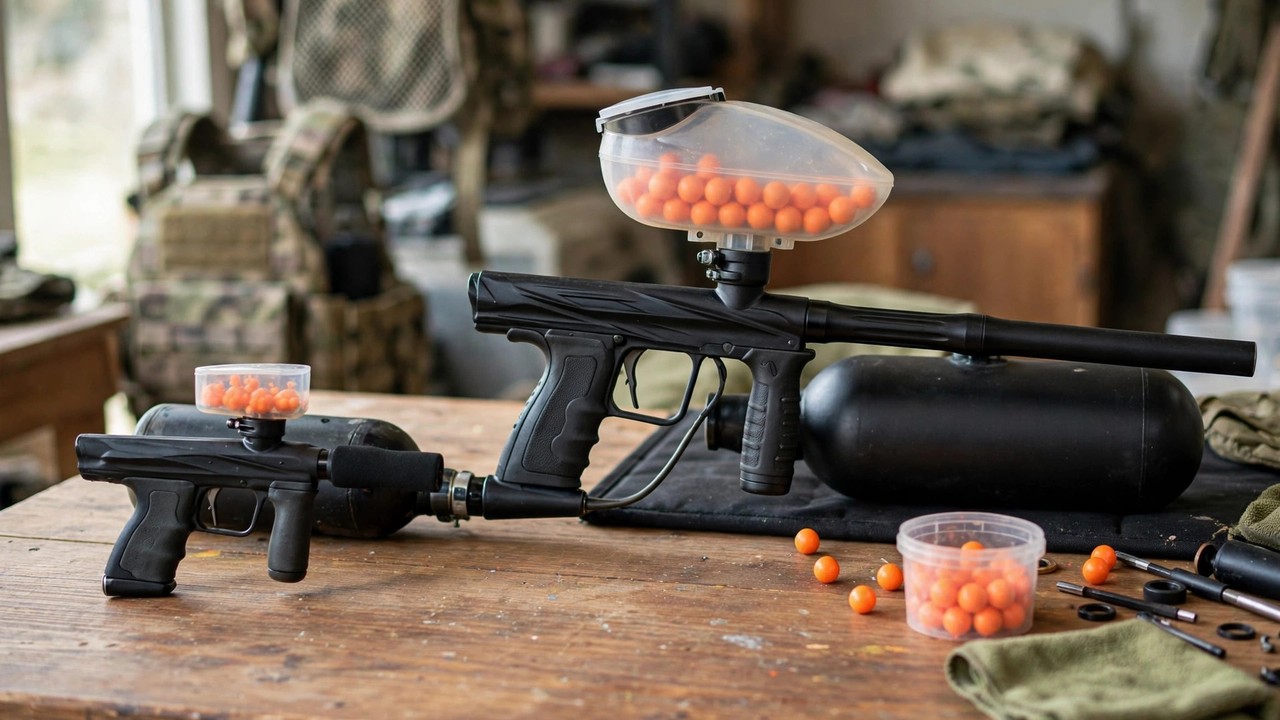
Low-impact paintball uses .50 caliber balls instead of the standard .68. The ball is roughly 30 percent smaller, weighs about a gram against three grams or more, and is fired at a lower velocity, around 200 to 250 feet per second instead of 280 to 300. Together that cuts the impact energy by roughly two thirds, which turns the sting most adults describe as a rubber-band snap into something closer to a tap.
The markers are lighter and easier for small hands too, which matters as much as the sting. A child who can comfortably hold and aim their marker has a completely different day from one wrestling with adult gear. The format has its own full guide in low-impact paintball explained.
Is It Safe for Them?
Played at a commercial field, paintball's overall injury rate is very low, around 0.2 injuries per 1,000 player exposures by the commonly cited industry figure, and the serious risk concentrates entirely in one behaviour: removing the mask. Kids' sessions are built around exactly that, with marshals whose main job is mask discipline, lower velocities, and smaller fields where staff can see everyone.
The parent's version of the safety briefing is short: the mask stays on, full stop, and the field's staff are there to enforce it. The evidence behind that rule, and the rest of the risk picture, is laid out in is paintball safe.
What a Kids' Session Looks Like
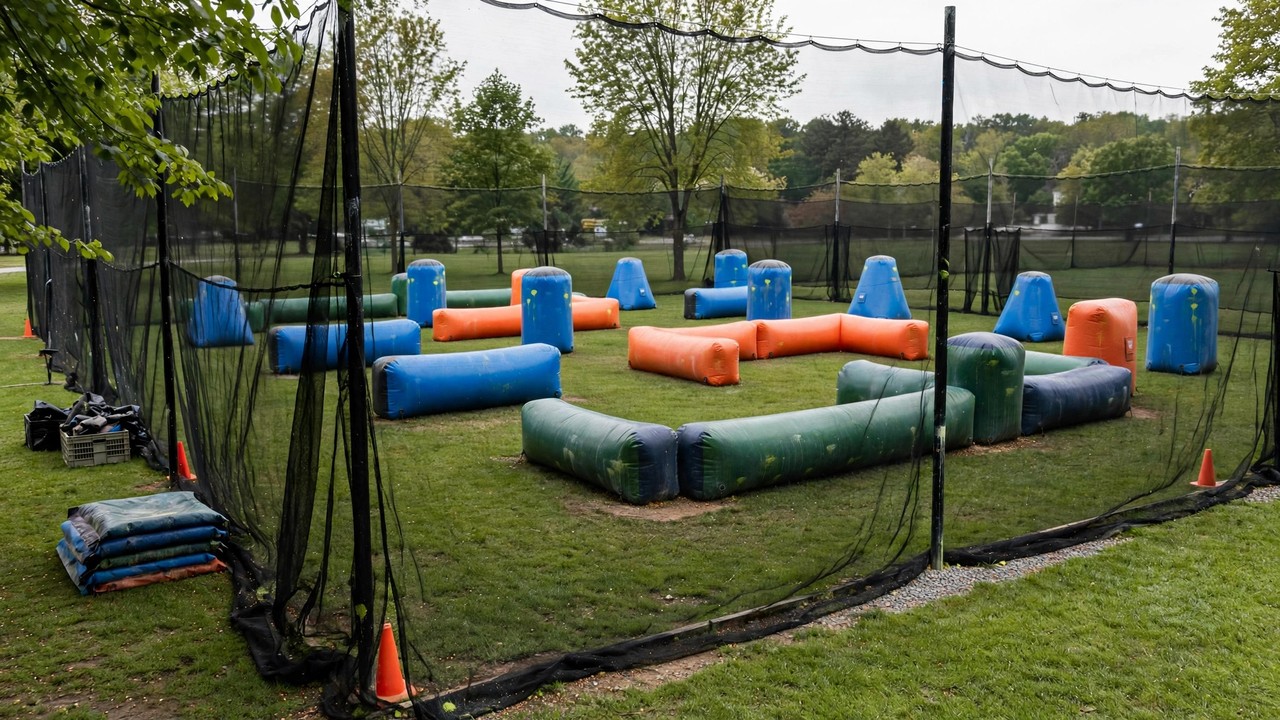
- Everything is provided. Marker, mask, air and usually a starting allocation of paint come with the package; kids need old clothes, closed shoes and a water bottle. See what to bring.
- Games are short and refereed closely. Ten-to-fifteen-minute rounds of simple modes, usually elimination or capture the flag, with breaks between.
- Groups are age-matched. Kids' sessions do not mix eight-year-olds with adult walk-ons; the field runs them separately.
- Expect dirt and grins. Mud is part of the product. Pack a change of clothes for the car.
Booking a Party: Questions Worth Asking
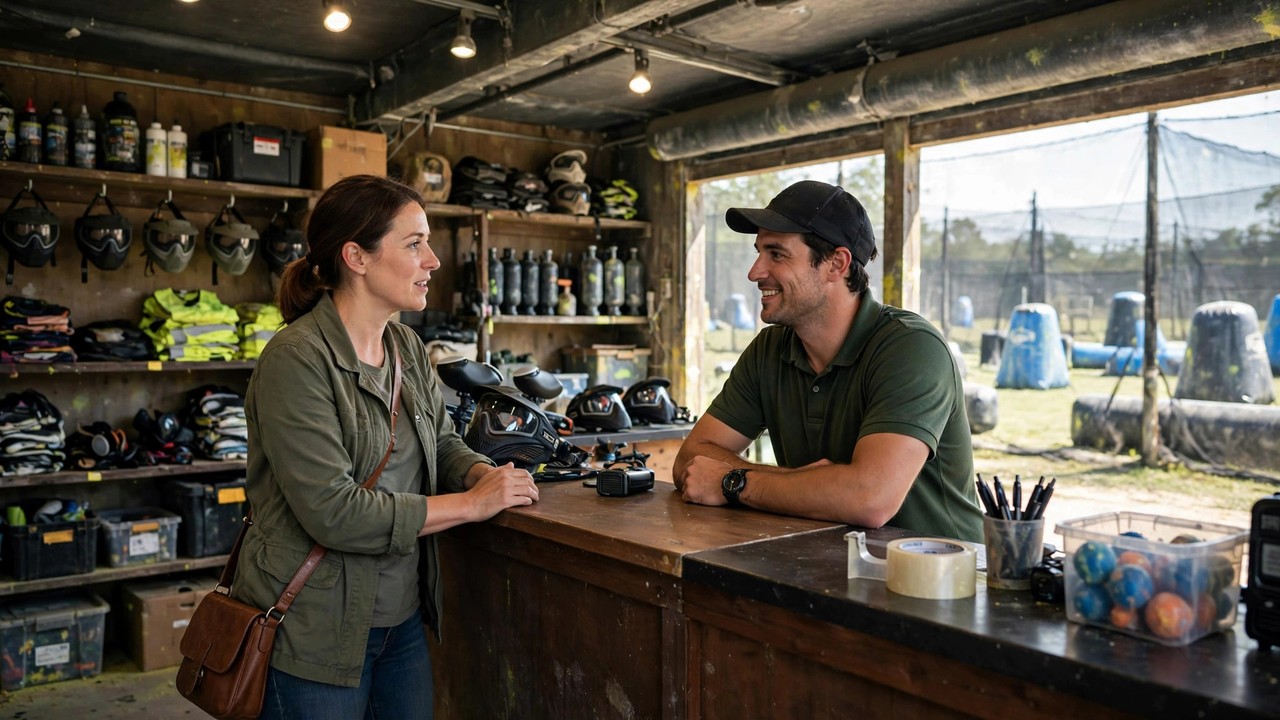
- What is the minimum age, and is the session low-impact .50 caliber?
- Will our group play privately, or be mixed with the public?
- How much paint is included, and what do extra bags cost? Paint is the real bill; see what paintball costs.
- How many marshals run a kids' group, and can parents watch?
- What happens if a child wants to sit out mid-session?
A field with good answers to those five questions is a field that runs kids' paintball properly.
Helping a Nervous Kid Enjoy It
The fear is almost always the sting, and the honest answer works better than reassurance: through a hoodie, a low-impact hit is a tap, and you can show them the maths, a one-gram ball at reduced speed. Dress them in layers, let them watch a round first if the field allows it, and tell them the two rules that make everything else easy: keep the mask on, and put a hand up if you want out. Most nervous kids are asking to go back by the second game. For the family-wide version of getting started, see paintball for beginners.
What Parents Usually Worry About Versus What Happens
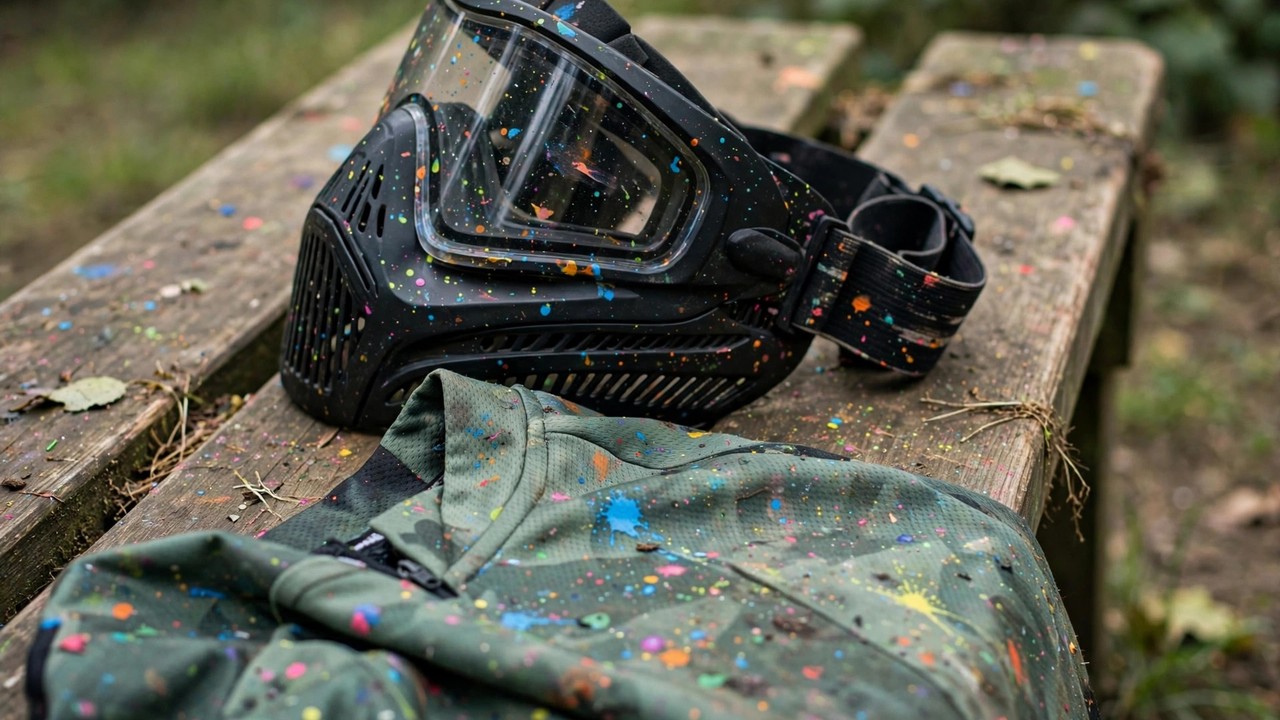
The worries parents bring are pain, danger and older players. The realities run milder on all three. Pain is managed by the low-impact format and layers, and most kids report the mud as the memorable part, not the hits. Danger is managed by the mask rule and the marshals, whose entire job at a kids' session is watching for exactly the behaviour a parent would watch for. And mixing with older players simply does not happen at a properly run field, because kids' groups are booked and fielded separately. The worry that turns out to be justified is stamina: a full session is more running than most children do in a normal week, so expect an exhausted, filthy, delighted child and plan the rest of the day accordingly.
Frequently Asked Questions
Most fields run standard play from about age 10 with a parent-signed waiver. Low-impact .50 caliber sessions open the sport around 7 or 8, and some venues take children from 6.
Low-impact paintball cuts the hit energy by roughly two thirds, and through normal clothing it lands as a tap rather than a sting. Kids' sessions also run at lower velocities on closely marshalled fields.
At a commercial field, yes. The sport's overall injury rate is very low, and the one serious risk, eye injury, is controlled by the mask rule that kids' marshals spend their whole session enforcing.
Layers they can get muddy: a hoodie or long sleeves, long trousers, closed shoes, and a change of clothes for afterwards. The field provides the mask, marker and air.
Whether the session is low-impact, whether your group plays privately, how much paint is included and what extras cost, how many marshals run the group, and whether parents can watch.