Last updated on August 28th, 2026 at 04:25 pm
Here’s the first thing to know: most paintball markers don’t have sights, so you don’t aim one like a rifle. You aim it like pointing your finger, both eyes open, focused on the target, watching where your paint lands and adjusting. Master that instinctive style and you’ll out-shoot players fixated on lining up the barrel. Here’s exactly how to do it.
- Keep both eyes open and look at the target, not the marker.
- Point, don’t sight, aim the marker where you’re looking, like pointing a finger.
- Watch your paint and walk your shots onto the target.
- Aim high at distance to allow for the ball’s drop.
Set Your Stance and Grip First
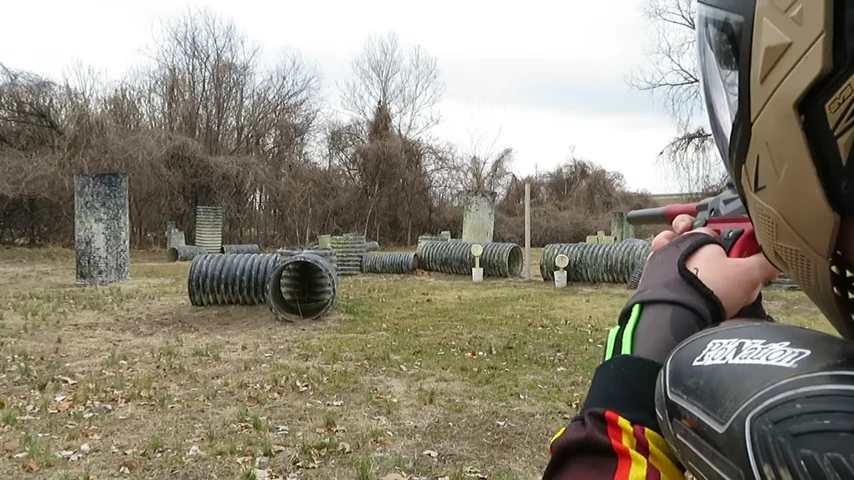
Good aim starts with a stable platform. Bring the marker in close and brace it against your shoulder or forearm rather than holding it out at arm’s length, a braced marker doesn’t wobble between shots. Square your body toward the target with your marker up and level, and keep a relaxed grip so you can squeeze the trigger smoothly instead of yanking it. From behind a bunker, lean out just enough to see and shoot, expose as little of yourself as possible.
The Core Method: Point and Shoot with Both Eyes Open
This is how experienced players aim, and it’s the most accurate approach for a sightless marker. Keep both eyes open and lock your focus on the target, not on your gun. Point the marker at what you’re looking at, the same instinct you use to point a finger, and fire. Because your eyes stay on the target, you keep full awareness of the field and can track a moving opponent, which you lose the moment you squint down the barrel. It feels strange for the first game, then quickly becomes automatic.
Use the Barrel as a Rough Reference
When you need a little more precision on a still target, glance down the top of the body and barrel with your dominant eye to confirm the marker is pointed where you want, tilting the hopper slightly out of your sight line if it blocks the view. Use this as a quick reference, then return your focus to the target, don’t get stuck staring down the barrel while the game moves around you.
Walk Your Shots onto the Target
This is the skill that makes paintball aiming unique: you can see your own paint fly. Fire a couple of balls, watch where they land, and adjust, left, right, higher, to “walk” your stream onto the target. A short controlled burst tells you far more than a single shot, and once your paint is landing on target you can keep it there. This bracketing is more reliable than trying to nail a perfect first shot, and it works at any range.
Aim Higher as the Target Gets Farther Away
A paintball leaves the barrel at around 280–300 FPS and then arcs and drops as it slows. Up close you can aim straight at the target, but past roughly 60–80 feet you need to aim progressively higher to let the ball drop onto your opponent. Watching your paint (above) shows you exactly how much lift to add on the day, wind and paint quality change it, and dialing in your marker’s accuracy makes that drop more predictable.
Should You Add a Sight?
A red-dot sight can help with slow, deliberate point shooting, and some players like one on a woodsball or magfed setup. But remember two things: it only lines up your point of aim, it can’t stop a paintball arcing, and in fast play most people aim faster with both eyes open than by hunting for a dot. Learn instinctive aiming first; add a sight later only if it genuinely helps your style.
Quick Tips for Better Shooting
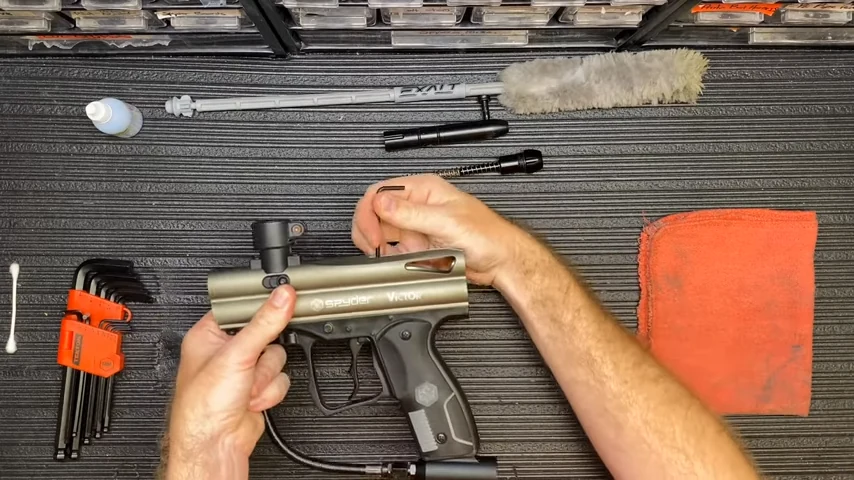
- Keep your marker clean. A clean barrel and breech shoot straighter; swab out any broken ball immediately.
- Don’t blind-fire. Spraying paint without a target wastes air and paint and gives your position away, hold until you have a shot.
- Keep the marker upright. Gravity and most loaders feed best when the marker is roughly level, so tilting it too far can cause misfeeds.
- Practice snap-shooting, leaning out from cover, firing a burst, and pulling back, so you can aim quickly without over-exposing yourself.
Conclusion
Aiming a paintball gun isn’t about lining up sights, it’s about pointing naturally with both eyes open, watching your paint, and walking your shots onto the target. Brace the marker for stability, aim a little high at distance, and keep it clean. Do that for a few games and accurate shooting stops being something you think about and becomes something you just do.
FAQs
Most don’t come with sights, and you don’t need them, players aim instinctively by pointing the marker with both eyes open and watching where the paint lands. You can add a red-dot sight for slow point shooting, but it can’t change how the ball flies.
Keep both eyes open and focus on the target, point the marker where you’re looking, then fire a short burst and “walk” your paint onto the target by watching where it lands. Brace the marker against your shoulder for stability and aim higher as distance increases.
Snap-shooting means leaning out from behind a bunker, firing a quick burst at your target, and pulling back into cover. Set up with the bunker in front of you, toes pointed toward the target, and expose only as much as you need to see and shoot.
Fields cap markers at about 280–300 feet per second, roughly 190–205 mph, for safety. That’s fast enough to sting but far slower than a firearm, and it’s why paintballs arc and drop over distance.