Last updated on September 28th, 2026 at 08:59 pm
Ask experienced players what separates a real team from five individuals in matching jerseys and the answer is rarely shooting. It is talking. Communication is the cheapest upgrade in paintball: it costs nothing, requires no practice gear, and a talkative average team will reliably beat a silent skilled one.
This guide covers what to call, how to say it so it is useful, and the habits that keep information flowing when the paint starts.
Why Talking Wins
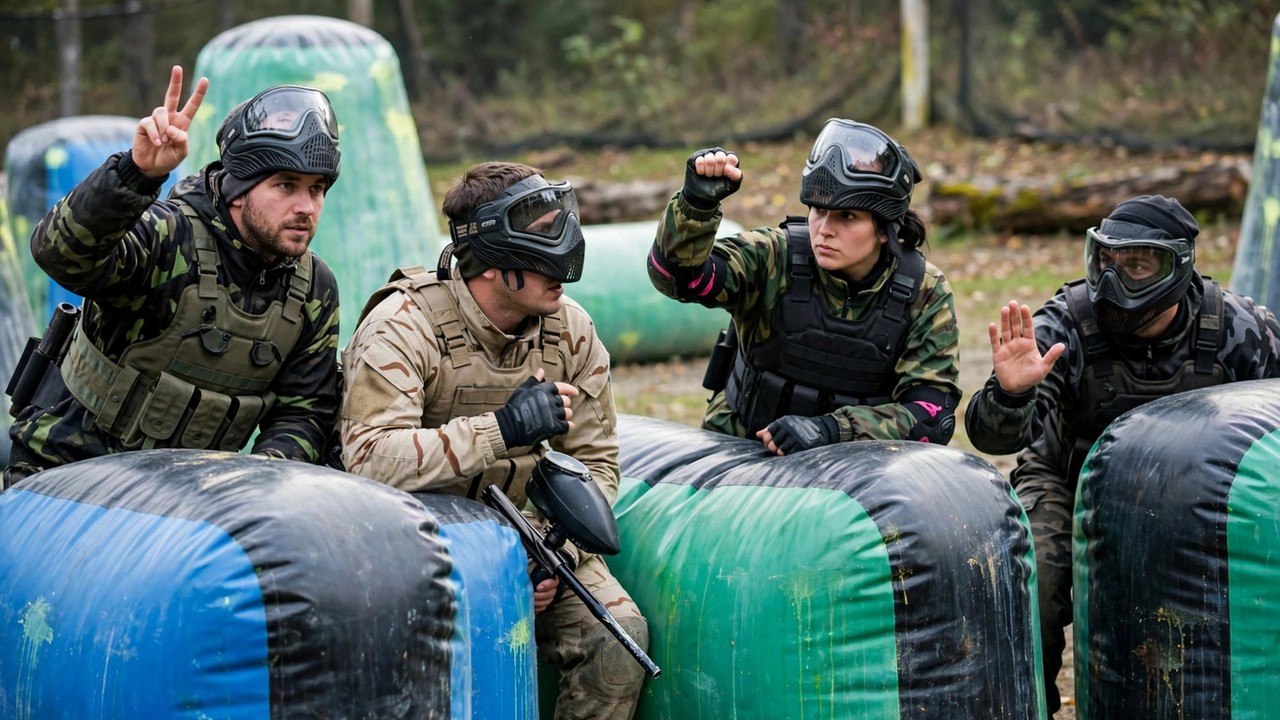
Behind a bunker you can see almost nothing. Your teammates collectively see almost everything. Communication is the mechanism that turns five narrow views into one complete picture, and the back players, who can see the most, exist partly to feed that picture forward.
Silence has a second cost people miss: a silent team plays five separate one-on-ones, so every player faces the field alone. A talking team brings two guns to every duel, because someone always knows where the threat is.
The Anatomy of a Useful Callout
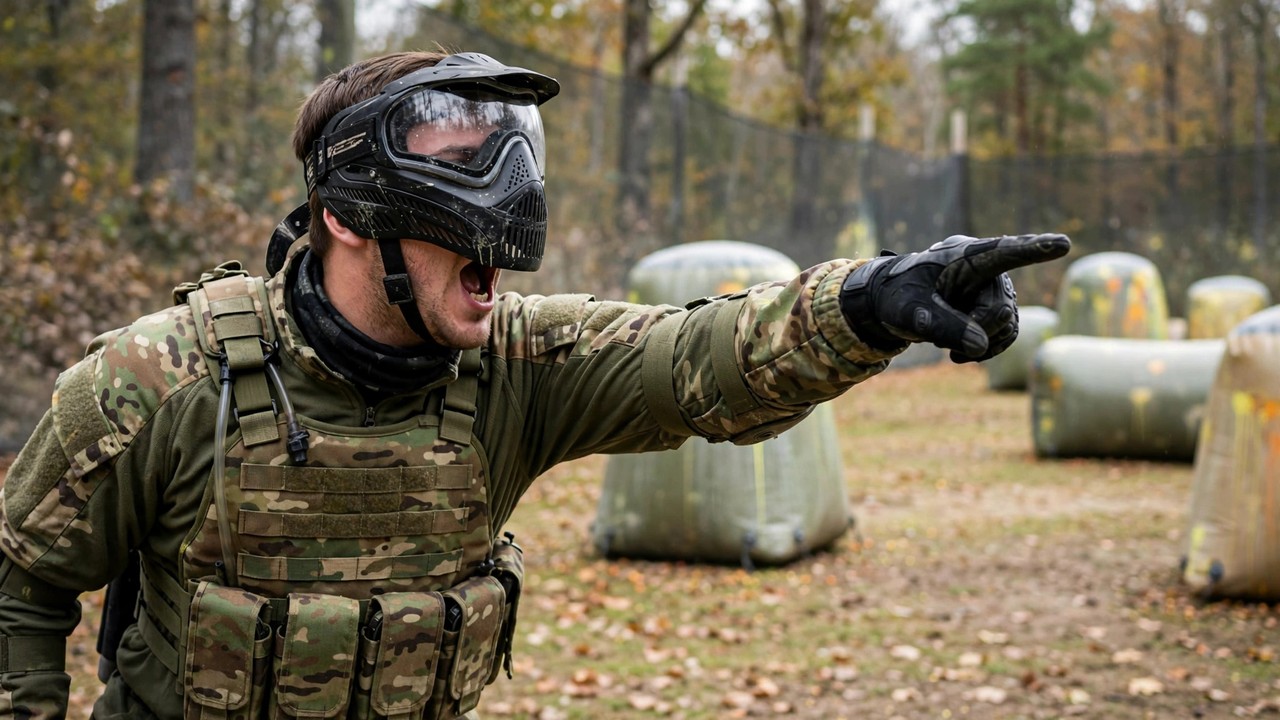
A callout answers three questions in as few words as possible: who or what, where, and doing what. “One in the snake, halfway up, moving” is a complete sentence of paintball. “Watch out!” is noise.
The where relies on shared vocabulary, which is why bunker names exist. On a speedball field the snake, the Doritos, the temple and the dollhouse give everyone the same map; in the woods, teams name landmarks before the game, the fallen tree, the left tape, the hut. Naming things before the horn is half of communication. The standard names are covered in what speedball is.
The Calls That Matter Most
- Position calls. Where each opponent lives: “two on the Dorito side, one deep”. Refresh them whenever someone moves.
- Elimination calls. “One down, snake side” changes everyone’s maths instantly. Counting bodies is how teams know when to push.
- Movement calls, yours and theirs. Announce your own bumps so cover fire follows you, and call enemy runs the moment they start, because a runner called mid-sprint is usually a runner eliminated.
- Intent calls. “Cover the snake, I’m going” turns a solo gamble into a supported play.
- The warning that saves teammates: telling a pinned player what is coming. A defender who hears “he’s running you” wins the exchange far more often than not; the mechanics of that moment are covered in bunkering.
Talking Under Fire
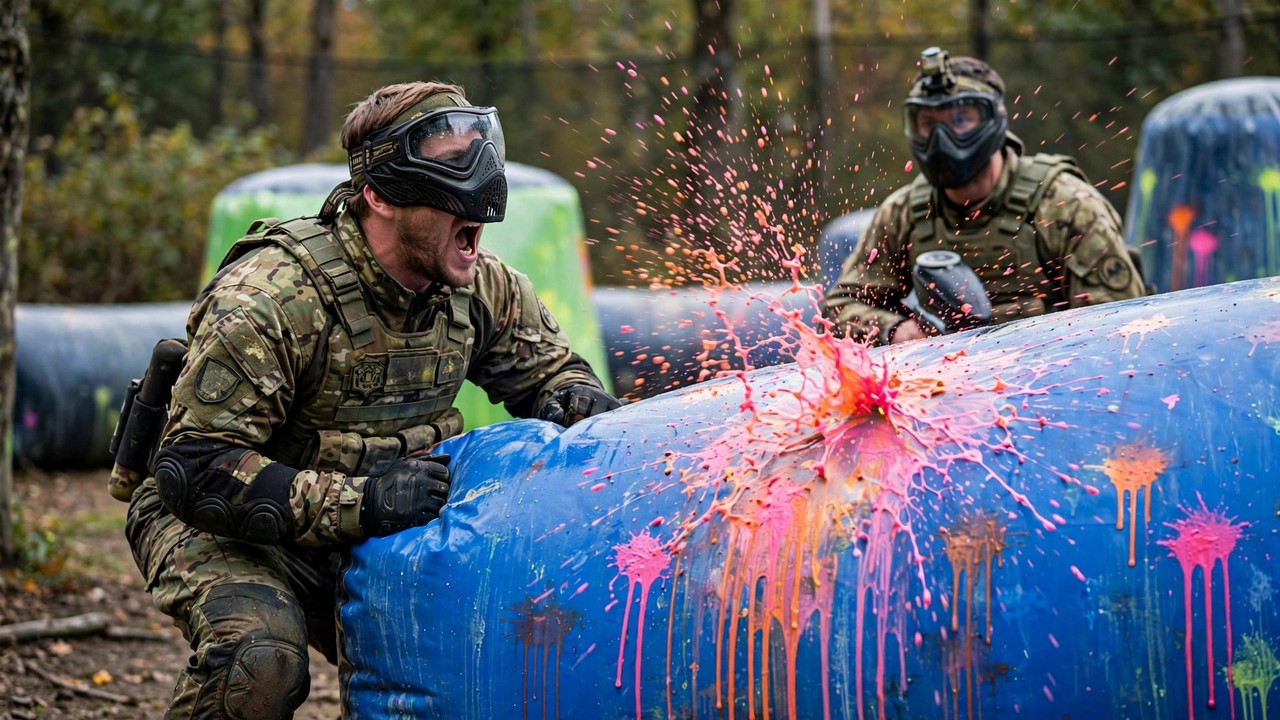
The habit that takes deliberate effort is talking while shooting. Under pressure most regular players go silent, exactly when their information is most valuable. Train the opposite reflex: the moment you see something, say it, even mid-firefight. Loud, short, repeatable phrases survive the noise of markers; sentences do not.
Two conventions keep the channel clean. Repeat important calls once so they carry across the field, and acknowledge calls made to you, a simple “got it” tells the caller the information landed. Unacknowledged calls get repeated, and repeated calls clog the one resource a team shares.
What About the Other Team Hearing You?
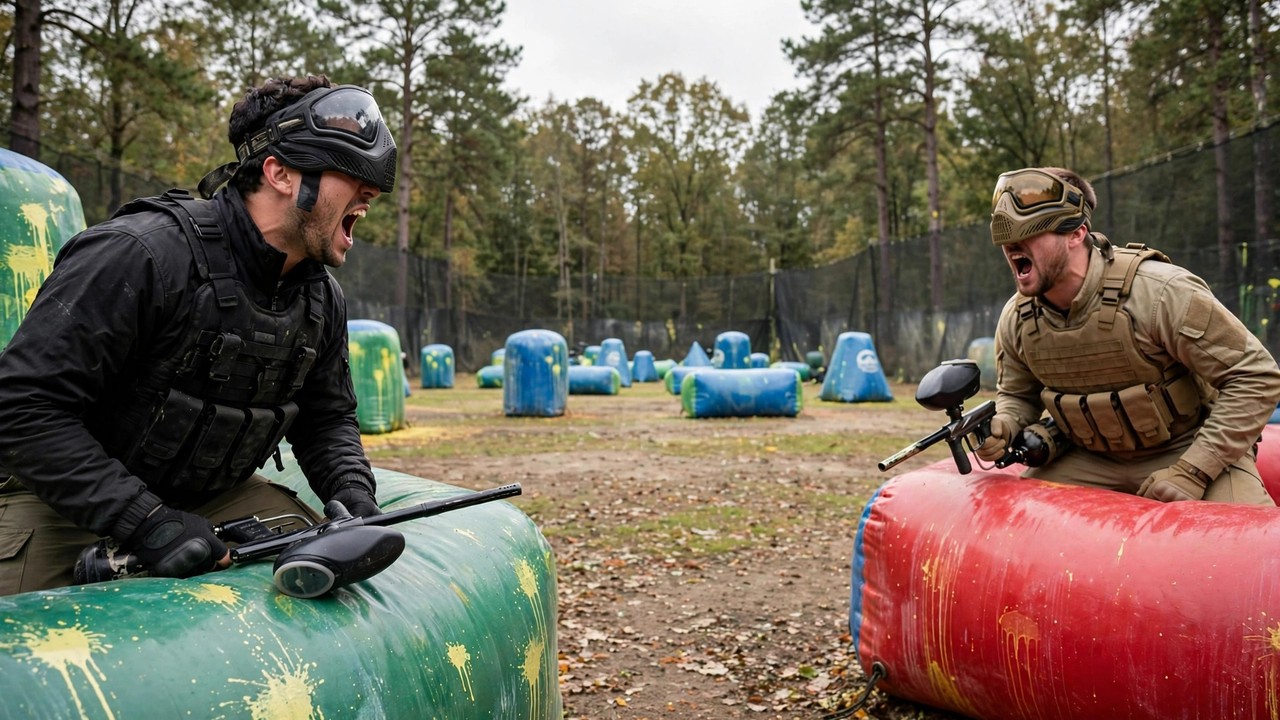
They will, and it mostly does not matter. Information ages in seconds: by the time a defender processes your call, the play it described is happening. Tournament teams shout constantly in front of opponents for exactly this reason. The exception is the woods, where distances are long, sound carries, and a quiet approach can be worth more than coordination; there, agree the plan before the game and save the voice for when contact starts. See what woodsball is for that side of the sport.
If deception is available cheaply, use it: a false call about your own movement costs nothing and occasionally moves a defender the wrong way. Just never fake the calls your own team relies on, eliminations and warnings, because the first time those are false, your team stops trusting all of them.
Building the Habit
Start with one job: call every elimination you see, all game, every game. It is the easiest call to make and the most universally useful. Add position calls next, then movement. Within a few outings the talking becomes automatic, and you will notice something strange: you play better personally, because describing the field out loud forces you to actually read it.
Communication threads through every other skill on this site, from positions to bumping; the full picture is in how to win at paintball.
Frequently Asked Questions
Callouts are short spoken reports that share what you can see with teammates who cannot: opponent positions, eliminations, movement and intentions. They turn five narrow views from behind bunkers into one picture of the field.
It answers who or what, where, and doing what, in as few words as possible. "One in the snake, halfway up, moving" is complete. Vague noise like "watch out" carries no usable information.
Eliminations. "One down, left side" is the easiest call to make and the most useful, because counting bodies tells the team when to push. Add position calls next, then movement calls.
Mostly no, because the information ages in seconds and the play is already happening. The exception is woodsball, where sound carries and stealth can be worth more; agree the plan before the game there and talk once contact starts.
Shared names are what make the "where" of a callout instant. Snake, Doritos, temple and dollhouse give a speedball team a common map, and woodsball teams name landmarks before the game for the same reason.