Last updated on September 28th, 2026 at 08:59 pm
Low-impact paintball is the standard game played with smaller, lighter, slower ammunition: .50 caliber paintballs instead of the usual .68. That one change cuts the impact energy by roughly two thirds, which is why fields market it to kids, first-timers and anyone whose only objection to paintball is the sting.
This guide covers the numbers behind it, who it is for, what it changes about the game, and its honest limitations.
The Numbers: .50 vs .68
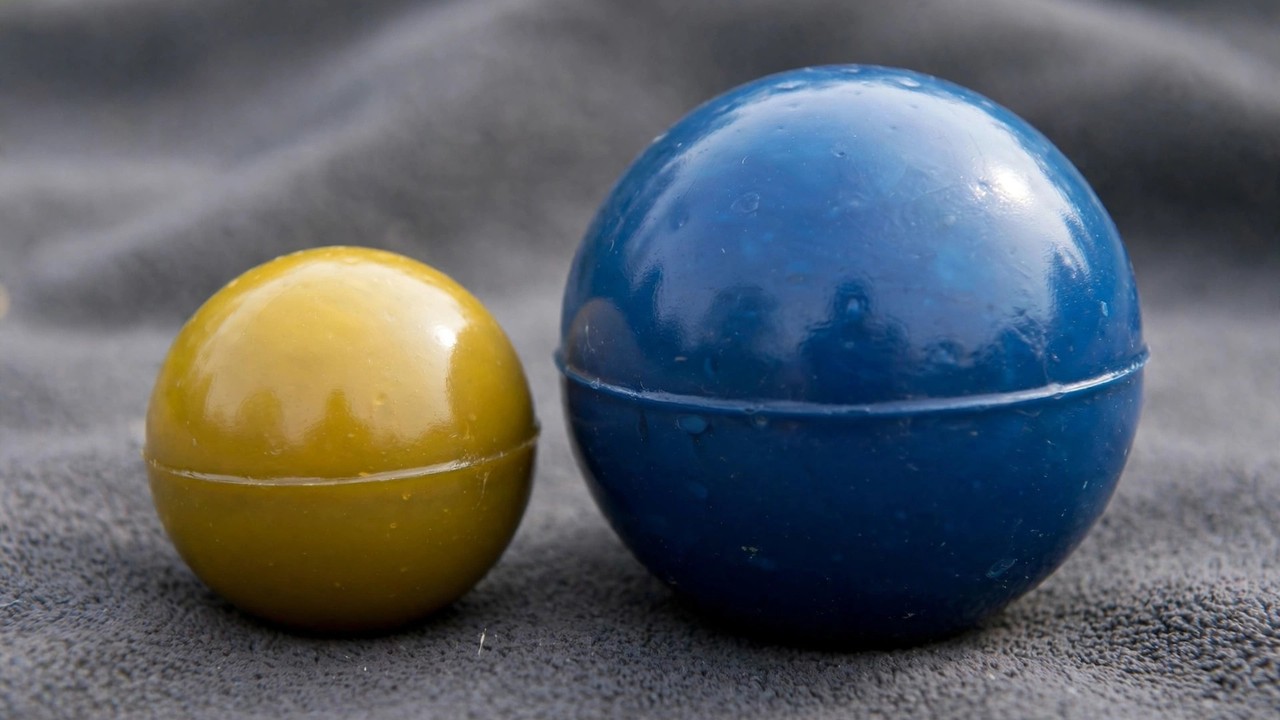
| Standard (.68 cal) | Low-impact (.50 cal) | |
|---|---|---|
| Ball diameter | About 17 mm | About 13 mm |
| Ball weight | Roughly 3 to 3.5 g | Around 1 g |
| Typical velocity | 280 to 300 fps | 200 to 250 fps |
| Impact energy | Baseline | Roughly two thirds less |
| Common minimum age | Around 10 | Around 7 to 8, some fields from 6 |
The energy difference is the whole product. A standard hit feels like a firm rubber-band snap and can leave a bruise on bare skin; a low-impact hit through clothing is closer to a tap. For the physics side, how much a paintball weighs breaks down both calibers.
Who Low-Impact Is For
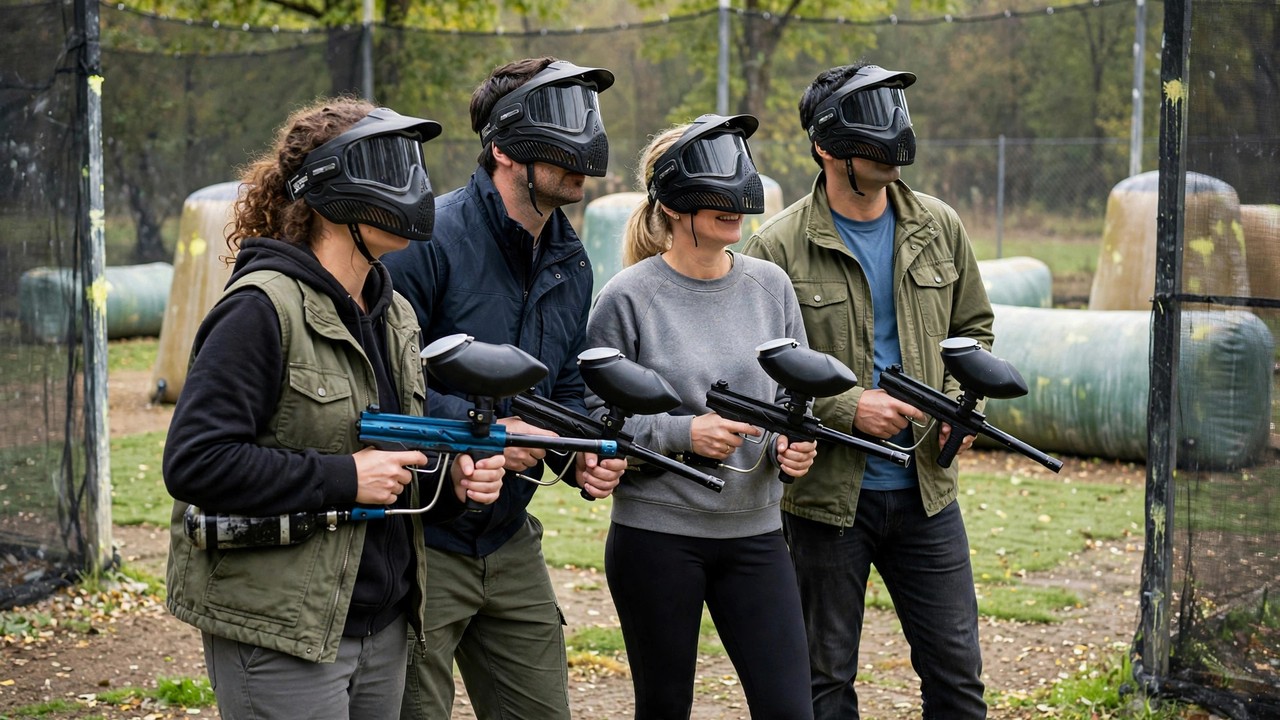
- Kids. The main audience. The lighter sting and lighter markers are what open paintball to ages 7 and 8, and at some venues 6. The parent-side details are in paintball for kids.
- Nervous first-timers. If the only thing keeping someone off the field is fear of the hit, low-impact removes the objection entirely.
- Mixed groups and corporate days. One session that a twelve-year-old, a grandparent and a keen regular can all enjoy.
- Indoor and close-quarters venues. Short engagement distances make gentler ammunition a sensible default.
What Changes on the Field
The game itself is identical: same modes, same bunkers, same rules, same masks. What changes is the equipment chain. Low-impact markers are usually lighter, simpler mechanical guns sized for smaller players, hoppers and paint are .50-specific, and because the balls are smaller and lighter, a case of paint goes further and costs fields less to supply, which is part of why kids’ parties are priced the way they are.
Range and accuracy do give something up. A one-gram ball sheds speed faster and drifts more in wind than a three-gram ball, so effective range is shorter and long shots wander. On the small fields where low-impact is played, that rarely matters.
The Same Rules Still Apply
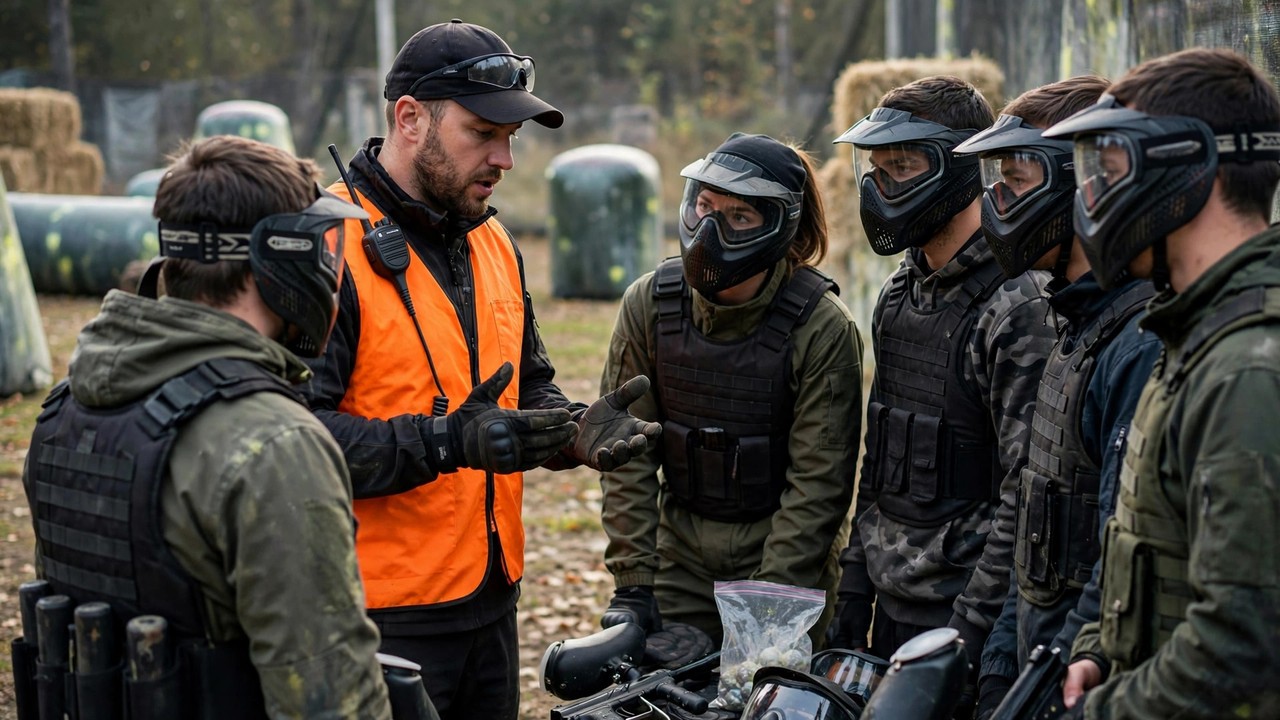
Low-impact does not mean low-rules. Masks stay on at all times, markers are chronographed, and marshals run the games exactly as they do for standard play, because the eye-safety case does not change with caliber. A .50 ball at 220 feet per second is still nothing an unprotected eye should ever meet. The full risk picture is in is paintball safe, and the field rules in the rules of paintball.
The Honest Limitations
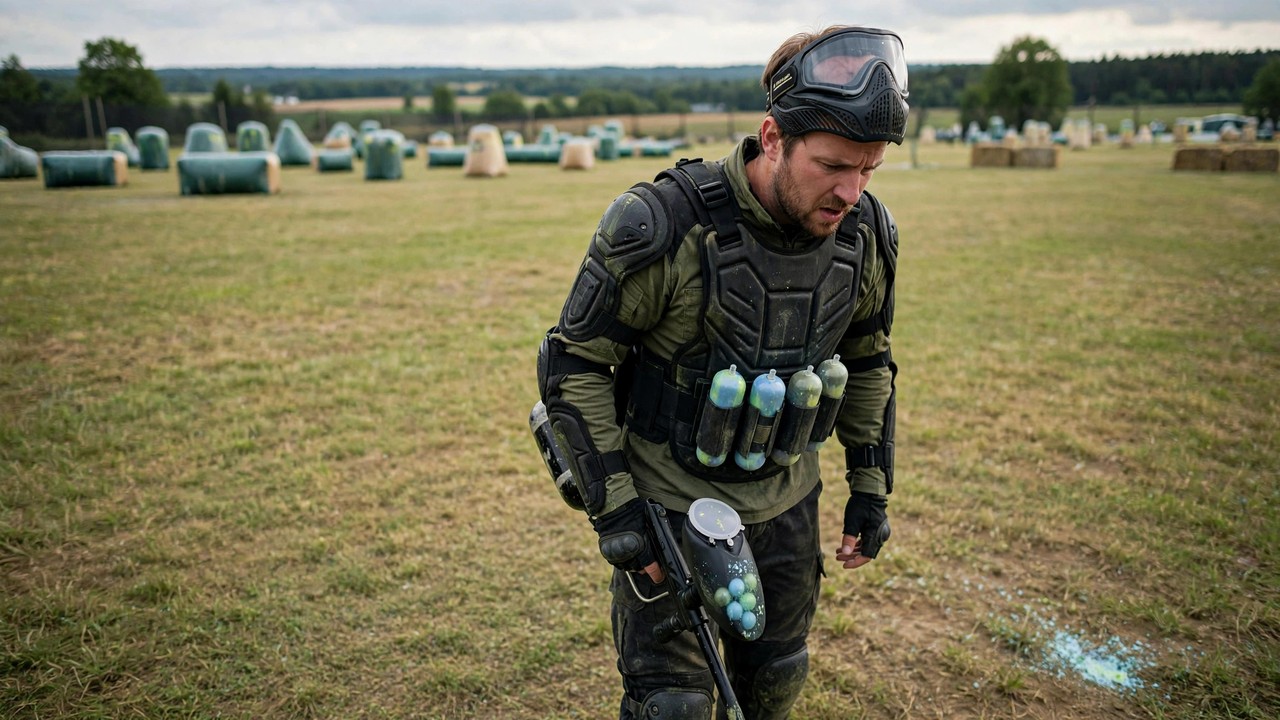
- Not every field offers it. Low-impact needs its own markers and paint stock, so call ahead rather than assuming.
- It is a field format, not a gear path. The .50 ecosystem for owners is thin; players who fall in love with the sport and buy gear almost all buy .68. Our marker roundup is effectively a .68 list for that reason.
- Breakage can be inconsistent. Lighter balls sometimes bounce where a .68 would break, which means more argued hits in competitive groups. For a kids’ party, nobody cares.
- Teenagers may find it tame. By the early teens most players are ready for standard play, and the sting is part of the fun.
Low-Impact or Standard: Choosing for a Group
The decision usually makes itself. Anyone under 10 in the group means low-impact, both for the age rules and for the experience. A nervous adult group splits on temperament: low-impact if the hesitation is real, standard if the group wants the full version, dressed properly per how to dress for paintball. And a group of returning players will want standard, because they already know the sting is smaller than the story. Where low-impact sits among all the ways to play is covered in the types of paintball, and the wider on-ramp in paintball for beginners.
Where Low-Impact Fits in the Sport
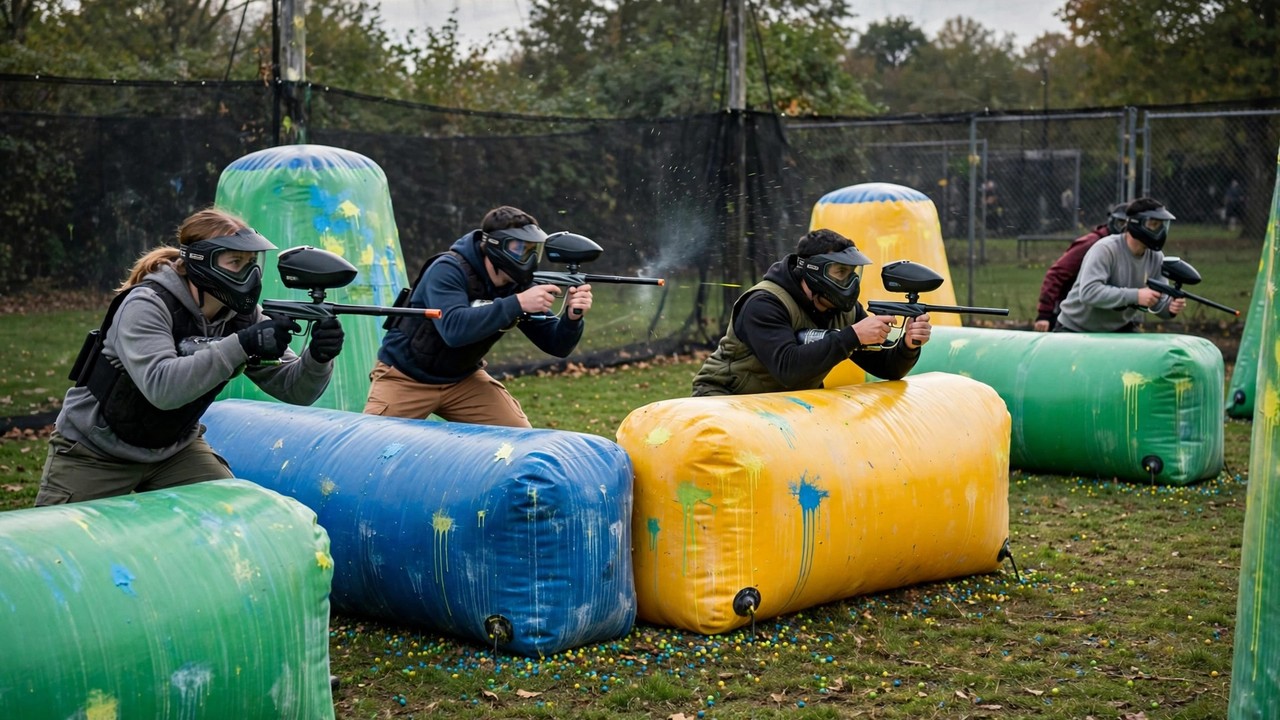
Fields adopted the .50 caliber format because it solved their hardest business problem: the large group of people who wanted to try paintball but would not book because of the sting, and the children below the standard age line. It works as an on-ramp precisely because everything except the ammunition is the real sport, the same masks, the same bunkers, the same game modes, so a player who starts at a low-impact party at eight is playing standard paintball at eleven with nothing to relearn. Think of it the way swimming pools think of the shallow end: not a lesser pool at all, just the same pool, entered at the point where the water is kinder.
Frequently Asked Questions
The standard game played with .50 caliber paintballs instead of .68: a ball about 30 percent smaller, roughly a gram instead of three or more, fired at 200 to 250 fps instead of 280 to 300. Impact energy drops by roughly two thirds.
Enough to change the experience. A standard hit is a firm rubber-band snap; a low-impact hit through clothing is closer to a tap, which is why fields use it for kids and nervous first-timers.
Commonly from age 7 or 8, with some venues taking children from 6. It is also offered to adult groups who simply prefer the gentler version.
Absolutely. The eye-safety case does not change with caliber, so masks, chronograph checks and marshals all apply exactly as in standard play.
You can, but the .50 ecosystem is thin and nearly all owned gear is .68. Treat low-impact as a field format for starting out rather than a long-term equipment path.