Last updated on September 28th, 2026 at 08:57 pm
The short list of places that fill paintball tanks: paintball fields and pro shops fill both HPA and CO2, scuba dive shops fill HPA, and welding gas suppliers fill CO2. Some sporting goods stores fill CO2 as well. What none of them will touch is a tank that is out of hydro date, and what will never work is a gas station air hose, because paintball tanks need pressures a hundred times higher.
Here is the full map of options, what each typically costs, and the difference between filling HPA and CO2, because they are entirely different jobs.
HPA Fills: Where the Compressors Are
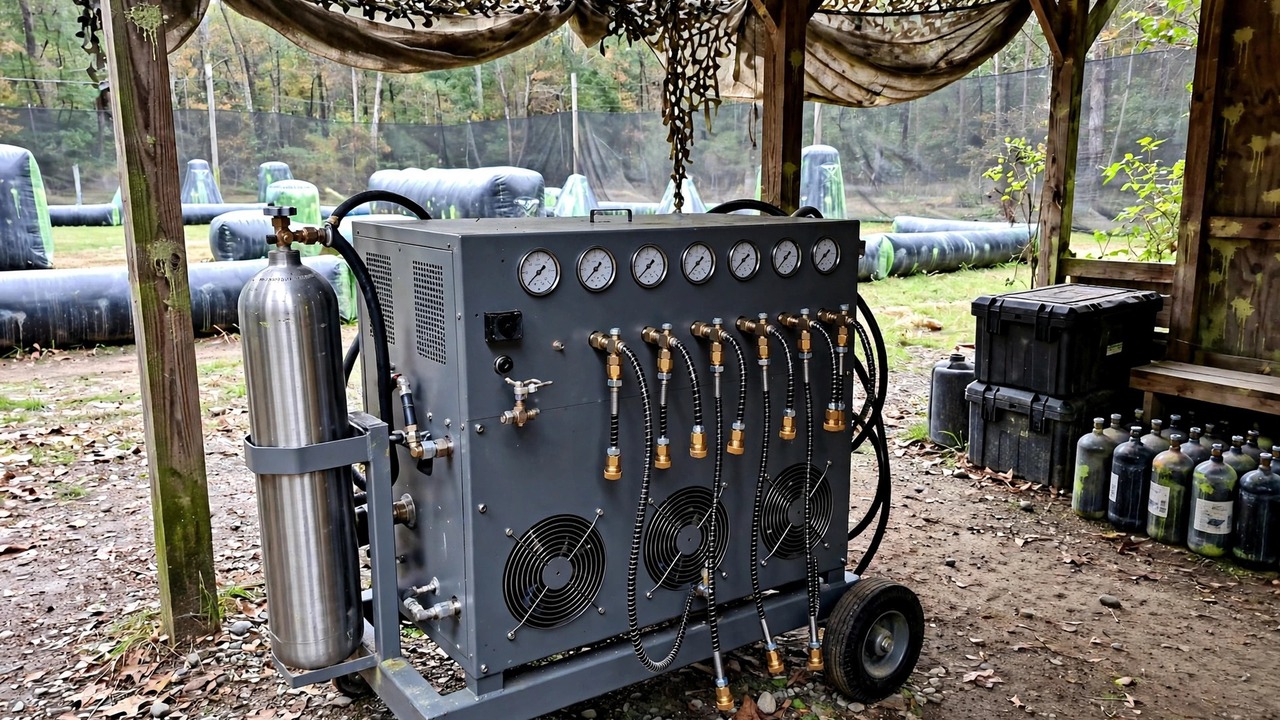
High pressure air tanks run 3,000 to 4,500 psi, so they can only be filled from a true high pressure compressor or a cascade of large storage cylinders. That equipment lives in predictable places:
- Paintball Fields: the default answer. Fills are often included with entry or sold as an all-day air band for a few dollars. If you play at a field, your air problem is solved.
- Paintball Pro Shops: most shops with a service bench run a compressor or cascade and fill walk-ins for a small fee.
- Scuba Dive Shops: dive compressors reach paintball pressures, and many shops will fill a paintball bottle for a few dollars. Call ahead: some decline for liability reasons, and shops with 3,000 psi systems cannot give a 4,500 psi tank a full fill.
- Airgun and PCP Shops: the precharged pneumatic airgun world uses the same pressures, and its fill stations are paintball-compatible.
At home, the working options are a personal high pressure compressor or a large scuba or storage cylinder with a fill station, both covered in our guides to paintball air compressors and filling a tank with a compressor. A garage shop compressor tops out around 150 psi and is not part of this conversation.
CO2 Fills: A Different Process Entirely
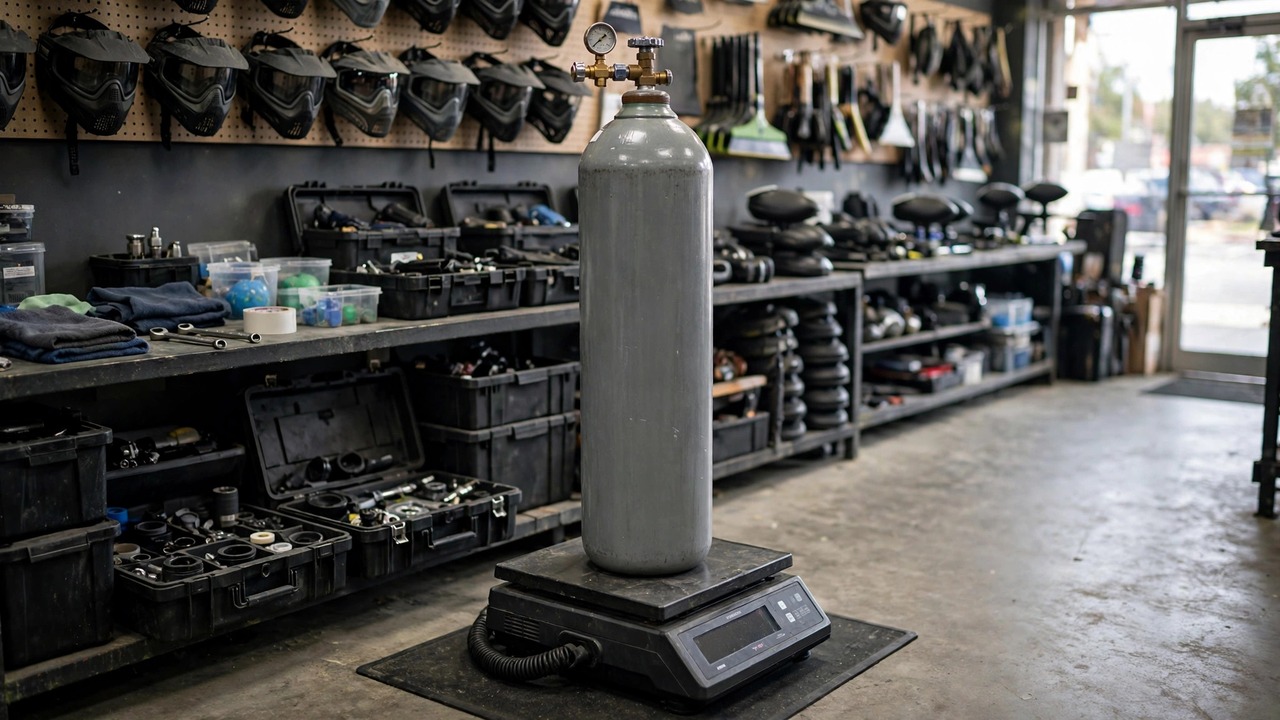
CO2 tanks are not pumped full of air; they are filled by weight with liquid CO2 transferred from a bulk cylinder, usually after chilling the tank. That is why CO2 fills happen where bulk CO2 lives:
- Paintball Fields and Pro Shops: nearly all keep a CO2 fill setup alongside the air station, typically charging by the ounce.
- Welding and Gas Suppliers: companies that sell industrial gases fill or swap CO2 cylinders every day and will usually handle a paintball bottle.
- Sporting Goods Stores: some locations of the big chains offer CO2 fills at the service counter, though coverage varies store by store, so call first.
- Homebrew and Beverage Suppliers: shops that service kegerator and aquarium CO2 systems have the same bulk supply and often fill small cylinders.
The full step-by-step for both gas types, including why a proper CO2 fill needs a scale and a chilled tank, is in our guide to how to fill a paintball tank.
What Fills Cost
Prices vary by region, but the shape is consistent: single HPA fills at fields and shops run a few dollars, all-day air at a field is commonly a flat few dollars more, dive shop fills sit in the same range, and CO2 is priced by the ounce so a small bottle costs pocket change and a large one a little more. Air is easily the cheapest part of this sport by a wide margin. The expensive mistake is not the fill, it is showing up with an empty tank and no plan in a town where nothing fills on Sundays.
Before You Hand Anyone Your Tank
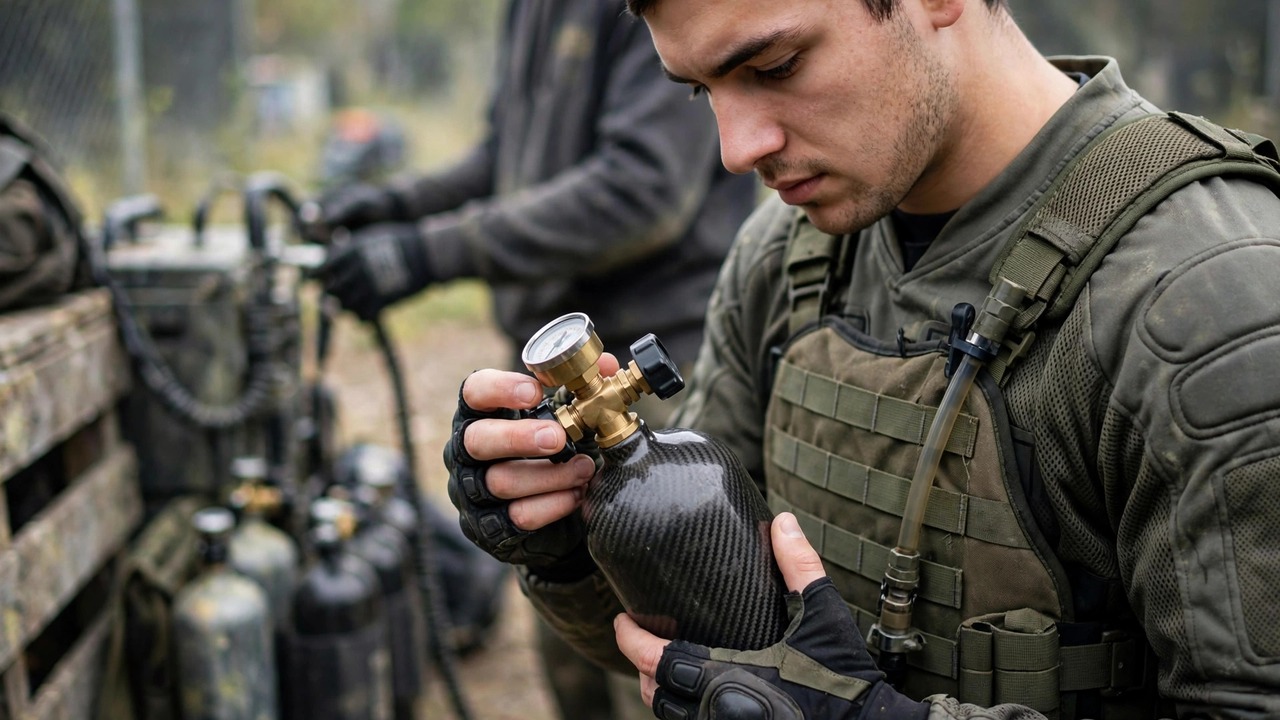
Three checks make every fill smooth. First, the hydro date: in date or no fill, everywhere. Second, the fill pressure: know whether your bottle is a 3,000 or 4,500 psi tank, because overfilling is dangerous and underfilling a 4,500 at a 3,000 psi station just means fewer shots. Third, the tank’s condition: a fill operator seeing deep gouges, a wobbly regulator, or a peeling label will turn you away, and our guide to tank lifespan explains what damage actually matters. Traveling players should scout fill locations at the destination before leaving; our gear travel guide covers that planning step.
Two more sources round out the map. Fire equipment companies that service SCBA gear for departments run high pressure cascade systems and will often fill paintball bottles if you ask, and some volunteer fire stations quietly do the same for locals. And wherever you call, ask two questions before driving over: what pressure their system tops out at, and whether they need your fill adapter. Most paintball tanks fill through a standard quick-disconnect nipple, but a shop that mostly does scuba may want you to bring your own fitting.
Frequently Asked Questions
No. Gas station air runs under 100 psi and paintball tanks need 3,000 to 4,500 psi. Only high pressure compressors, cascade systems, or bulk CO2 setups can fill paintball cylinders.
Many do, for a few dollars, since dive compressors reach paintball pressures. Call ahead: some decline for liability reasons, and a 3,000 psi shop cannot fully fill a 4,500 psi bottle.
Single HPA fills at fields and shops run a few dollars, all-day air bands cost a little more, and CO2 is priced by the ounce. Air is among the cheapest recurring costs in the sport.
Yes, with a personal high pressure compressor or a scuba or storage cylinder plus a fill station. An ordinary shop compressor cannot come close to the required pressure.
An expired hydro date is the usual reason, followed by visible damage like deep gouges or a loose regulator. Both are safety calls the fill operator is required to make.