Last updated on September 28th, 2026 at 08:57 pm
Whether you can play paintball in your backyard comes down to one document: your city or county’s municipal code. State law rarely bans paintball on private property, but a large share of incorporated cities and towns have ordinances against discharging air guns or any projectile device inside city limits, and those ordinances are what make backyard games legal in one zip code and a citation in the next.
Here is how to find your answer in minutes, and how to run a backyard game that nobody regrets.
Step One: Read Your Local Code
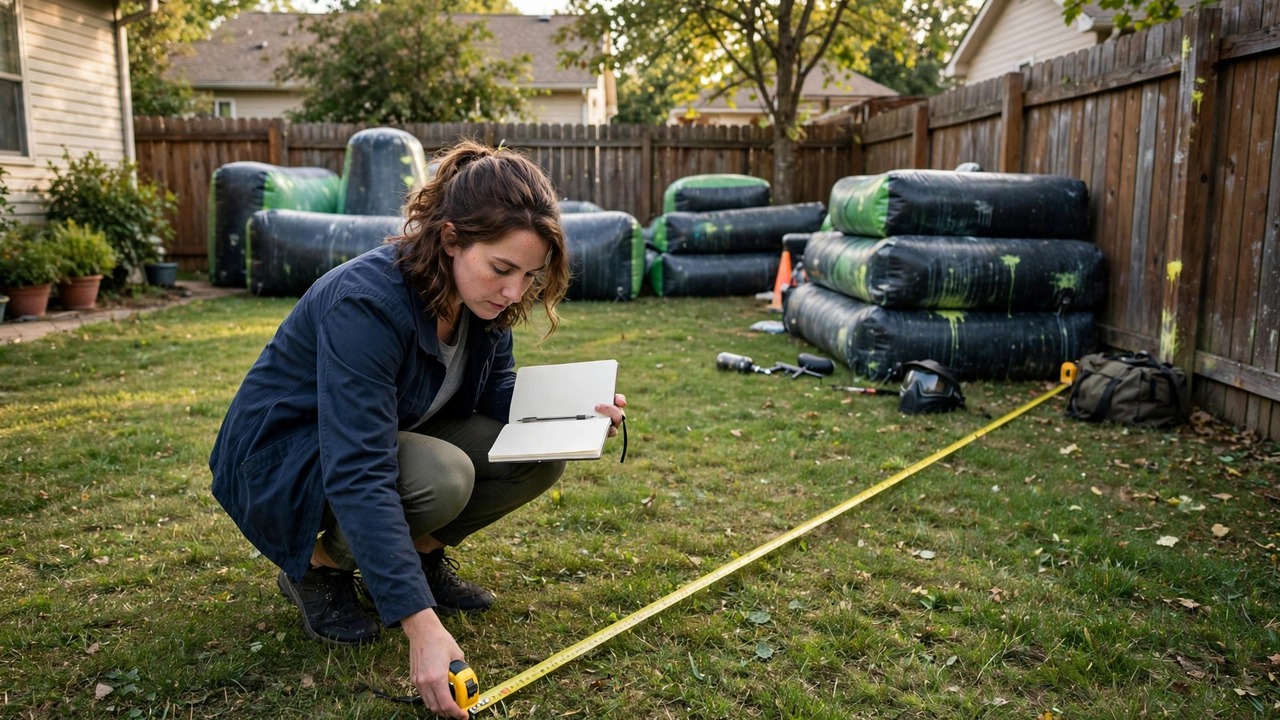
Search your city or town name plus municipal code online, then search the code for terms like discharge, air gun, pneumatic gun, or projectile. Ordinances in this area are usually short and explicit. Some ban all discharge inside city limits, some restrict it near streets and neighboring homes, and some are silent, which generally leaves backyard play lawful on private property with the owner’s permission.
The pattern varies by state too. Virginia, for instance, lets localities regulate pneumatic guns but requires that ordinances still allow their use on private property with the owner’s permission when conducted with reasonable care to keep projectiles on the property. Other states leave cities free to ban discharge outright, and many do. Rural unincorporated land is usually the permissive end of the spectrum, which is why backyard paintball is mostly a countryside sport. If the code is ambiguous, a call to the non-emergency police line or city clerk gets a definitive answer, and our broader guide to paintball law covers the state-level picture.
The Space Question: Most Yards Are Smaller Than You Think
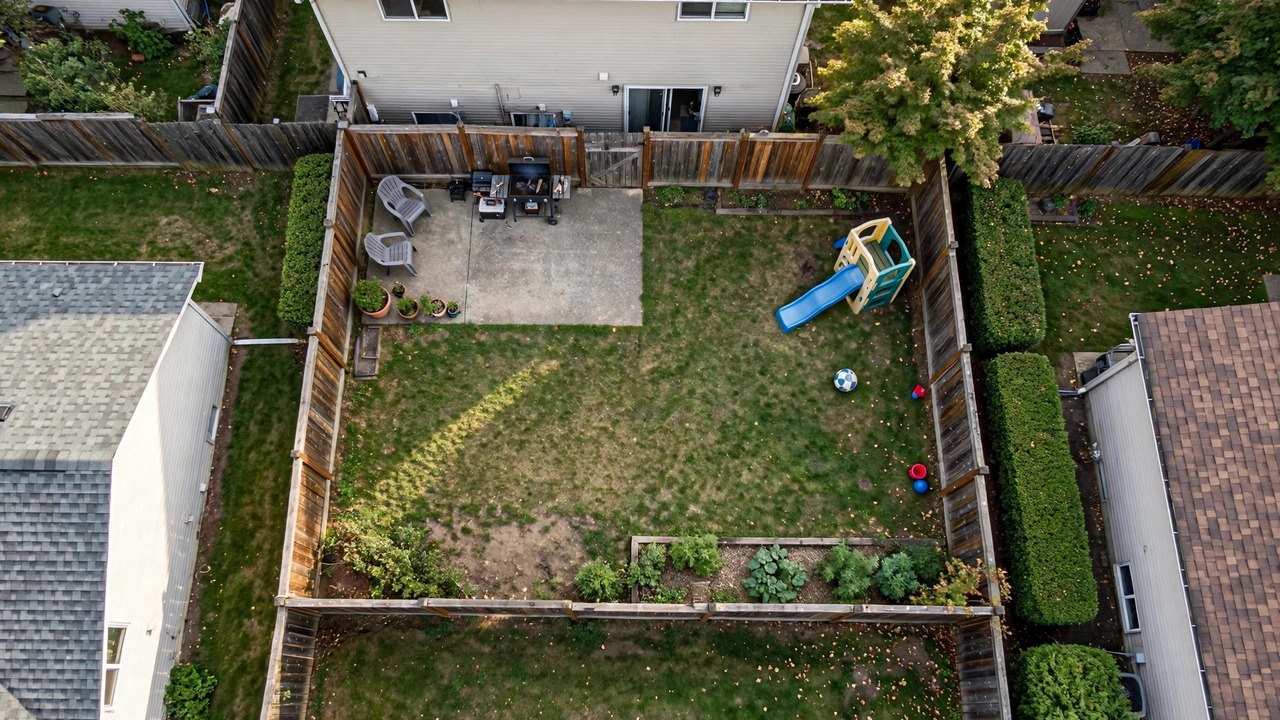
A paintball flies well past 150 feet, and an errant ball keeps going until something stops it. A suburban lot bordered by neighbors on three sides has no safe firing line without serious netting, which is why commercial fields surround play areas with tall professional-grade barrier net, and why a proper backyard field build starts with netting. For a real backyard game you want either genuine acreage with tree cover and empty margins, or physical backstops, dense woods, a hillside, tarps or netting, on every line a ball could take. A paintball that leaves your property and hits a neighbor’s window, car, or kid converts a legal gray area into an open-and-shut liability, instantly.
Space is also the argument for playing low impact at home. Low-impact .50 caliber gear runs at lower velocities with far less energy, is friendlier to mixed ages, and throws less paint into the shrubbery.
Safety Does Not Relax at Home
Backyard games have none of a field’s infrastructure and all of its risks, so the field rules come home with the gear:
- Masks On, Always: proper paintball masks for every player and every bystander, no exceptions, from before markers come out until they are put away. Nearly all serious paintball injuries are unprotected-eye injuries.
- Chrono Discipline: borrow or buy a chronograph and keep every marker at or under standard field velocities, lower for close quarters.
- Clear Boundaries: mark the play area, agree on a ceasefire word, and use barrel covers whenever someone steps out.
- Tell the Neighbors: a heads-up prevents the call that ends the game. Muzzle noise plus glimpses of marker-shaped objects is exactly what generates police visits.
Paint, Property, and Cleanup
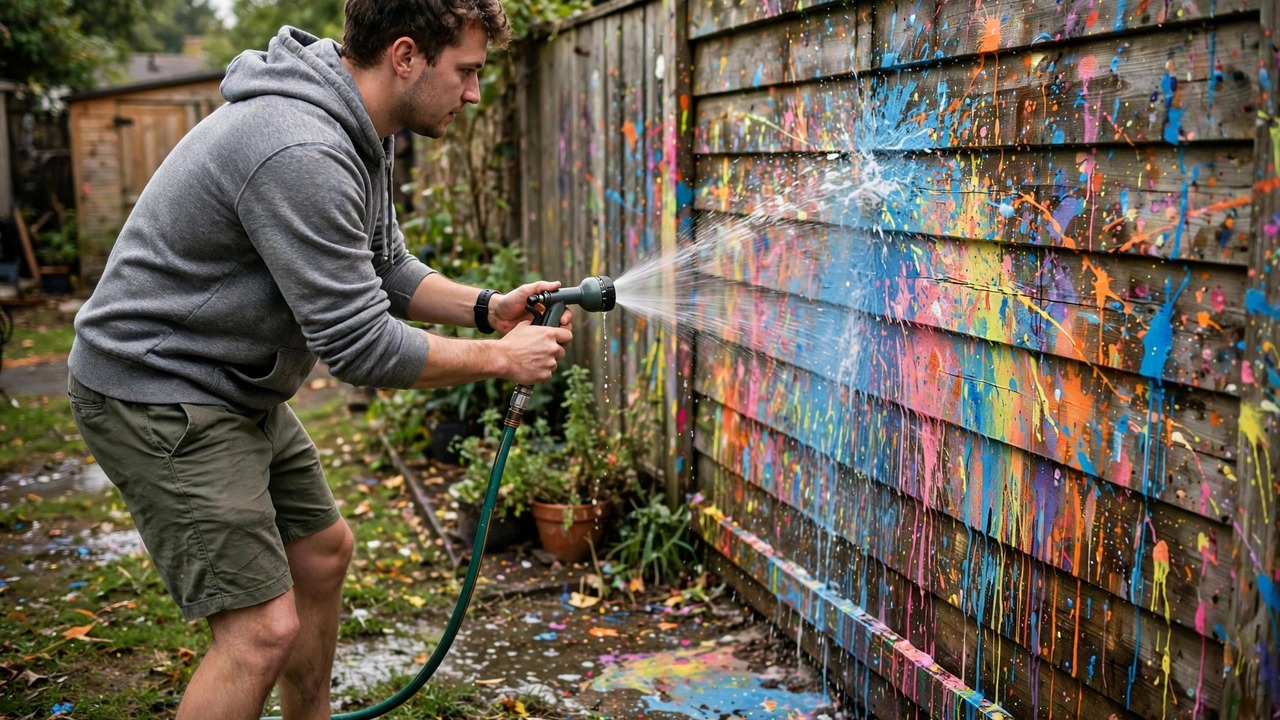
Paintball fill is water-soluble and nontoxic, but it stains porous surfaces if it bakes in the sun, and shells accumulate anywhere the game concentrates. Hose down siding, fences, and patios the same day, rake shells out of grass before mowing, and expect a season of backyard games to leave marks a field never would. Cars deserve special respect: fresh fill washes off automotive paint, but a close-range hit can chip it, so park everything well outside the play area.
One more honest consideration: guests. A commercial field wraps every player in waivers and insurance. In your yard, you are the field owner, and an injury to a guest lands on your homeowner’s policy and your conscience. Running the game with field-grade discipline, and reading our guide to paintball for kids before inviting anyone under twelve, is what responsible hosting looks like. For groups that outgrow the yard, a day at a real field costs less than most people assume and comes with referees, netting, and insurance built in.
Frequently Asked Questions
It depends on your municipal code. Many incorporated cities prohibit discharging air guns or projectiles inside city limits, while rural unincorporated land is usually permissive. Check your city's ordinance first.
More than a typical suburban lot. Paintballs carry well past 150 feet, so you need real acreage or physical backstops like woods, hillsides, or netting on every possible line of fire.
Proper paintball masks for every player and bystander at all times, a chronograph to keep markers at or under field velocities, barrel covers off-field, and clearly agreed boundaries.
Fill washes off most surfaces if cleaned the same day, but it can stain porous materials in the sun, and close-range hits can chip automotive paint. Park vehicles well away from the play area.
Usually yes. Low-impact .50 caliber gear runs at lower velocity with roughly a third of the energy, suits mixed ages, and keeps stray shots gentler on property and neighbors.