Last updated on August 28th, 2026 at 06:30 pm
Here’s the honest answer most guides get wrong: a standard air compressor cannot fill a paintball HPA tank. A workshop compressor tops out around 150 PSI, while paintball air tanks need 3,000–4,500 PSI, twenty to thirty times more. To fill at home you need proper high-pressure gear. Here’s exactly what works, how to use it safely, and the cheaper alternatives.
- A regular air compressor won’t work, not nearly enough pressure.
- What does: a high-pressure (PCP) compressor rated to 4,500 PSI, or a scuba/cascade tank with a fill station.
- Cheapest option: just fill at a field, pro shop, or dive shop.
Why a Normal Air Compressor Can’t Fill a Paintball Tank
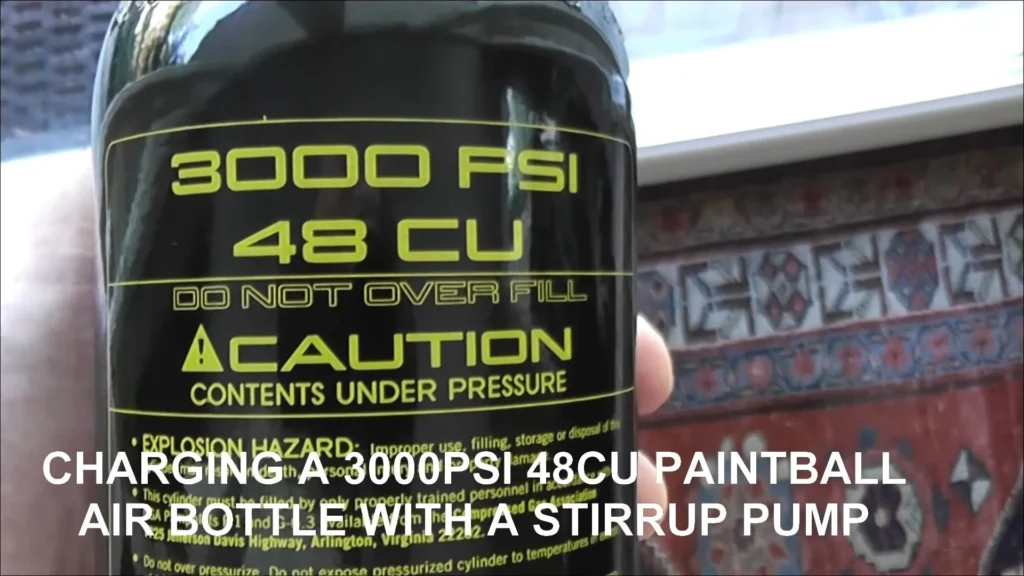
It comes down to pressure. Paintball HPA (compressed air) tanks are rated at 3,000 or 4,500 PSI, and they need to be filled close to that to be useful. A typical garage or workshop air compressor is built for tools and only reaches roughly 150 PSI. There’s simply no way for it to fill a paintball tank, and CO2 tanks aren’t filled with air at all, so a compressor can’t fill those either.
What You Actually Need to Fill HPA at Home
- A high-pressure (PCP) compressor rated to at least 4,500 PSI. These are made for airguns and paintball, and good ones include cooling and a moisture filter to keep the air dry. See our guide to the best paintball air compressors.
- A scuba or “cascade” tank with a fill station, a large high-pressure bottle you get filled at a dive shop, then use to top off your paintball tank many times before it needs refilling.
How to Fill an HPA Tank, Step by Step
- 1. Check the tank’s hydrostatic test date and rated pressure, and inspect it for damage.
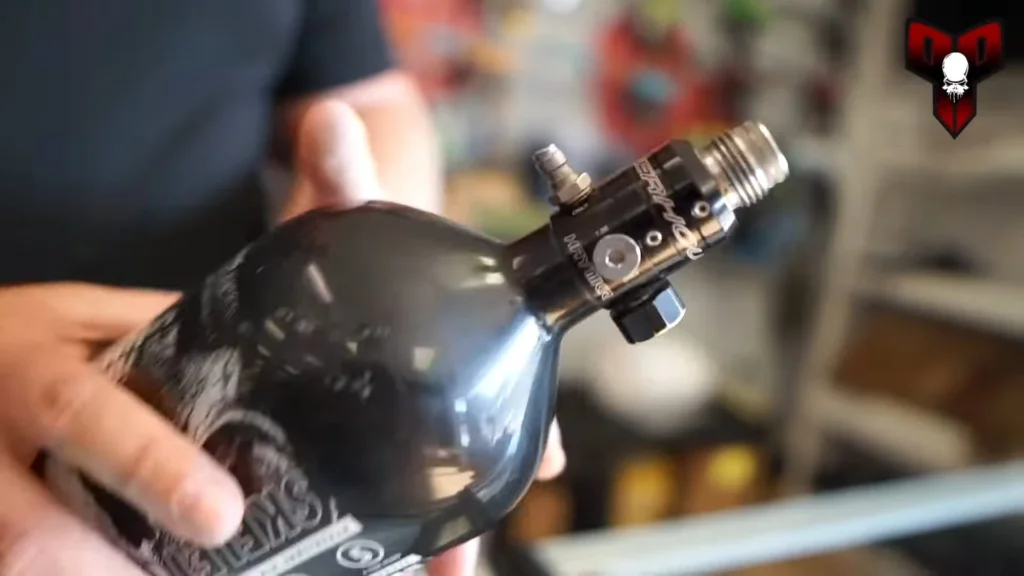
- 2. Connect the fill station’s nipple to the tank’s fill port until it clicks on securely.
- 3. Open the source valve slowly. Filling fast heats the air and gives a false “full” reading that drops as it cools.
- 4. Watch the gauge and stop at the tank’s rated pressure, never overfill past it.
- 5. Close the valve, bleed the fill line, then disconnect. Let the tank cool and top off if it settled below rating.
Filling a CO2 Tank Is Different
CO2 tanks aren’t filled with air or a compressor at all. They’re filled with liquid CO2 from a bulk CO2 supply using a fill station and a scale, weighing the tank to its rated ounces. That’s a job for a pro shop or a welding-gas supplier, see our full guide to filling a paintball tank.
The Cheaper Alternative: Just Get It Filled
Unless you play very often, buying a high-pressure compressor or scuba setup rarely pays off. Paintball fields, pro shops, and scuba/dive shops fill HPA tanks for just a few dollars, and fields usually include air fills with a day pass. Home filling only makes sense once you’re playing enough that the equipment cost works out cheaper than paying per fill.
Safety First
- Never exceed the rated pressure. Fill slowly and stop at the number stamped on the tank.
- Keep the air dry. Moisture from a poor compressor corrodes tanks and markers, use a proper filter.
- Mind the hydro date. Don’t fill an expired or damaged tank; retire it safely instead.
Is a Home Fill Setup Worth It?
Before buying a compressor, weigh how often you play. A high-pressure PCP compressor or a scuba-and-fill-station setup is a real investment, a decent compressor runs several hundred dollars and up, so it only pays off once you’re playing frequently enough that the savings on per-fill charges outweigh that upfront cost. For someone who plays a handful of times a year, the maths rarely works: field, pro-shop, and dive-shop fills are cheap, quick, and hassle-free. Home filling makes the most sense for dedicated regulars, big families of players, or anyone who lives far from a convenient fill location and values being able to top up on their own schedule.
Conclusion
You can’t fill a paintball tank with an ordinary air compressor, the pressures aren’t even close. For home HPA fills you need a 4,500 PSI PCP compressor or a scuba/cascade tank, filled slowly to the rated pressure. For most players, though, a field or dive shop is faster, cheaper, and safer. Whatever route you choose, respect the pressure rating and hydro date every time.
FAQs
No. A standard air compressor only reaches around 150 PSI, but paintball HPA tanks need 3,000–4,500 PSI. You need a high-pressure PCP compressor or a scuba/cascade tank. CO2 tanks aren’t filled with air at all, they use a bulk CO2 supply.
A high-pressure (PCP) compressor rated to at least 4,500 PSI, ideally with cooling and a moisture filter. These are made for airguns and paintball, unlike ordinary workshop compressors, which can’t reach the required pressure.
Only if you play often. A high-pressure compressor or scuba setup is a real upfront cost, while fields and dive shops fill tanks for a few dollars. Home filling pays off once you’re playing enough that the per-fill savings beat the equipment price.
Connect the fill station between the scuba tank and your HPA tank, open the scuba valve slowly to avoid heat build-up, watch the gauge, and stop at your tank’s rated pressure. Then close the valve, bleed the line, and disconnect.