Last updated on September 28th, 2026 at 08:59 pm
Competitive paintball teams do not send five players out to freelance. Each player has a position with a defined job, and the standard set is five: snake, Dorito, front, mid and back. Knowing them matters even if you never play a tournament, because the roles explain why organised teams dismantle groups of stronger individual players.
This guide covers what each position does, the temperament and skills each one rewards, and how to pick yours. The positions live on the mirrored fields described in what speedball is, but the logic transfers to any format.
What Each of the Five Positions Does
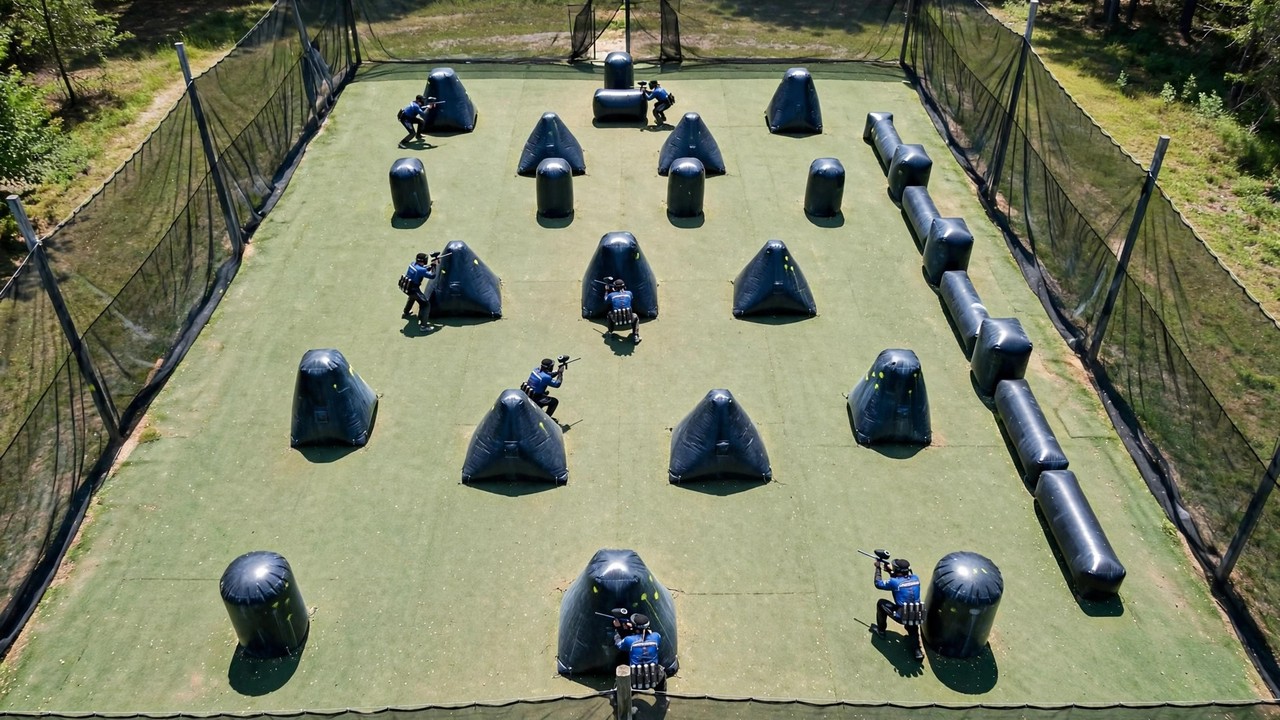
| Position | Where they live | The job |
|---|---|---|
| Snake | The long, low bunker down one tape line | Crawl forward, gain shooting angles down the opposing line |
| Dorito | The triangular bunkers on the other tape | Mirror the snake player, press the opposite side |
| Front | Forward-centre bunkers | Create pressure, take ground early, force opponents tight |
| Mid | Middle of the field | Support both tapes, fill gaps as the point develops |
| Back | Rear bunkers near the start gate | Lane the breakout, control paint, feed information forward |
Snake: The Crawler
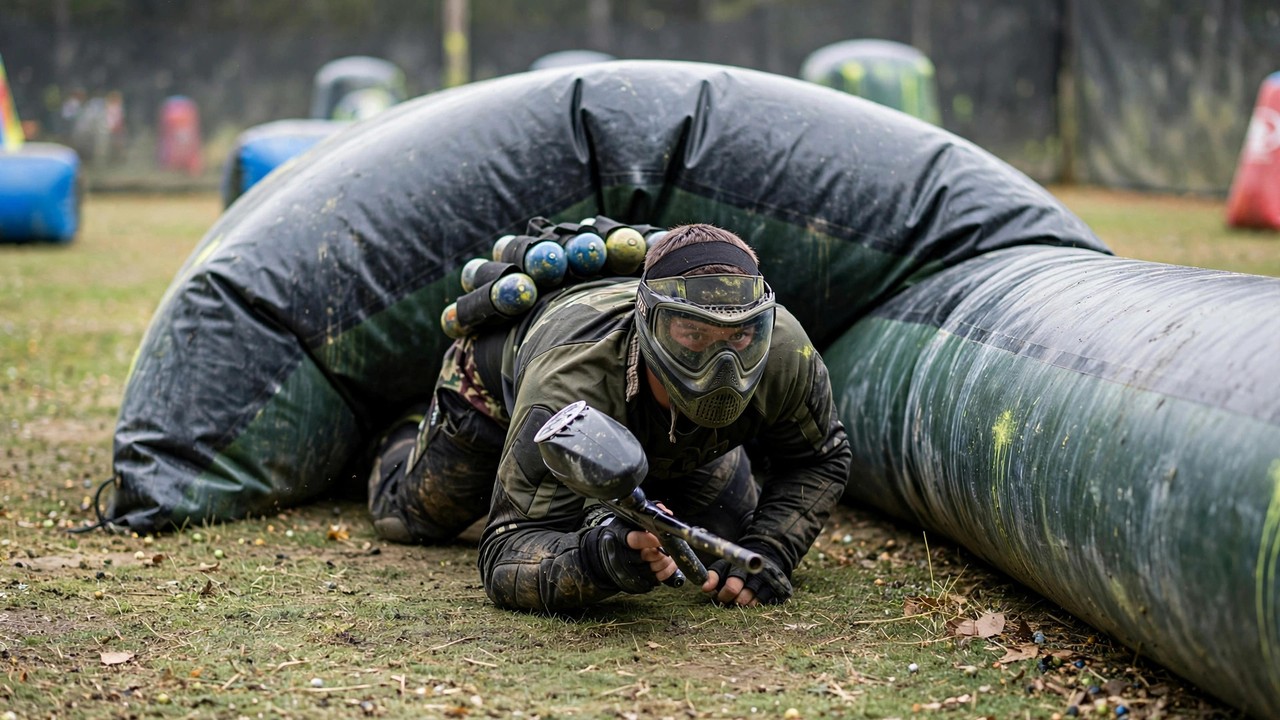
The snake player lives on their knees and elbows, working along the low bunker one knuckle at a time to earn angles nobody else on the field can shoot. It is the most physically punishing position and often the most decisive, because a snake player who reaches the far end can shoot down the entire opposing line.
It rewards small, patient, composed players with an excellent low-profile snap shot. Knee and elbow protection stop being optional here; see the best paintball elbow pads.
Dorito: The Mirror
The Dorito side is the other tape line, played through the triangular bunkers. The role mirrors the snake, pressing forward for angles, but standing rather than crawling, which makes it a duelling position: expect constant snap battles with whoever is defending the line. Strong snap shooting is the entry requirement.
Front: The Pressure
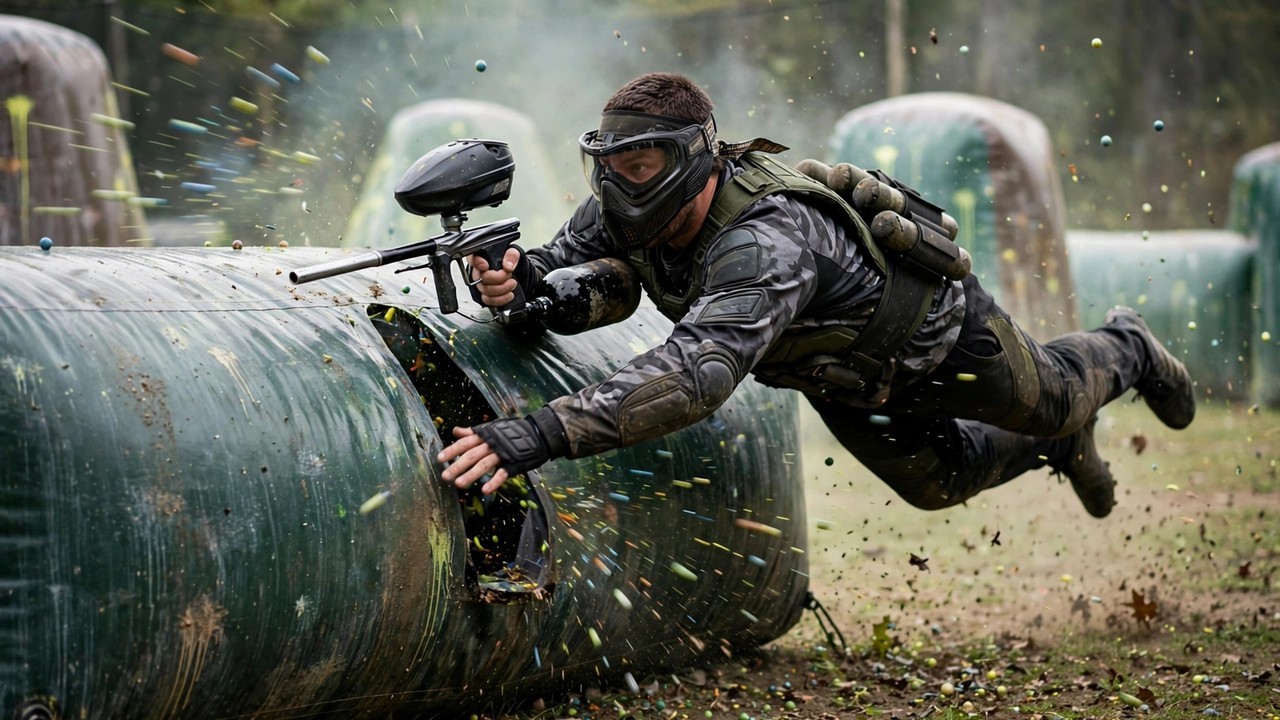
Front players take the forward-centre bunkers and exist to make the opposing team uncomfortable: shooting angles into players who thought they were safe, threatening runs, and forcing defenders to watch them instead of the tapes. It is an aggressive, high-risk role with the shortest life expectancy on the field, and played well it buys every teammate room to work.
Mid: The Connector
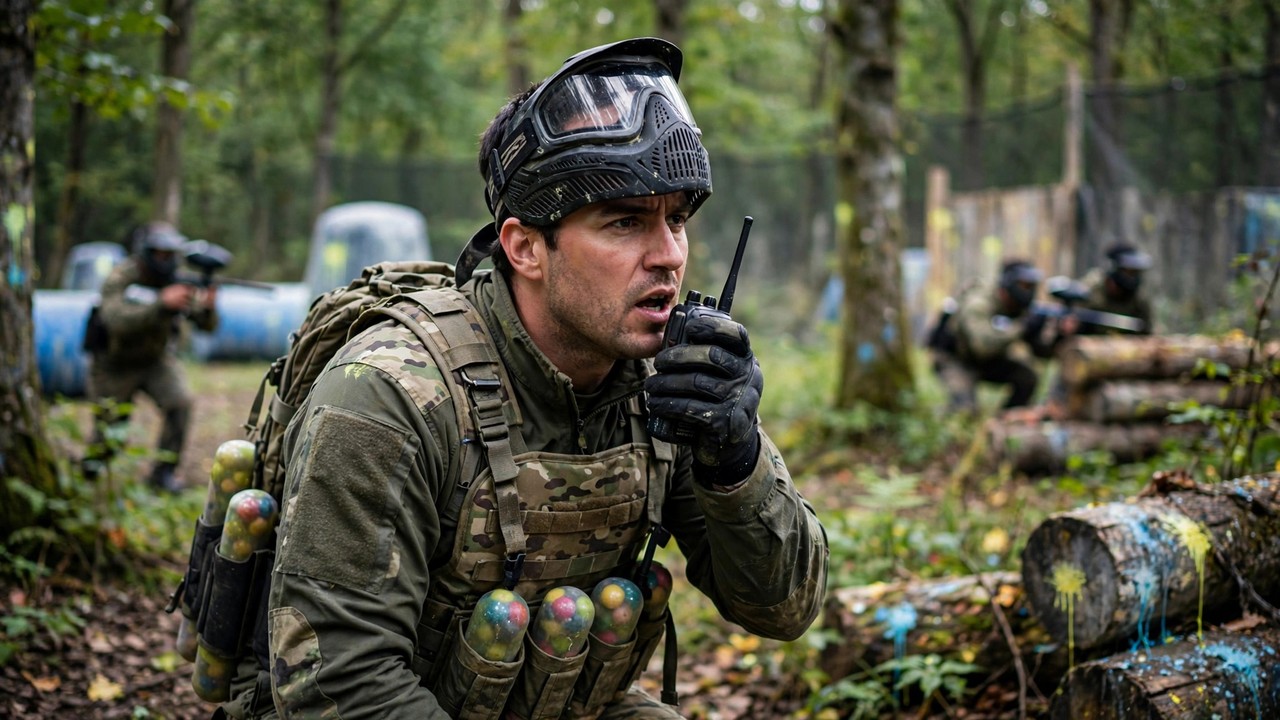
The mid supports both ends: feeding paint to whichever tape is under pressure, filling the bunker a fallen teammate left, and moving up as the team advances. It demands field vision more than any single mechanical skill, which is exactly why it is the best position for a newer player. You see how points develop from the middle, and every mistake is recoverable in a way a front player’s is not.
Back: The Anchor
Back players start the point as the team’s firepower, laning the breakout to thin the opposing team before anyone reaches cover, then spend the rest of it controlling paint and talking. Because they can see most of the field, the back player is usually the loudest voice, feeding positions forward to teammates buried behind bunkers. The two component skills have their own guides: laning and communication and callouts.
How the Positions Move Together
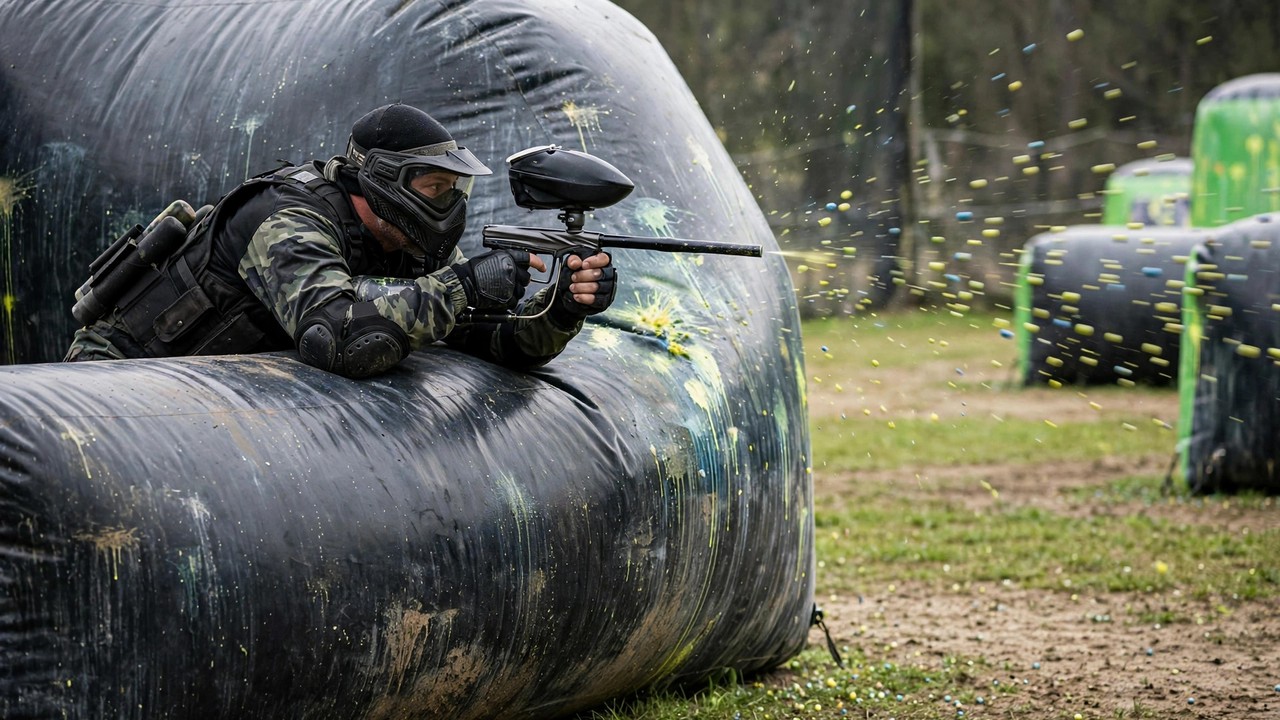
The positions are a starting shape, not a cage. As the team eliminates opponents, everyone bumps forward, back becomes mid, mid becomes front, and the shape advances as a unit. The mechanics of those moves are covered in bumping between bunkers, and the opening seconds that put everyone in position are covered in the breakout.
Choosing Your Position
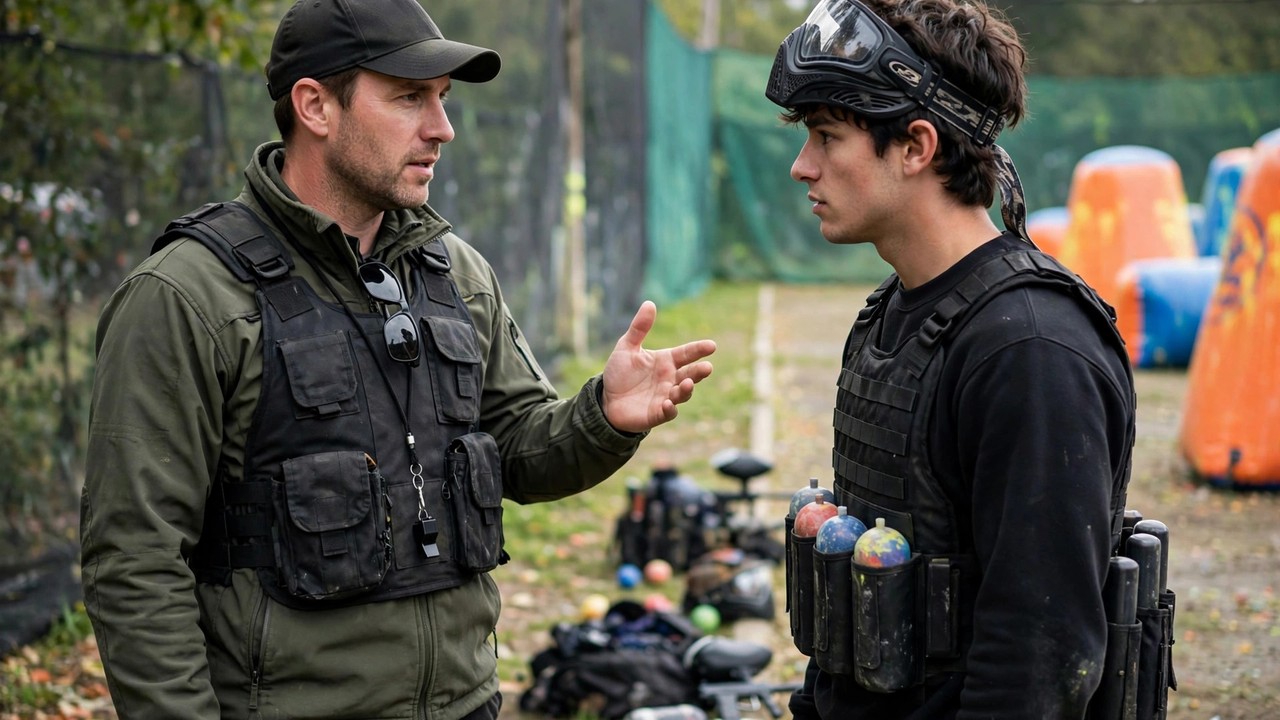
- New to organised play: start at mid or back. You learn the rhythm of a point with time to think.
- Small, patient, comfortable crawling: the snake will reward you.
- Confident dueller with a fast snap: the Dorito side.
- Fearless and quick, happy trading risk for impact: front.
- Loud, steady, accurate at volume: the back is a skill set of its own, not a hiding place.
Whatever the position, the fundamentals underneath are the same, and how to win at paintball ties them together.
Positions With Fewer Players
Rec games rarely give you five organised players, and the structure compresses gracefully. With three, run one player on each tape and one anchor in the middle who lanes, talks and fills. With two, pair up on one side of the field and play it as a unit, one pressing and one supporting, rather than splitting to opposite tapes where neither of you can help the other. The principle survives any headcount: someone presses, someone supports, and somebody is always watching the whole field and saying what they see.
Frequently Asked Questions
The standard five are snake, Dorito, front, mid and back. Snake and Dorito players work the two tape lines, the front creates pressure in the centre, the mid supports both ends, and the back lanes the breakout and controls paint.
Mid or back. Both give you time to think, a view of how the point develops, and mistakes that are recoverable, unlike the front, where errors usually end your point.
The snake player crawls along the long low bunker on one tape line, gaining angles down the opposing side. It is the most physically demanding position and often the most decisive when the player reaches the far end.
They lane the breakout to thin the opposing team, then control paint and communicate, feeding positions forward to teammates who cannot see the field from behind their bunkers. It is a skill set of its own, not a hiding place.
The names are speedball vocabulary, but the logic transfers everywhere: someone presses each flank, someone supports, someone anchors and talks. Organised roles are why average teams beat groups of strong individuals.