Last updated on September 29th, 2026 at 04:52 am
The breakout is the first two to five seconds of a paintball point: players leave the start box, lanes of paint go up, and everyone sprints for their first bunker. It is the shortest phase of the game and the most decisive one, because it sets who controls space for the entire point. Good teams often win their points at the breakout, before most players have realised the point has properly started.
This guide covers what actually happens in those seconds, the roles involved, and how to drill it. It assumes you know the field style; if not, start with what speedball is.
What Happens Off the Break
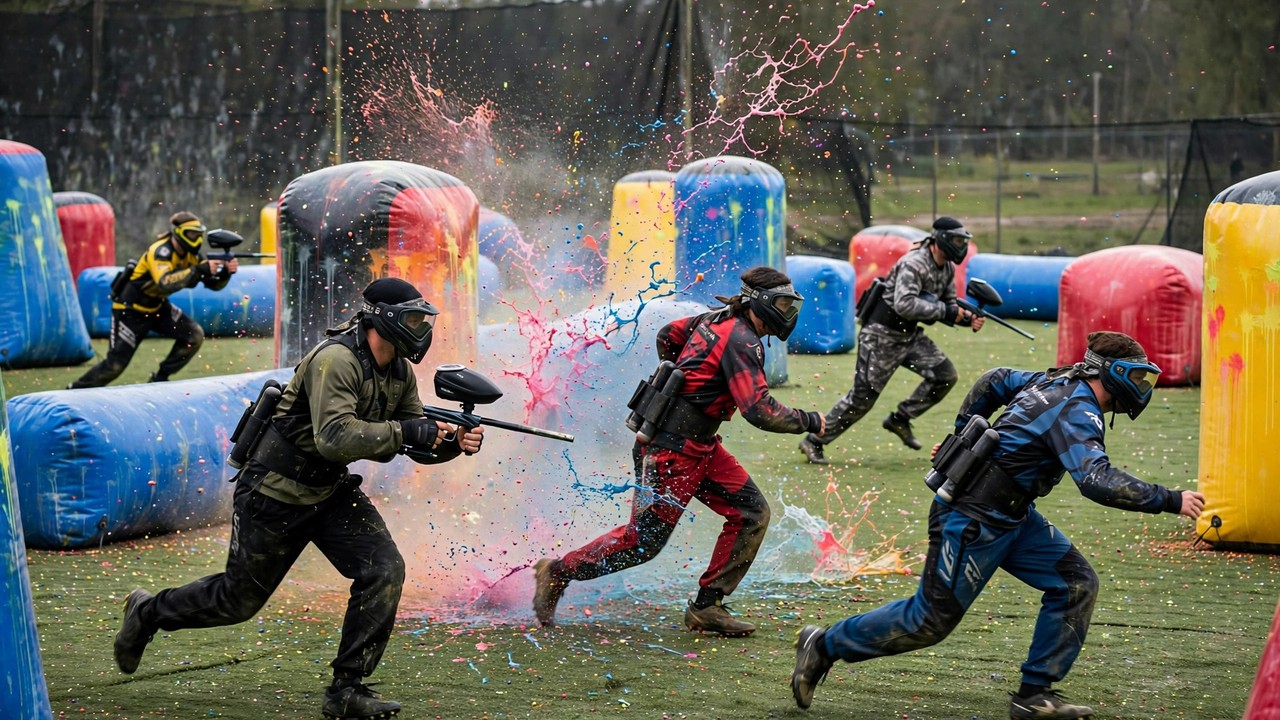
At the horn, three things happen at once. Runners sprint for their primary bunkers, the positions they must reach for the team’s plan to exist. Back players stop a step or two out of the gate and shoot lanes, streams of paint down the corridors the opposing runners have to cross. And everyone is exposed, because nobody has reached cover yet.
That is why eliminations off the break are so valuable. A player shot in the opening seconds never influences the point at all, and a team that goes down a body immediately is defending the rest of the way. It is also why running and gunning wildly gets you eliminated quickly: the breakout rewards a plan executed at speed, not aggression for its own sake.
Primaries: Know Where You Are Going
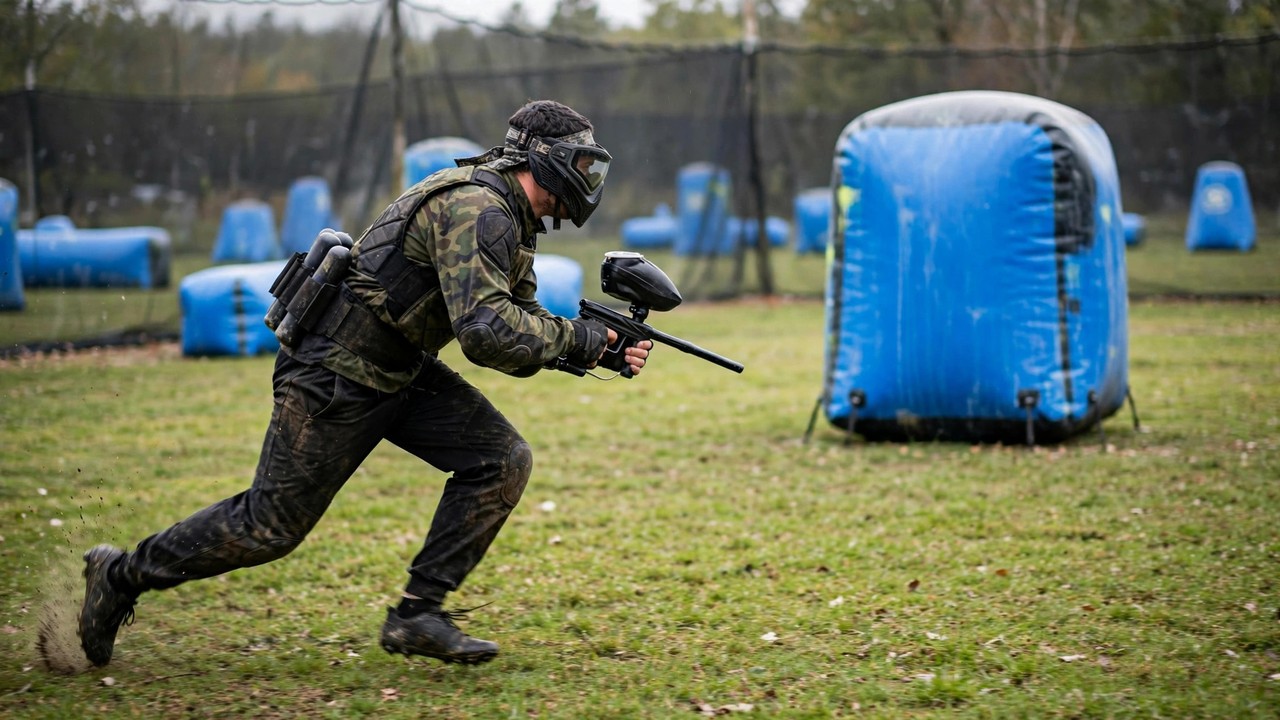
Your primary is the bunker you are committed to reaching off the break, chosen before the point starts. Walking the field beforehand is what makes a primary trustworthy: you learn the exact line, how many steps it takes, and where the danger crosses your path.
Experienced players also find blind spots, positions where you can stand a few steps from the gate, away from a bunker, yet still be concealed from the opposing side. A good blind spot lets a shooter stay up and laning for an extra beat before moving, which is often the beat that catches a runner.
Laning: The Other Half of the Breakout
While runners go, back players deny. A lane is a controlled line of paint placed on a gap the opposing runners must cross, and shooting one well is about consistency rather than volume: paint arriving steadily where a body will be, timed to the sprint. The full technique has its own guide in laning in paintball.
The interaction between lanes and primaries is the whole chess of the breakout. If their lanes are strong, your runners go to shorter, safer primaries. If their lanes are weak, you release runners deep and take the field’s best real estate while it is cheap.
A Simple Breakout Structure for a New Team
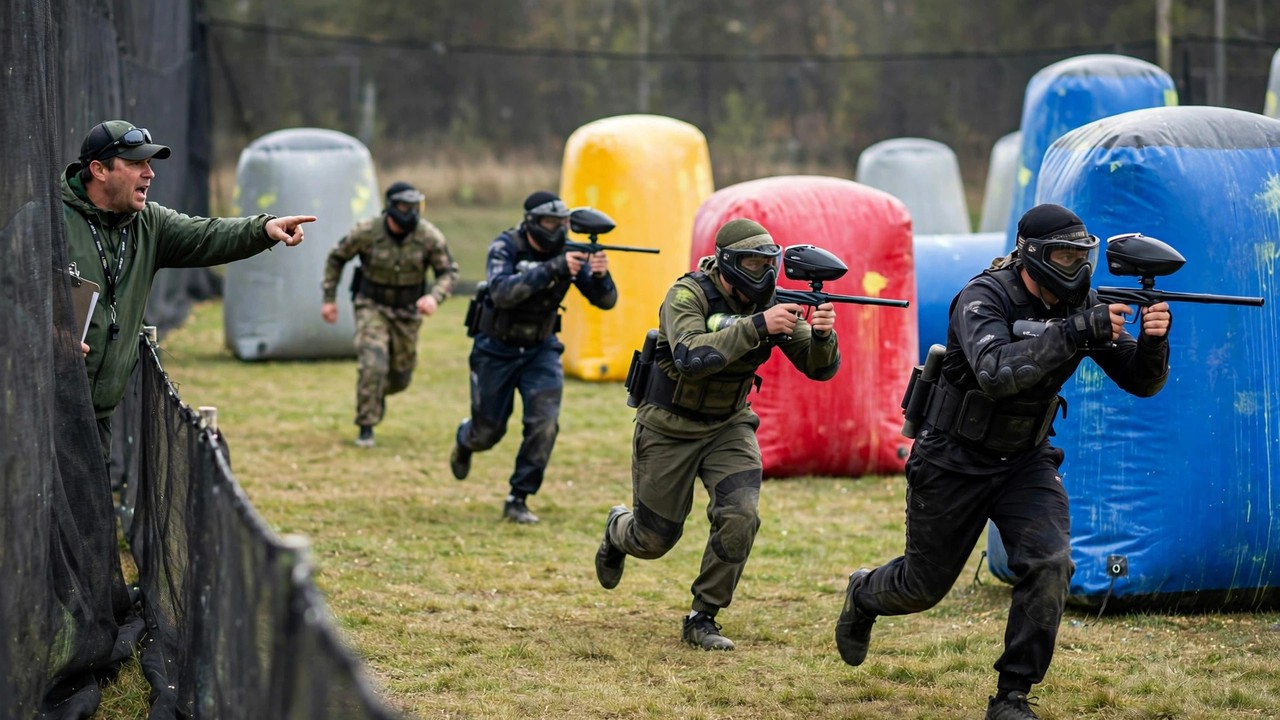
- Two shooters stay home. They lane the widest corridors, usually the snake side and the Dorito side, for the first two seconds, then move.
- Two runners take mid-field primaries. Not the deepest bunkers, the reliable ones they can reach in three seconds.
- One player floats. They read the break, fill wherever a runner went down, and keep the plan intact.
Simple beats clever here, every single time. A plan every player can execute at full sprint outperforms an elaborate one that falls apart when the first lane forces a runner short. Once bodies are established in primaries, the point becomes the positional game covered in paintball positions and the moving game covered in bumping between bunkers.
How to Drill Breakouts
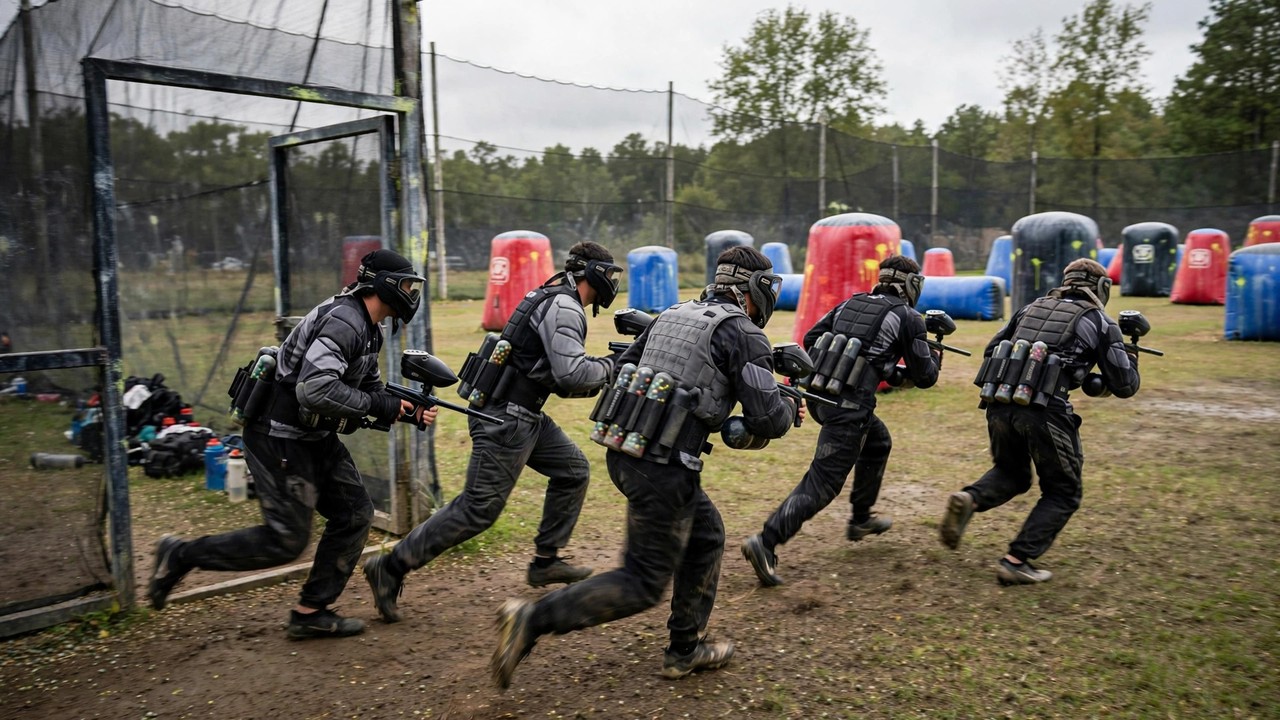
Breakouts are the most drillable part of paintball, because they are short and repeatable. Run the same break repeatedly and score it on simple questions: did every runner reach their primary, did the laners put paint in the right corridor for the full window, and did anyone go down. Rotate who lanes and who runs, and drill the mirrored version so the plan works from both start boxes.
Paint cost is the usual objection, and the honest answer is that lane drills can be run with markers only, no runners, scoring paint placement against a target crossing the gap. It is not glamorous, and it is the cheapest improvement per case of paint in the sport.
The Habits That Get Players Shot Off the Break
- Standing in the gate to shoot. The start box is the most pre-aimed spot on the field. Shoot from a step off it, or from a blind spot, never from where everyone knows you are.
- Watching your own paint. Laners who admire their stream stop tracking the runner. Track the body, adjust the paint.
- Improvising a primary. Deciding where to go mid-sprint means hesitating in the open. The decision belongs before the horn.
- Running upright and wide. Sprint low, tight and on the planned line. Every extra inch of profile is a target crossing a lane.
For the wider game around the breakout, see how to win at paintball and the modes it plays out in under paintball game modes.
Frequently Asked Questions
The breakout is the first two to five seconds of a point, when players leave the start box, back players shoot lanes, and runners sprint to their primary bunkers. It largely decides who controls space for the rest of the point.
Your primary is the bunker you commit to reaching off the break, chosen before the point starts. Walking the field beforehand tells you the line, the number of steps and where opposing lanes will cross your path.
Because everyone is out of cover at once. Standing in the pre-aimed start gate, improvising a primary mid-sprint, and running upright through a lane are the usual causes.
Run the same break repeatedly and score it: did runners reach their primaries, did laners hold paint in the right corridor, did anyone go down. Lane placement can be drilled without runners at all, which keeps the paint bill low.
No. Sprinting wildly while shooting gets players eliminated quickly. The breakout rewards a simple plan executed at full speed, with lanes covering the runners.