Last updated on September 29th, 2026 at 04:56 am
Speedball is the tournament face of paintball. It is played on a small, flat, perfectly symmetrical field filled with inflatable bunkers, and a single point is usually over in two to five minutes. Everything about it is built for speed: the field is compact, the cover is identical on both sides, and the markers are made to put a lot of paint downrange very quickly.
If you have only ever played rental games in the woods, speedball feels like a different sport. This guide covers the field, the bunkers, the five positions, how a match is actually scored, and what gear the format demands. For how speedball sits alongside the other formats, see our guide to the types of paintball.
What Makes a Field Speedball
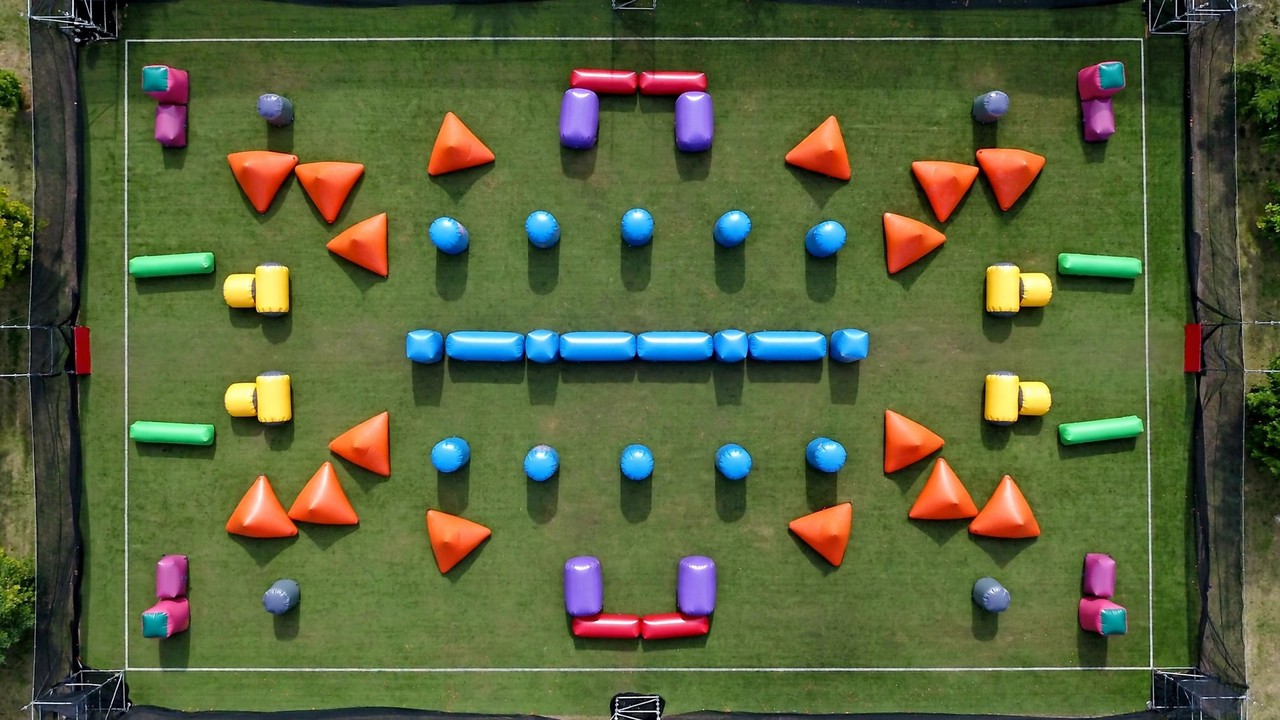
Two things define a speedball field: it is small, and it is mirrored. Every bunker on your side has an exact twin on the opposing side, so neither team starts with a terrain advantage. That symmetry is the whole point. It turns the game into a pure contest of movement, shooting and communication rather than who drew the better hill.
In the United States the competitive scene runs largely under the NXL banner, and its standard field measures roughly 150 feet wide by 120 feet long. That is deliberately tight. Players are within range of each other from the opening horn, which is why points end so quickly. Our guide on how big a paintball field is puts those dimensions next to woodsball fields for comparison.
The Bunkers and What They Are Called
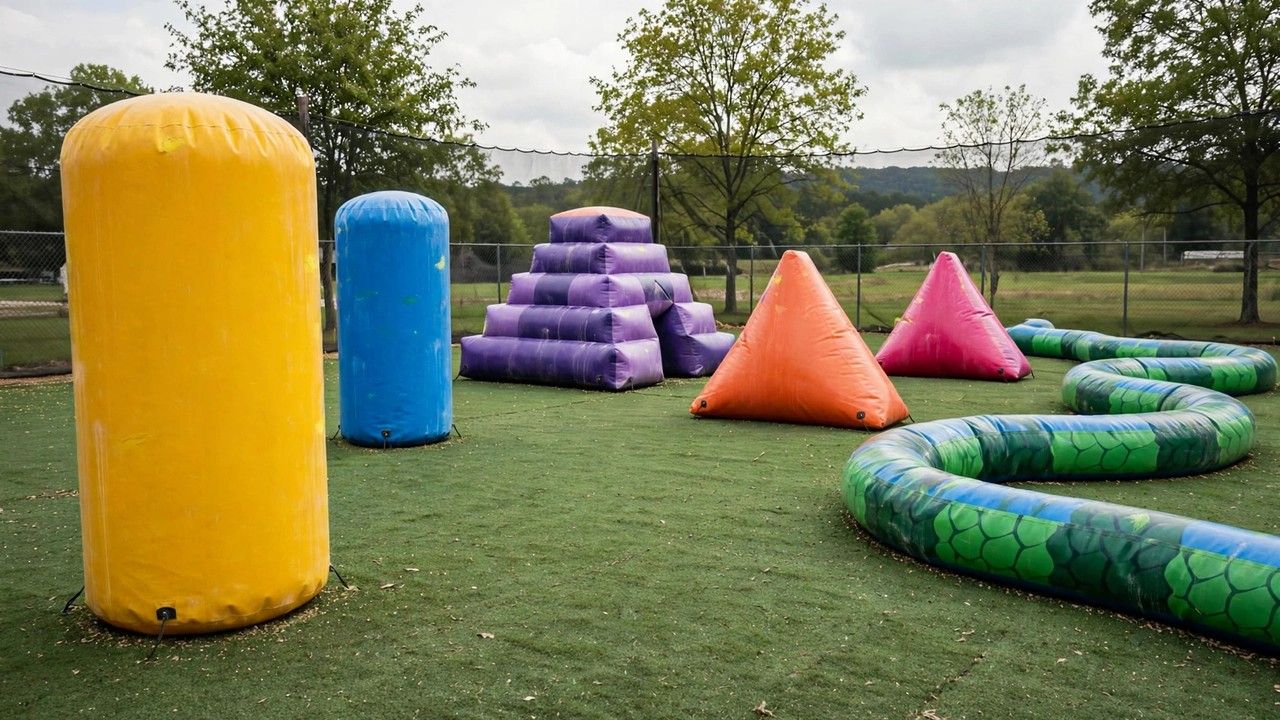
Speedball bunkers are inflatable, and they have names that every player uses. Learning them is the fastest way to stop sounding like a first-timer, because callouts depend on them.
- Snake: a long, low, curving bunker running down one side of the field. Players crawl along it to advance without exposing themselves.
- Dorito: a triangular bunker, named for the shape. The Doritos usually run down the opposite side from the snake.
- Temple: a large, tall bunker that offers strong cover and often anchors the middle of the field.
- Dollhouse: a small square bunker with minimal cover, used as a stepping stone between stronger positions.
Layouts change from event to event, but the vocabulary stays the same. When a teammate shouts a bunker name and a direction, you are expected to know instantly where they mean.
The Five Speedball Positions
Speedball teams are small, so every player has a defined job. Most teams organise around five roles.
| Position | What the role does |
|---|---|
| Snake | Works the long low bunker, crawling forward to gain angles on the opposing side |
| Dorito | Plays the triangular bunkers on the opposite side, mirroring the snake player |
| Front | Pushes aggressively toward the opponent half and creates early pressure |
| Mid | Supports both ends of the field and fills gaps as the point develops |
| Back | Anchors from the rear, laying paint and feeding information to the front players |
Beginners are usually put in a back or mid role first. Those positions are the safest place to learn the timing of a point without being eliminated in the opening seconds, and they still teach you the two skills that matter most: shooting accurately under pressure and talking constantly.
How a Speedball Match Is Scored
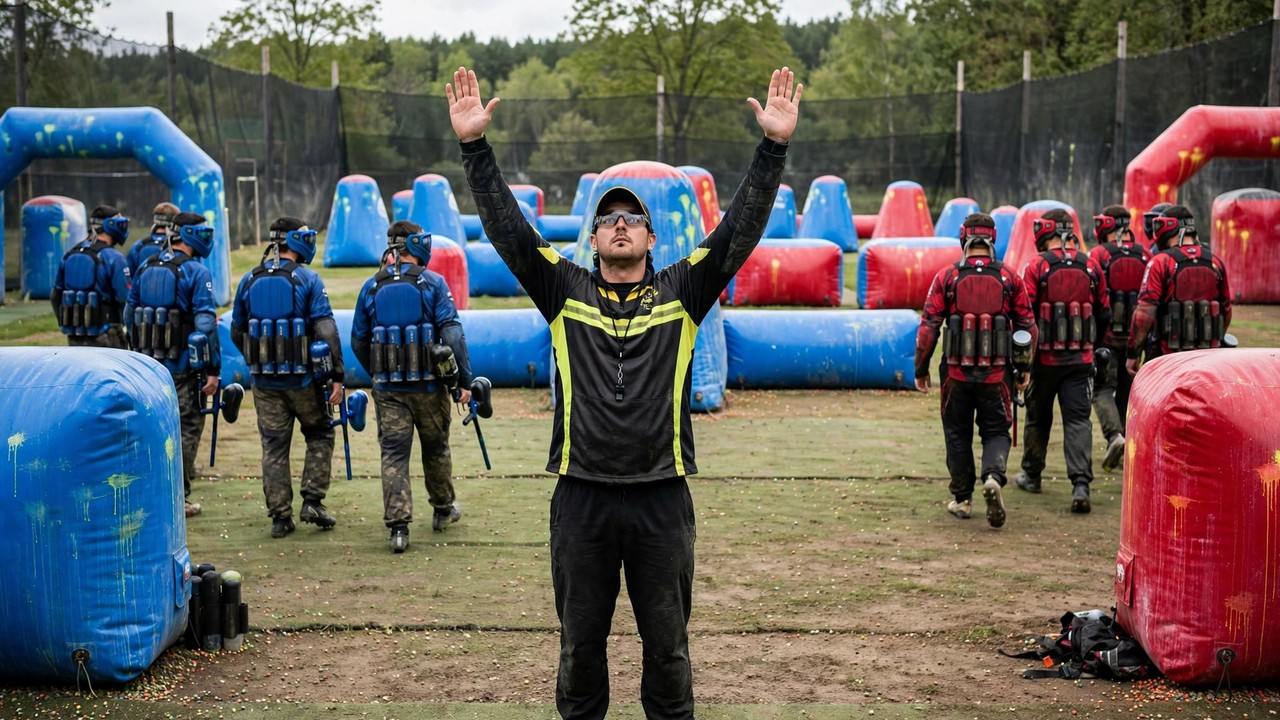
A speedball match is not one long game. It is a series of short points played back to back against a clock. NXL matches are 5-on-5 and run 12 to 15 minutes depending on the division, with teams racing to reach a set number of points before time expires. A team can also end the match early by forcing a mercy, which means opening a lead of four to six points depending on the division.
That structure explains the intensity. Losing a point costs you very little time, so teams take aggressive risks at the breakout that would be reckless in a longer format. It also means a match can swing quickly, since points arrive every few minutes.
The Gear Speedball Demands
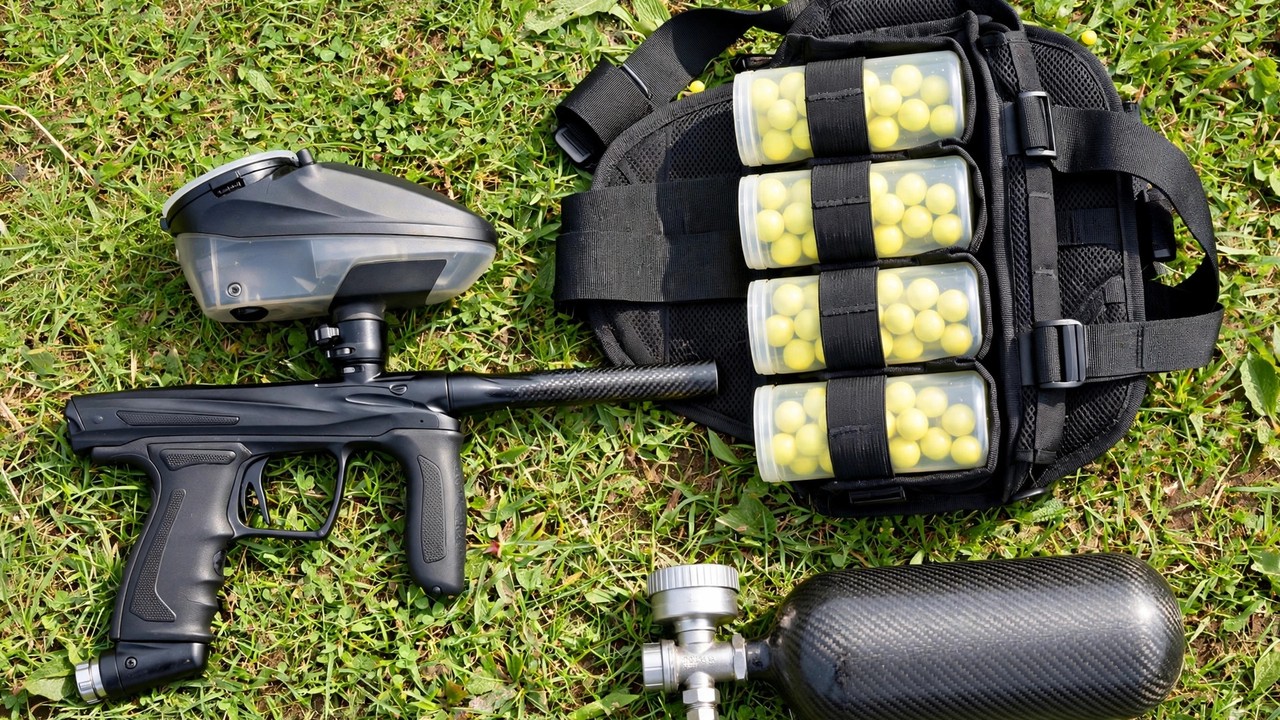
Speedball gear is chosen for weight and rate of fire. Markers are lightweight electronic models with fast, adjustable triggers, and loaders are force-fed so they can keep up when a player is shooting hard. A gravity hopper that works fine in the woods will starve an electronic marker on a speedball field.
Protection matters more than it looks from the sidelines, because you spend the point sliding, diving and crawling. Knee protection and a mask with a thermal lens are the two items worth spending on early. Our roundups of the best electronic paintball guns, the best paintball hoppers and the best paintball protective gear cover the specifics.
How Much Paint Speedball Uses
This is the part that surprises people. Players commonly send more paint downrange during a three-minute speedball point than during a fifteen-minute woodsball game. Laning the breakout, keeping an opponent pinned and shooting through bunkers all consume paint quickly, and none of it is wasted from a tactical point of view.
Budget accordingly. Speedball is the more expensive format to play regularly, and paint is the recurring cost rather than the marker. Our breakdown of what paintball costs covers the numbers.
Is Speedball Right for You?
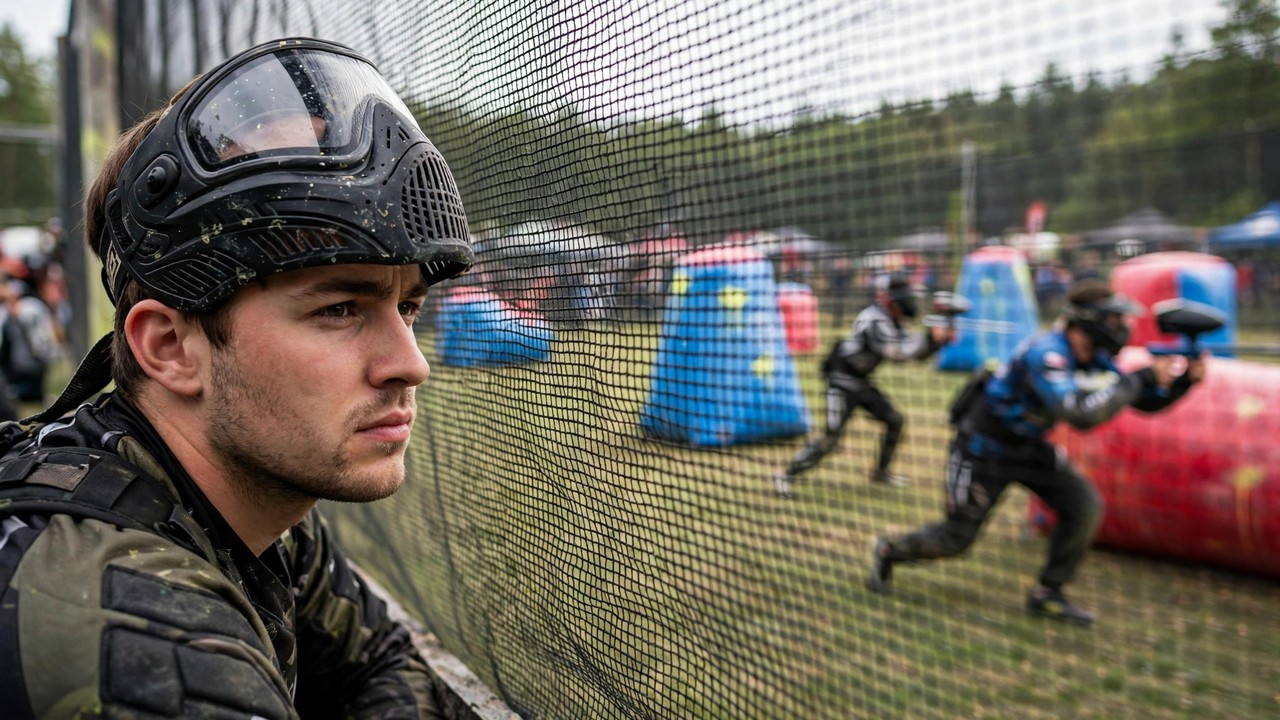
Speedball suits players who want a physical, competitive, repeatable game. Because the field is mirrored and the points are short, you get many attempts at the same problem in a single day, which makes it the fastest format for improving deliberately.
It suits you less if you prefer long games, stealth, or a slower pace. If that sounds more appealing, woodsball is the other main branch of the sport, and the types of paintball guide lays out every option side by side. If you want to get better at the shooting itself, start with how to aim a paintball gun.
Frequently Asked Questions
Speedball is the tournament format of paintball, played on a small, flat, perfectly symmetrical field filled with inflatable bunkers. Points are short, commonly two to five minutes, and both teams face identical cover so neither has a terrain advantage.
Standard NXL fields measure roughly 150 feet wide by 120 feet long. That is deliberately compact, which is why players are in range of each other from the opening horn and points end quickly.
The common names are the snake, a long low curving bunker; the Dorito, a triangular bunker; the temple, a tall bunker that anchors the middle; and the dollhouse, a small square bunker with minimal cover.
Most teams use five roles: snake, Dorito, front, mid and back. Snake and Dorito players work the two sides of the field, the front player pushes forward, the mid supports both ends, and the back anchors from the rear.
Yes, considerably. Players commonly send more paint downrange in a three-minute speedball point than in a fifteen-minute woodsball game, which makes paint the main recurring cost of playing speedball regularly.