Last updated on September 29th, 2026 at 04:56 am
Woodsball is paintball played on natural, unmodified ground. Instead of inflatable bunkers on a flat field, your cover is trees, ditches, fallen logs, rocks and whatever the terrain happens to give you. It is the original form of the sport, going back to the first game in 1981, and it is still how most people play.
Fields are far bigger than a tournament field, games run much longer, and the whole rhythm of play changes. This guide covers the terrain, how games are structured, the gear that actually suits the woods, and the tactics that work there. For how woodsball compares with the other formats, see our guide to the types of paintball.
The Field Is the Defining Feature
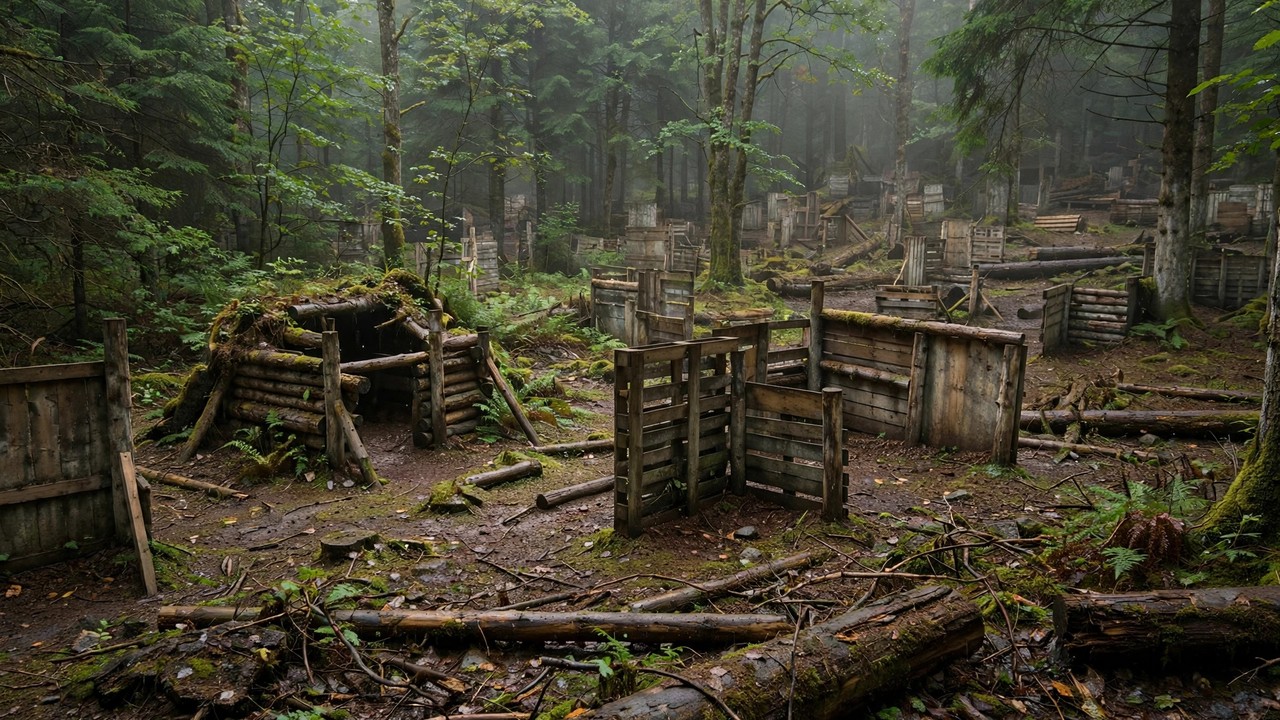
A speedball field is deliberately identical on both sides. A woodsball field is the opposite: nothing is mirrored, and the ground itself decides how a game plays out. Fields can span dozens of acres, and terrain shapes the game more than any other single factor. A dense tree line, a creek bed or a ridge will dictate where the fighting happens long before either team makes a plan.
That size has a practical consequence people underestimate. Teammates can end up hundreds of yards apart, which makes voice communication difficult or impossible. Plans have to be made before the game starts, because you often cannot renegotiate them once it does.
How Woodsball Games Are Structured
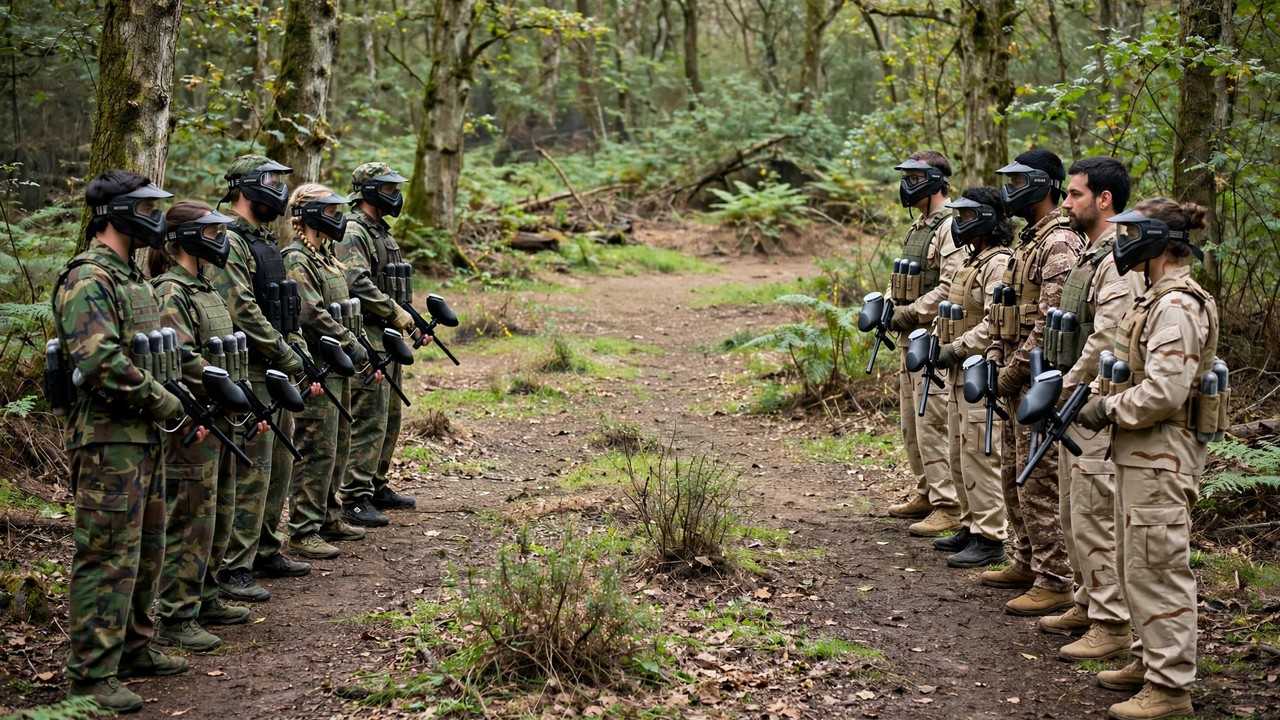
Woodsball games last much longer than speedball points. A single game commonly runs fifteen minutes to well over an hour, and larger scenario events built on woodsball fields can span multiple days. Team sizes scale up to match, sometimes to dozens of players a side.
Because games are long, stamina matters as much as shooting. You will spend most of a game moving, waiting and repositioning rather than firing. Our guide on how long a paintball game lasts breaks the timings down by format.
Gear That Suits the Woods
Woodsball gear priorities are almost the reverse of speedball. Range and reliability beat rate of fire, because engagements happen at longer distances and you cannot rely on a quick trip back to the staging area if something fails.
- Marker: many woodsball players run mechanical markers rather than the electronic models common in speedball. They are simpler, tougher and less bothered by dirt and rain.
- Clothing: camouflage or muted colours genuinely help, because the cover is natural and broken up rather than solid.
- Mask: a thermal lens matters more here, since you are outside for long stretches in changing temperatures.
- Carrying gear: a harness or tactical vest is worth having, because you cannot restock mid-game the way you can between speedball points.
For specifics, see our picks for the best woodsball paintball guns, the best mechanical paintball markers and the best masks for woodsball. What you wear matters too, which our guide on how to dress for paintball covers.
Tactics That Work in the Woods
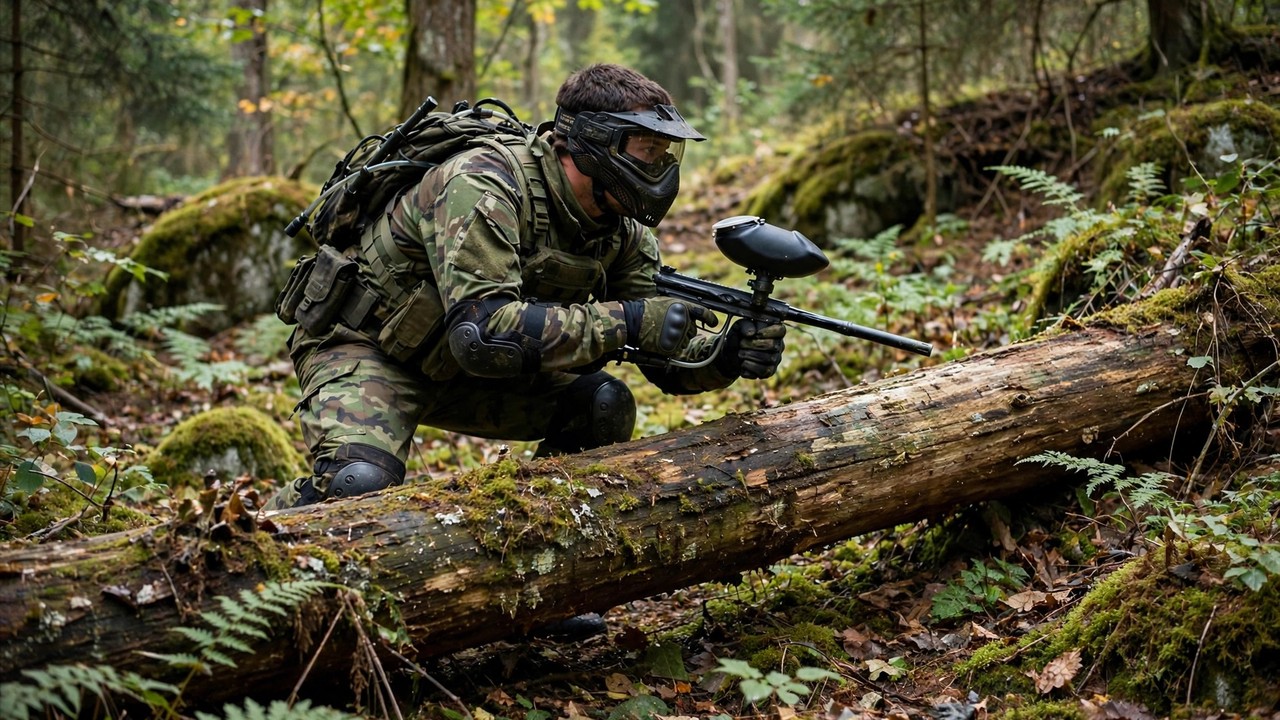
The woods reward patience in a way a tournament field never does. Standing still behind good cover is often stronger than pushing, because an opponent moving through undergrowth gives away position with sound long before you see them.
- Move slowly and stop often. Sound carries in the woods, and the player who stops to listen usually hears the one who does not.
- Use the natural terrain, not just objects. A dip in the ground can be better cover than a tree, and it does not tell the enemy where you are.
- Flank wide. Large fields leave real gaps on the edges, and a wide flank is far more achievable here than on a symmetrical field.
- Agree on a plan before the horn. Once teams spread out, coordinating is often impossible.
- Watch your silhouette. Cresting a ridge or standing against open sky makes you visible from a long way off.
Smoke is genuinely useful on a large field for screening a move across open ground. If you are exploring that, see the best paintball smoke grenades and how paintball grenades work. For general tactical improvement, our guide on how to win at paintball goes further.
Woodsball Compared With Speedball
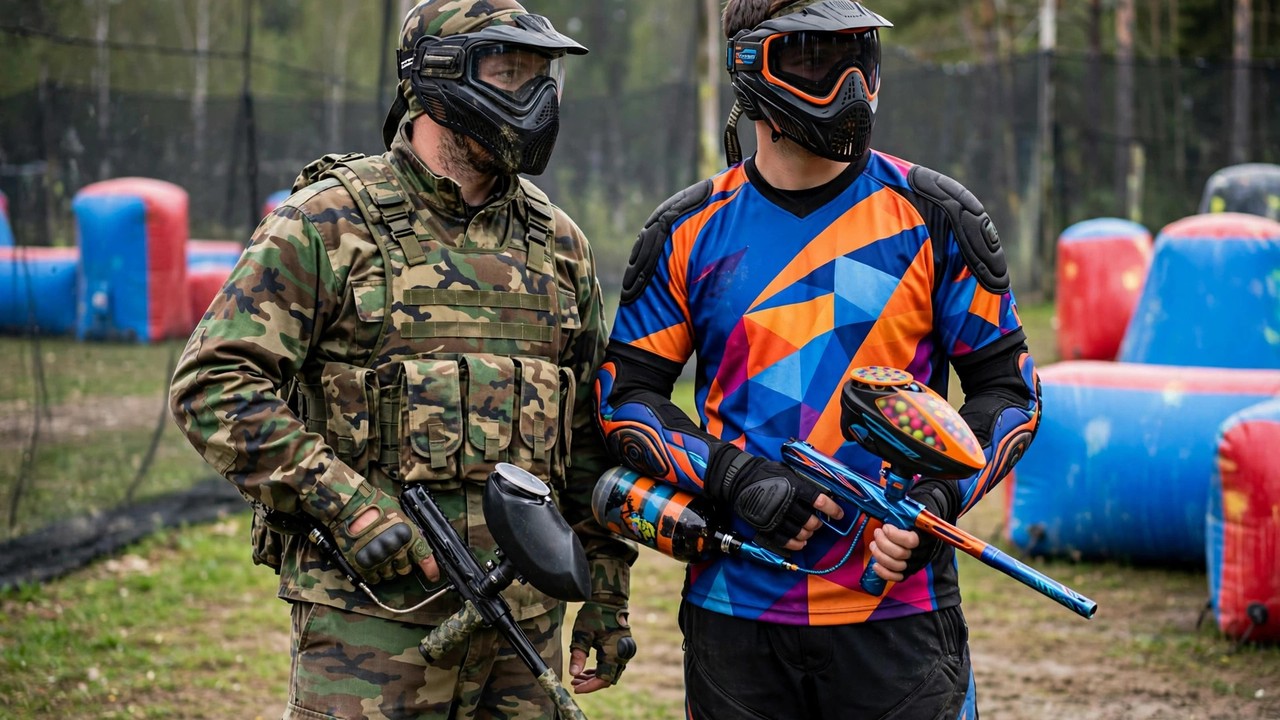
| Woodsball | Speedball | |
|---|---|---|
| Field | Natural terrain, can span dozens of acres | Small, flat, symmetrical |
| Cover | Trees, ditches, rocks, structures | Inflatable bunkers |
| Game length | 15 minutes to several hours | Points of 2 to 5 minutes |
| Typical marker | Mechanical, built for range | Electronic, built for rate of fire |
| Paint used | Less | Considerably more |
| Rewards | Patience, positioning, stealth | Reflexes, speed, communication |
Is Woodsball Right for You?
Woodsball is the most forgiving format for newcomers. The pace is slower, the fields are large enough that you are not under fire from the opening horn, and rental gear is perfectly adequate. It is also the cheapest way to play regularly, because you get through far less paint than a speedball player.
It suits you if you like tactics, terrain and longer games, and it scales naturally into scenario play and MilSim events if you want more structure later. If you have not played at all yet, start with our first-timer guide and what to bring for paintball.
Frequently Asked Questions
Woodsball is paintball played on natural terrain, using trees, ditches, rocks and undergrowth for cover instead of inflatable bunkers. It is the original form of the sport, dating to the first game in 1981, and remains the most common way people play.
Woodsball fields are far larger than tournament fields and can span dozens of acres. That size is why teammates often end up hundreds of yards apart and voice communication becomes difficult.
Games commonly run from fifteen minutes to well over an hour, and scenario events built on woodsball fields can span multiple days. Stamina matters as much as shooting.
A marker built for range and reliability, a mask with a thermal lens, muted or camouflage clothing, and a harness to carry paint and air. Many woodsball players prefer mechanical markers because they are simpler and cope better with dirt and rain.
Yes. It is the most forgiving format for newcomers because the pace is slower, fields are large enough that you are not under fire immediately, rental gear is adequate, and you get through far less paint than in speedball.