Last updated on September 29th, 2026 at 04:54 am
Speedball and woodsball are the two main branches of paintball, and the difference is not a matter of preference around the edges. They use different fields, different markers, different tactics and different amounts of money. Choosing between them is the first real decision a new player makes.
The short answer: start with woodsball. It is slower, cheaper, more forgiving and available at almost every field. Move to speedball if you find you want shorter, sharper, more competitive games. The rest of this guide explains why.
Speedball vs Woodsball Side by Side
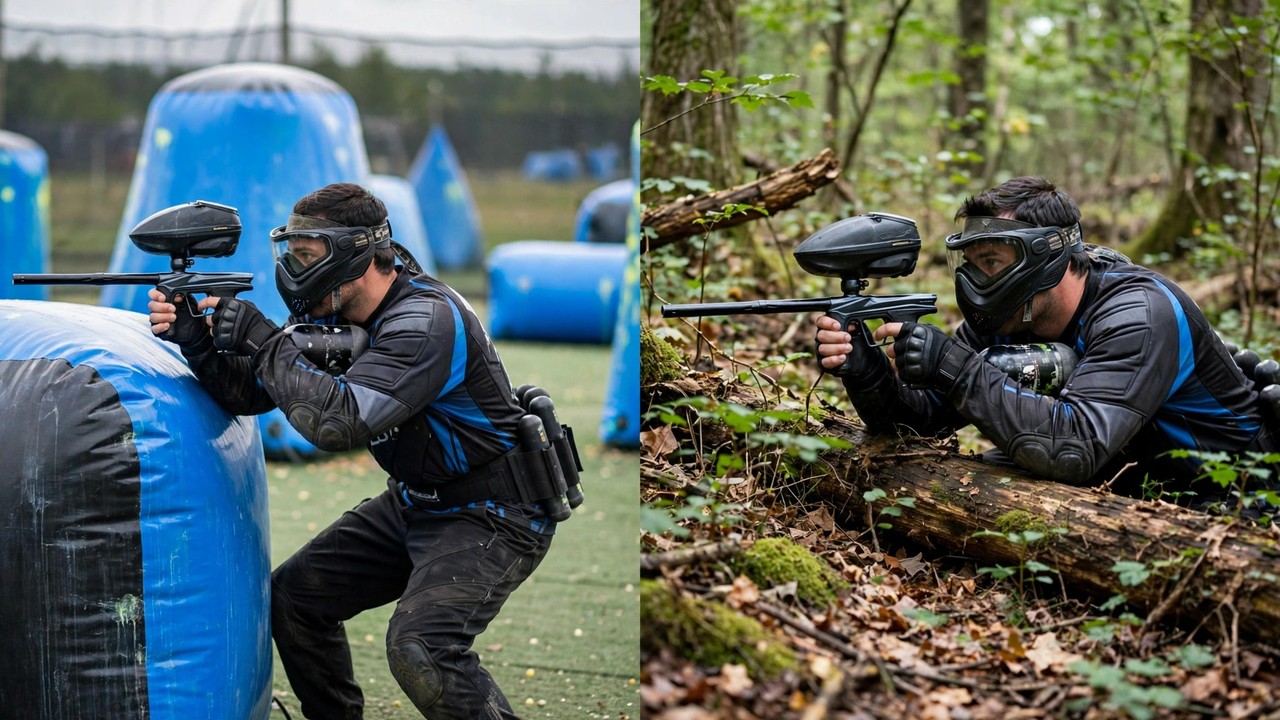
| Speedball | Woodsball | |
|---|---|---|
| Field | Small, flat, perfectly symmetrical | Natural terrain, can span dozens of acres |
| Cover | Inflatable bunkers | Trees, ditches, rocks, structures |
| Game length | Points of 2 to 5 minutes | 15 minutes to several hours |
| Team size | Small, commonly 3 or 5 a side | Larger, sometimes dozens a side |
| Typical marker | Lightweight electronic | Rugged mechanical, often magfed |
| Paint used | Considerably more | Less |
| Rewards | Reflexes, speed, communication | Patience, positioning, stealth |
The Field Changes Everything Else
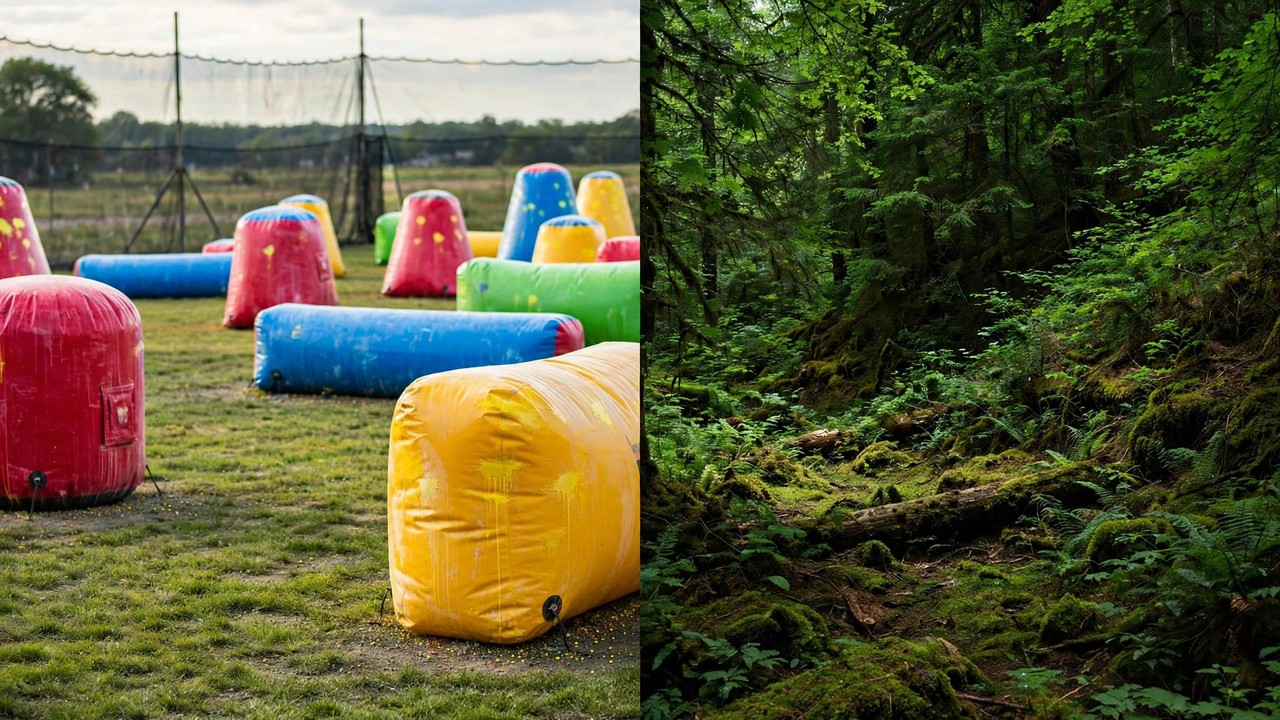
A speedball field is mirrored on purpose. Every bunker on your side has an exact twin opposite, so neither team gets a terrain advantage and the game becomes a pure contest of movement and shooting. Standard NXL fields measure roughly 150 feet by 120 feet, which is small enough that both teams are in range from the opening horn.
A woodsball field is the opposite. Nothing is mirrored, fields can run to dozens of acres, and the terrain decides where the fighting happens before either team makes a plan. That size also breaks communication, because teammates can end up hundreds of yards apart with no way to talk.
Pace and Game Length
Speedball is played as a series of short points, commonly two to five minutes each, run back to back against a clock. You get many attempts at the same problem in a single day, which makes it the faster format for improving deliberately.
Woodsball games run from fifteen minutes to well over an hour, and scenario events built on woodsball fields can span multiple days. Most of that time is spent moving, waiting and repositioning rather than shooting, so stamina matters more than reflexes.
Cost Is the Deciding Factor for Most People
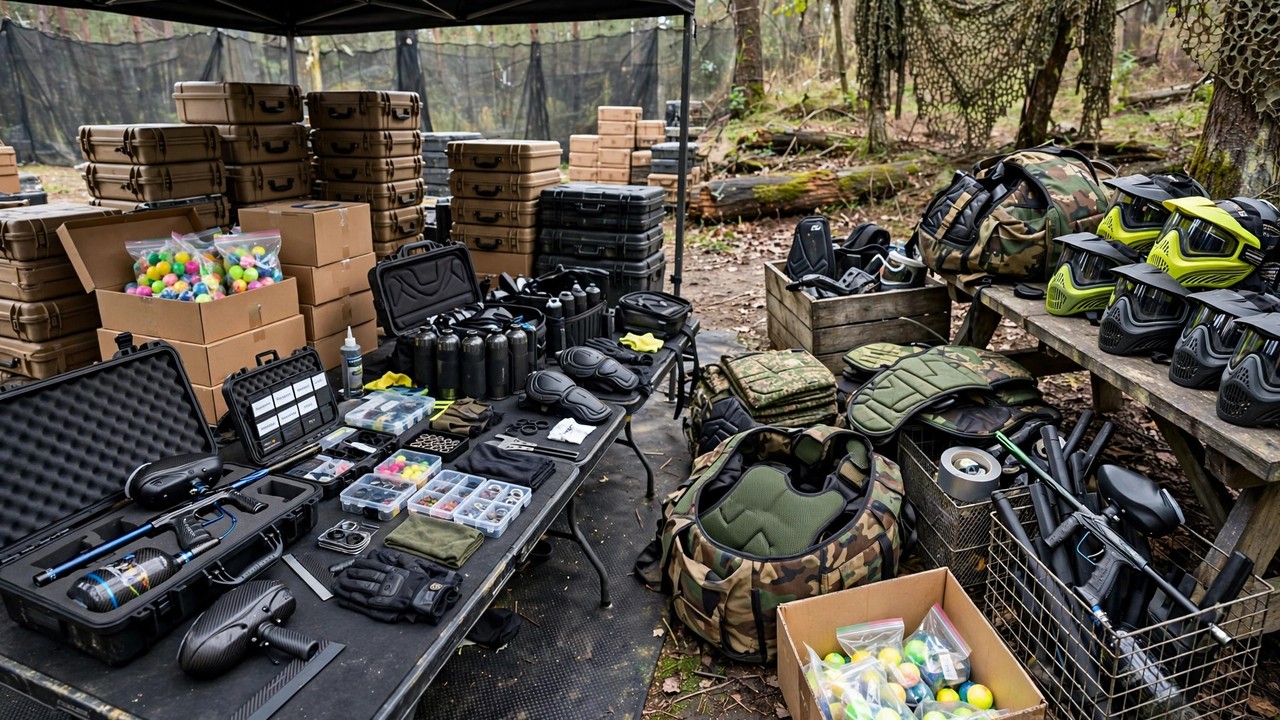
This is the difference nobody mentions until the bill arrives. A single three-minute speedball point routinely burns more paint than a fifteen-minute woodsball game. Laning the breakout and keeping opponents pinned burns paint quickly, and none of it is wasted tactically.
Paint, not the marker, is the recurring cost of paintball. If you intend to play regularly on a budget, woodsball is meaningfully cheaper. Our breakdown of what paintball costs covers the numbers.
The Gear Pulls in Opposite Directions
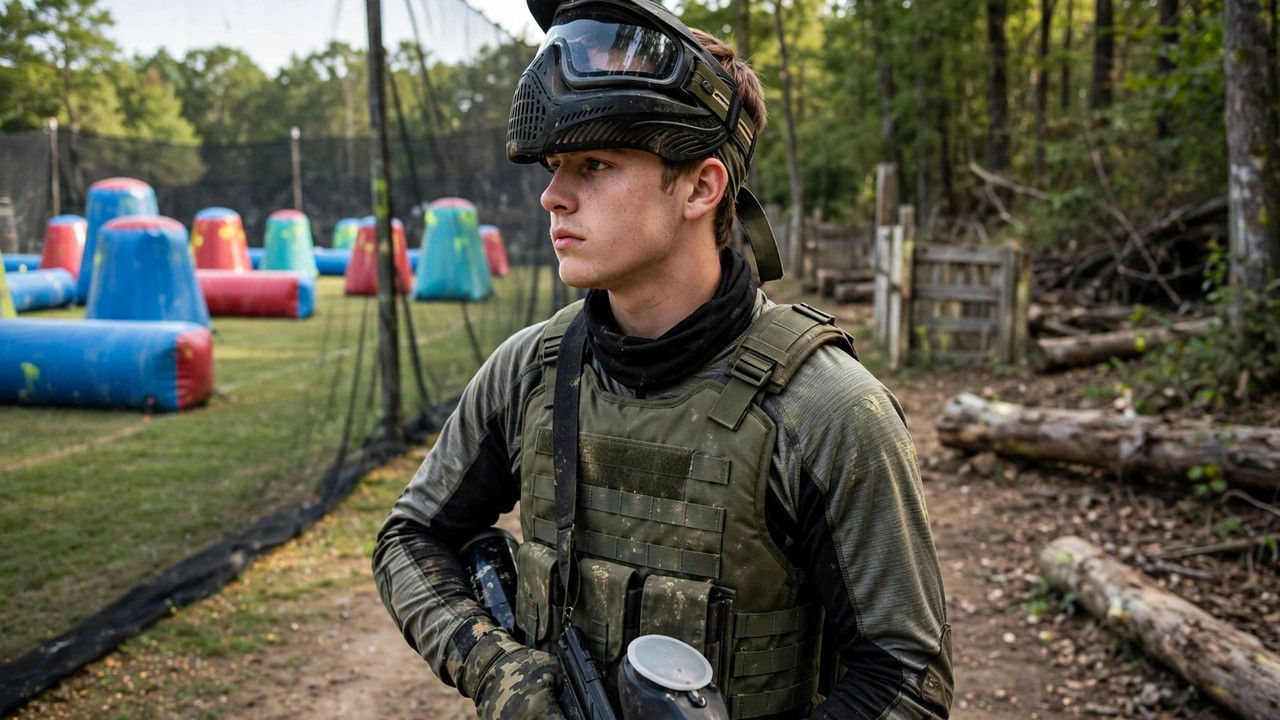
Speedball gear is chosen for weight and rate of fire: a lightweight electronic marker with a fast adjustable trigger, and a force-fed loader that can keep up with it. A gravity hopper that keeps up fine under trees will starve a fast electronic marker on an airball court.
Woodsball gear is chosen for range and reliability. Many players deliberately run mechanical markers because they are simpler, tougher and less troubled by dirt and rain, and because engagements happen at longer distances where volume of fire matters less.
See the best electronic paintball guns and best paintball hoppers for speedball, or the best woodsball paintball guns and best mechanical markers for the woods.
Which Should You Start With?
- Start with woodsball if you are new, playing with a mixed group, on a budget, or unsure whether you will enjoy the sport at all.
- Start with speedball if you already know you like fast competitive games, you want to improve quickly, and the running cost is not a concern.
- Play both if you can. They train genuinely different skills, and time on a speedball field will make you a sharper shot in the woods.
You do not have to choose permanently. Most fields run both, and plenty of players move between them depending on who they are playing with that weekend. For the full picture of everything on offer, see our guide to the types of paintball, or read the dedicated guides to what speedball is and what woodsball is.
Where the Other Formats Fit
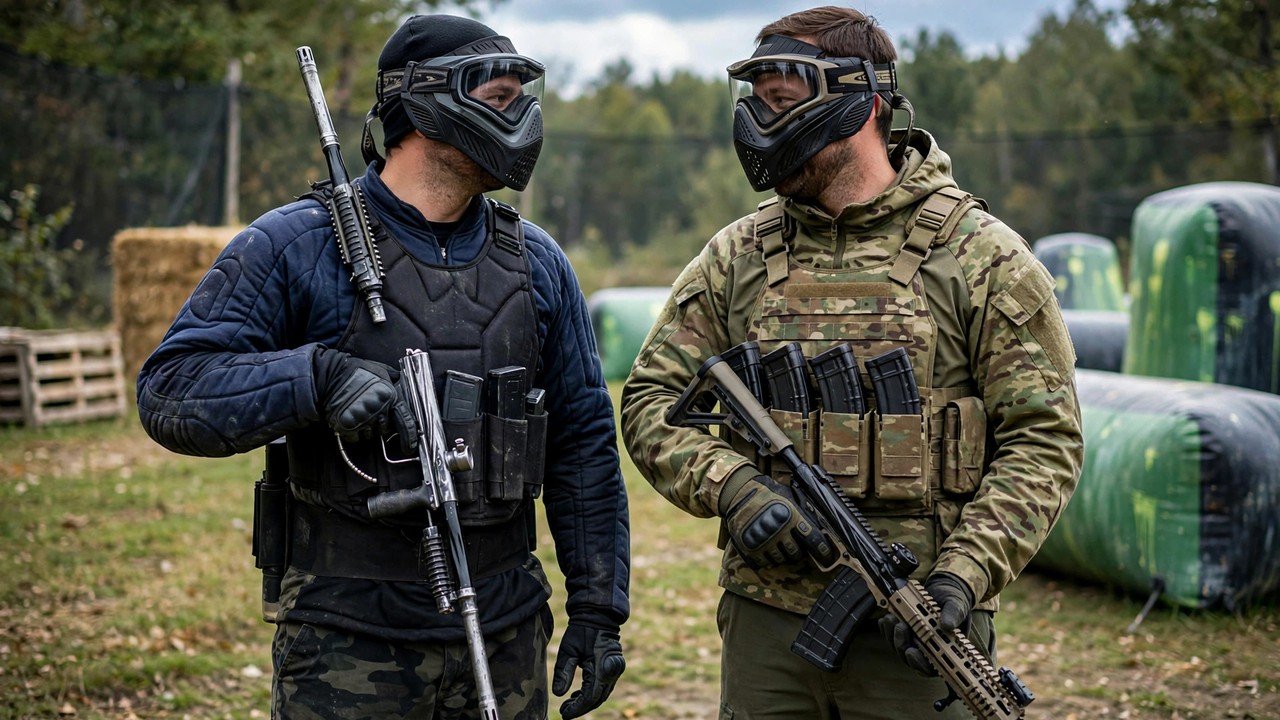
Speedball and woodsball are the two branches, but they are not the only way to play. Several formats sit on top of them rather than beside them, which is why the choice is rarely permanent.
- Scenario games and MilSim events are built on woodsball-style terrain, with missions, factions and a command structure layered over the top.
- Magfed is a gear choice rather than a field, so it can be run in either branch, though it suits the woods far better.
- Rec ball is where nearly everyone starts, and it almost always runs on woodsball-style fields.
Frequently Asked Questions
Speedball is played on a small, flat, perfectly symmetrical field with inflatable bunkers and points of two to five minutes. Woodsball is played on large natural terrain with real cover and games running from fifteen minutes to several hours.
Woodsball. It is slower, cheaper, more forgiving and available at almost every field, and rental gear is perfectly adequate for it.
Yes. Players commonly send more paint downrange in a three-minute speedball point than in a fifteen-minute woodsball game, and paint rather than the marker is the recurring cost of playing.
Broadly yes. Speedball favours lightweight electronic markers with force-fed loaders, while woodsball favours rugged mechanical markers built for range and reliability in dirt and rain.
Yes, and it is worth doing. They train genuinely different skills, most fields run both, and time on a speedball field tends to make you a sharper shot in the woods.