Last updated on September 29th, 2026 at 04:54 am
Format decides where you play. Game mode decides what you are actually trying to achieve once you get there. The same field can host half a dozen completely different games in an afternoon simply by changing the objective, and knowing the common modes before you arrive makes the marshal briefing far easier to follow.
These modes run in both woodsball and speedball, and most big scenario events are built out of them. For how the formats themselves differ, see our guide to the types of paintball.
Elimination
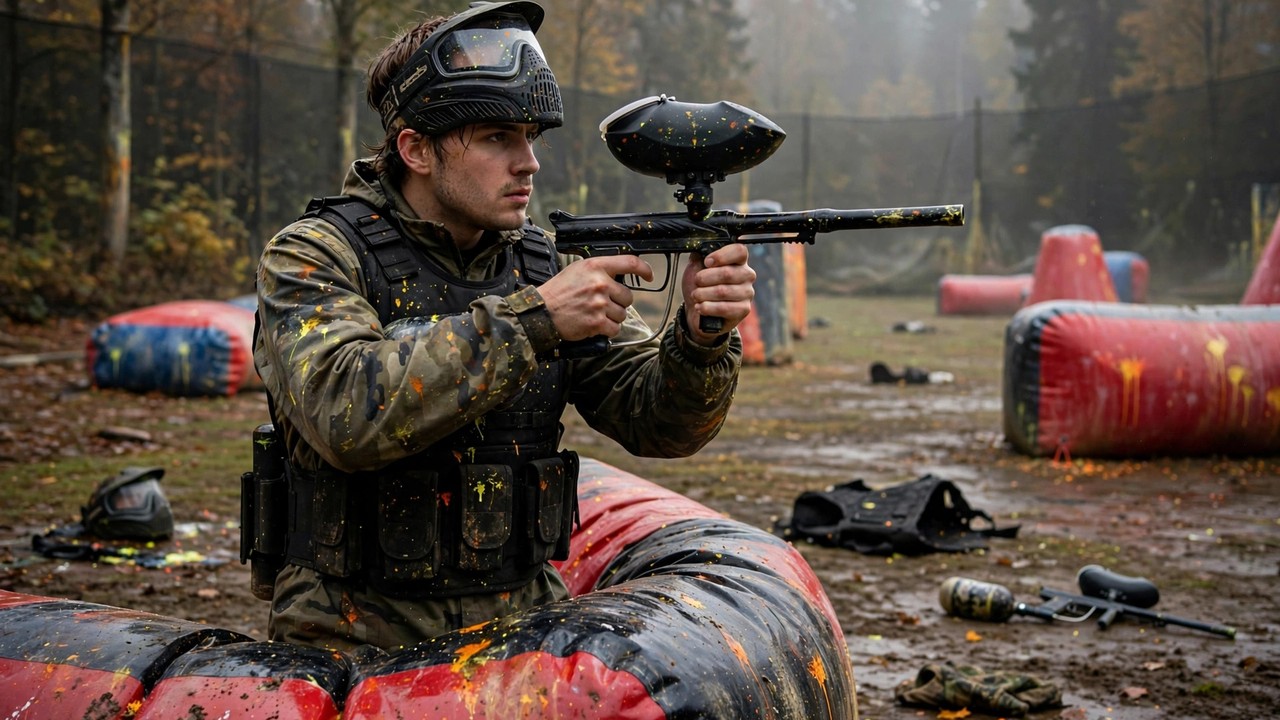
The simplest mode, and the one every field defaults to. Two teams start on opposite sides and the goal is to tag every opposing player. No flags, no objectives, just position and shooting.
With no respawns it is often called total elimination or last player standing. Elimination is the purest test of the basics, which is exactly why it is the best mode for a first game: there is nothing to remember except stay behind cover and call your hits.
Capture the Flag
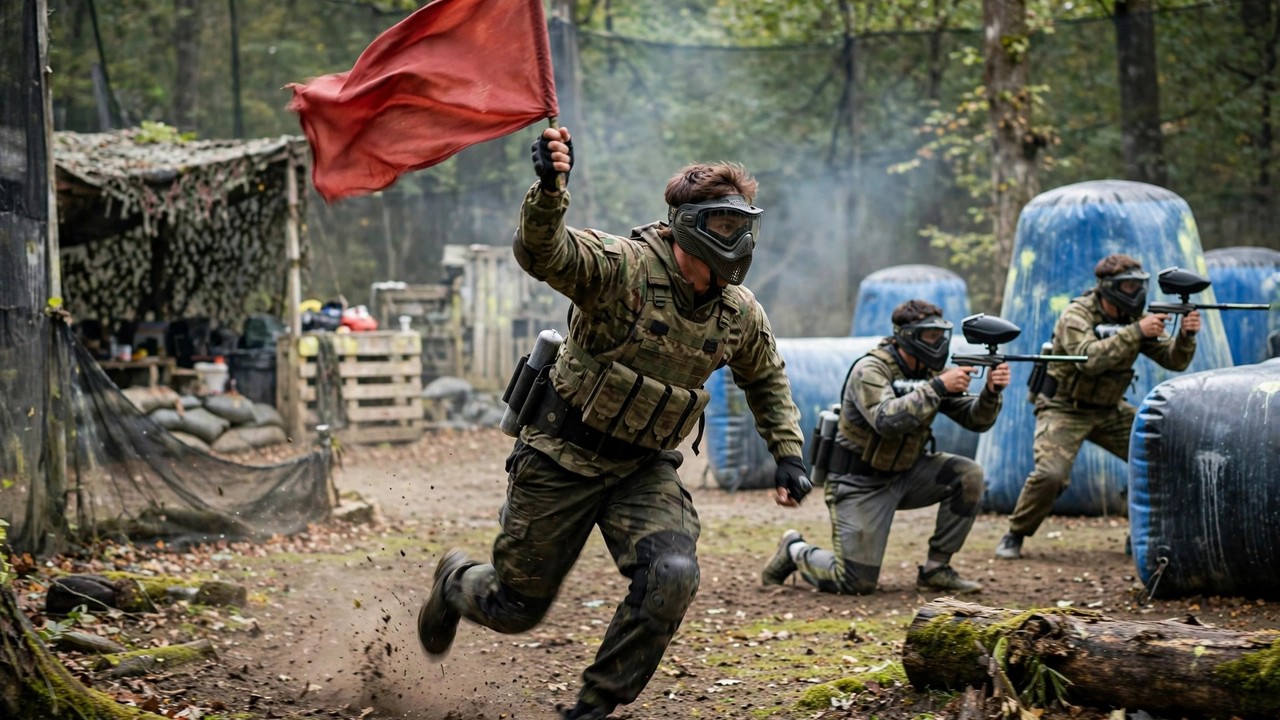
The classic paintball objective. Each team defends its own flag while trying to take the opposing flag and carry it back to base. It runs in two common variants.
- Two-flag: both teams have a flag to defend and one to capture, which forces every team to split between attack and defence.
- One-flag (centre flag): a single flag sits in the middle and both teams race for it, then try to carry it to the opponent base. This produces a much sharper fight over the centre of the field.
Capture the flag punishes teams that all push or all hide. It is the mode where communication starts to matter more than individual shooting.
King of the Hill and Zone Control
Teams compete to control a marked area, and the winner is whoever holds it for the required time. Eliminations are a means rather than the goal, which flips the usual incentives: a team can be wiped out repeatedly and still win by occupying the zone at the right moments.
It is a good mode for mixed-ability groups, because holding ground gives less confident players a clear and useful job.
Attack and Defend
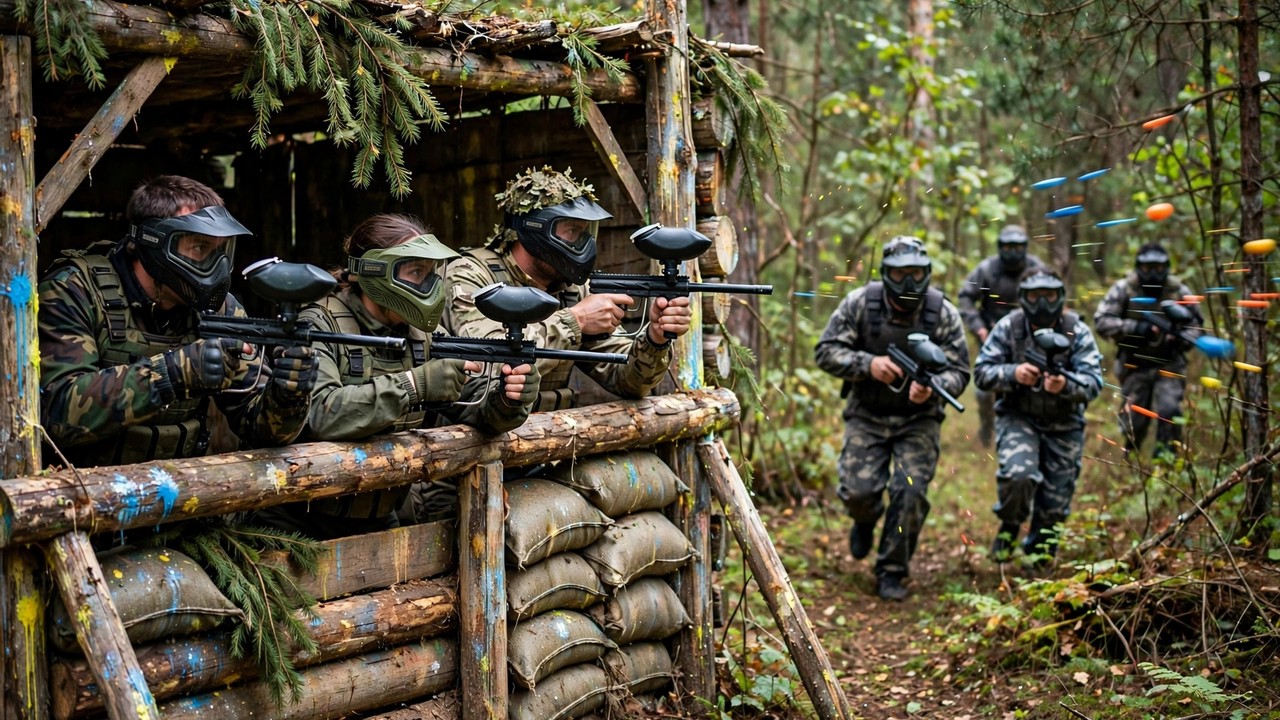
One team defends a position from behind prepared cover while the other advances from the far side to take it. Teams then usually swap roles so both sides get a turn at each.
Attack and defend is one of the few modes that does not need even teams. Attackers commonly outnumber defenders by three to one or even four to one, which makes it the standard solution when a group turns up badly unbalanced.
VIP Escort
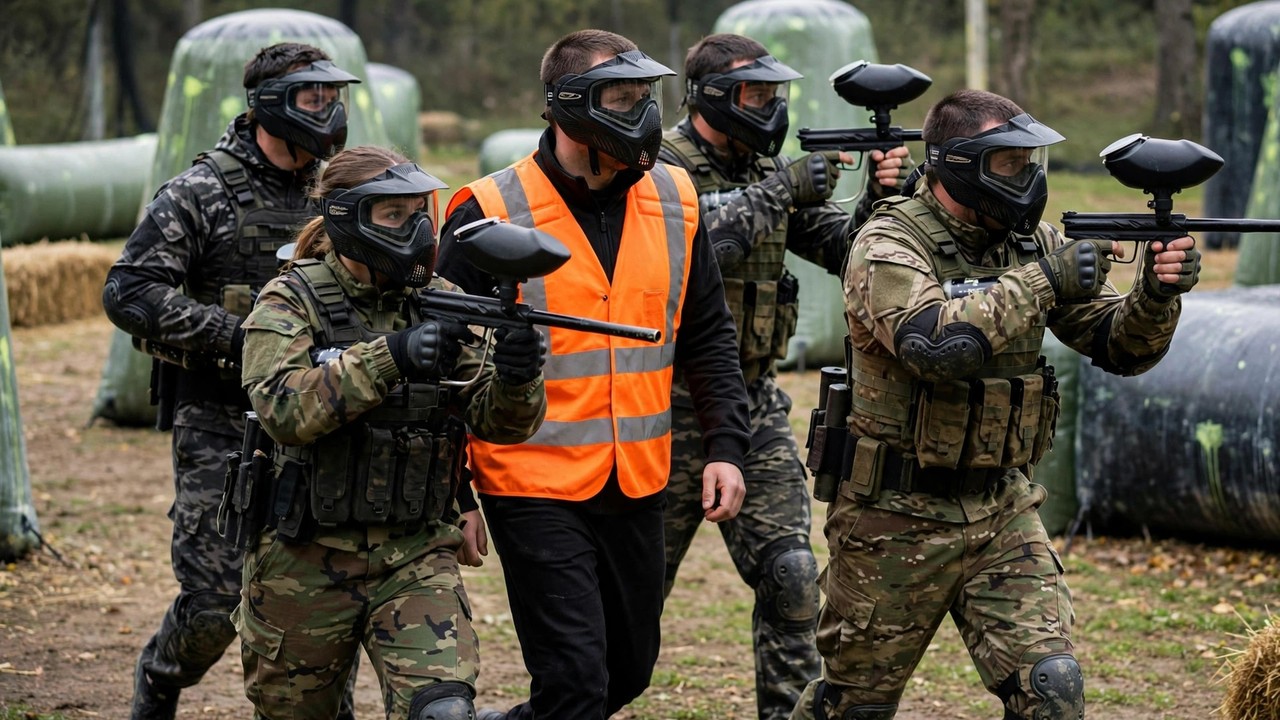
One player on a team is designated the VIP. Their team must escort them to a marked extraction point, while the opposing team tries to find and eliminate the VIP before they reach it.
The mode works because it creates an obvious focal point without telling the defenders where it is. Good VIP teams move the protected player quietly along an edge while the rest of the team makes noise somewhere else.
Medic
Medic is a variation layered on top of some other mode rather than a mode by itself. Each team has one medic carrying armband kits. When a player takes a hit, headshots and designated vital zones usually excepted, the medic ties a kit to their arm and sends them straight back into the game.
It changes the shape of a game immediately. The medic instantly becomes the highest-value target on the field, and protecting them becomes a job in itself. The same mechanic appears in most scenario events.
Choosing a Mode for Your Group

| Situation | Mode that works |
|---|---|
| Complete beginners | Elimination, nothing extra to remember |
| Uneven team numbers | Attack and defend, works at 3:1 or 4:1 |
| Mixed confidence levels | King of the hill, holding ground is a real job |
| Group that keeps ending games too fast | Medic, keeps players in the game longer |
| Experienced group wanting tactics | Capture the flag or VIP escort |
Rules vary from field to field, and the same mode can be run slightly differently even at neighbouring sites, so listen to the marshal briefing before each game rather than assuming the version you played last time still applies. If you want to actually win them, our guide on how to win at paintball covers the tactics, and playing paintball for the first time covers the basics.
Frequently Asked Questions
The common ones are elimination, capture the flag, king of the hill or zone control, attack and defend, and VIP escort. Medic is usually a variation layered on top of another mode rather than a mode by itself.
Elimination. There is nothing extra to remember beyond staying behind cover and calling your hits, which lets new players focus on the basics rather than an objective.
Each team defends its own flag while trying to take the opposing flag back to base. In the one-flag variant a single flag sits in the centre and both teams race for it, which produces a sharper fight over the middle of the field.
Run attack and defend. It is one of the few modes that does not need even numbers, and attackers commonly outnumber defenders by three to one or four to one.
Each team has one medic carrying armband kits. When a player is hit, usually excluding headshots or hits to a designated vital zone, the medic can tie a kit to their arm and return them to play. It makes the medic the highest-value target on the field.