Last updated on September 29th, 2026 at 04:56 am
MilSim, short for military simulation, is scenario paintball pushed toward realism. The shooting is the same, but almost everything around it changes: you operate inside a formal chain of command, you wear an approved uniform, your ammunition is issued and limited, and getting hit puts you into a casualty procedure rather than simply sending you to a respawn point.
It is the most structured way to play paintball, and the most demanding. This guide covers how MilSim events are organised, the rules that define them, and whether the format is worth trying. For how it compares with the other formats, see our guide to the types of paintball.
The Chain of Command
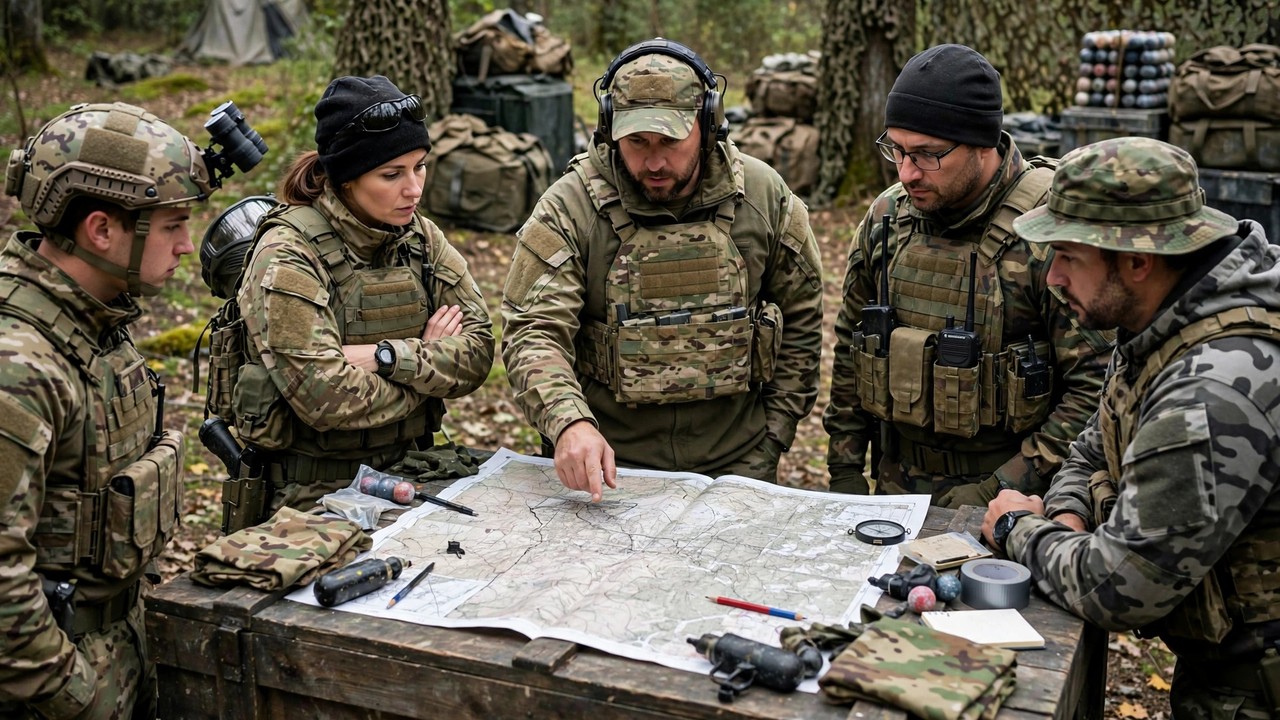
MilSim events mirror real military command structures, and this is the feature that most defines the format. Players are organised into squads and platoons, and platoon leaders are held responsible for making sure their platoon follows the event rules, fills its assigned roles, and respects ammunition and reloading restrictions.
The practical effect is that you do not decide for yourself what to do next. Orders come down the chain, and your job is to execute your part of them. Players who dislike being told what to do tend to bounce off MilSim quickly. Players who enjoy being part of something coordinated tend to find it the most immersive paintball they have played.
Uniform Requirements
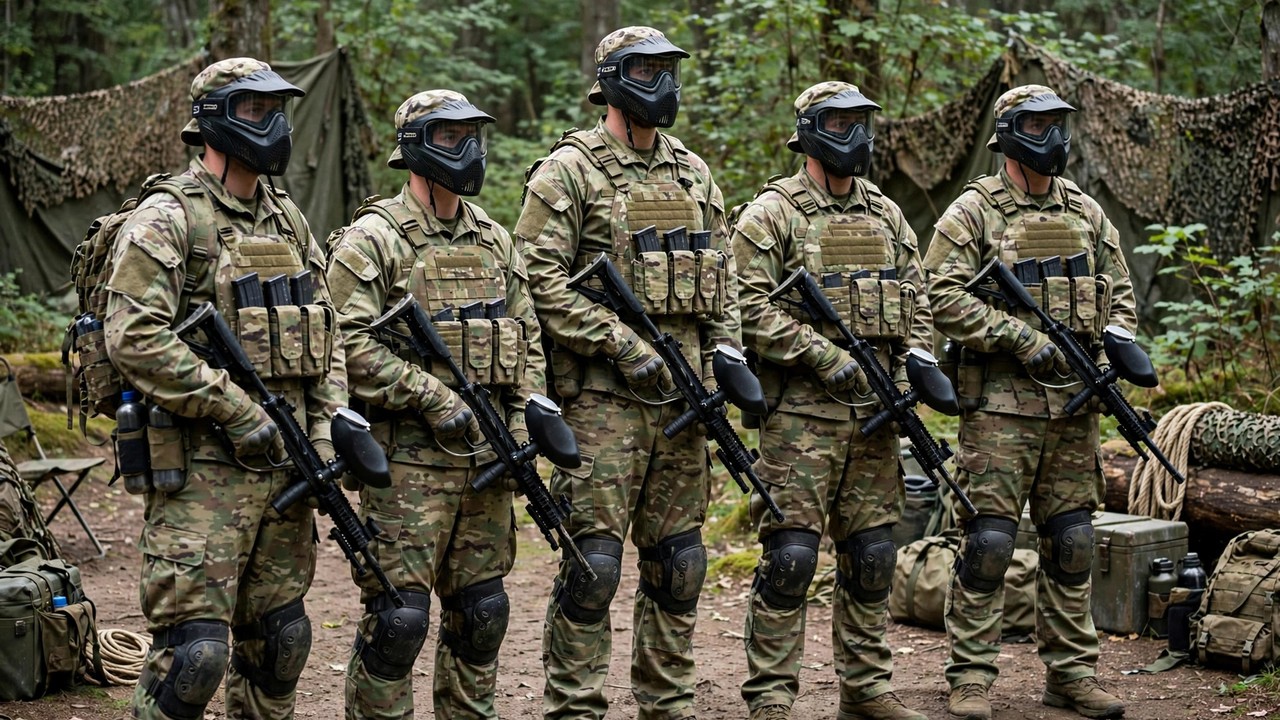
MilSim events specify authorised uniforms for each faction, and this is enforced. Failure to comply with the uniform requirement can result in ejection from the game. That sounds harsh until you understand the reasoning: the rule exists so each faction looks like a cohesive unit rather than a group of individuals, which is what makes identifying friend from foe possible at distance.
Check the specific event ruleset before buying anything. Requirements differ between organisers and between factions within the same event, and camouflage that is correct for one side may be prohibited for the other.
Limited Ammunition and Resupply
In most formats you carry as much paint as you can afford. In MilSim you do not. Participants are issued an initial supply at check-in and are resupplied during the event based on their faction current supply chain capacity. How that ammunition is used, and how it is cross-loaded between members of a squad, is left to the unit leadership.
This single rule reshapes the entire game. Suppressing fire becomes a decision with a cost, magazines get distributed to whoever needs them most, and holding a position becomes viable in a way it never is when both sides have unlimited paint. It is also why many MilSim events require or strongly encourage magazine-fed markers.
Casualty Rules, Medics and Respawns
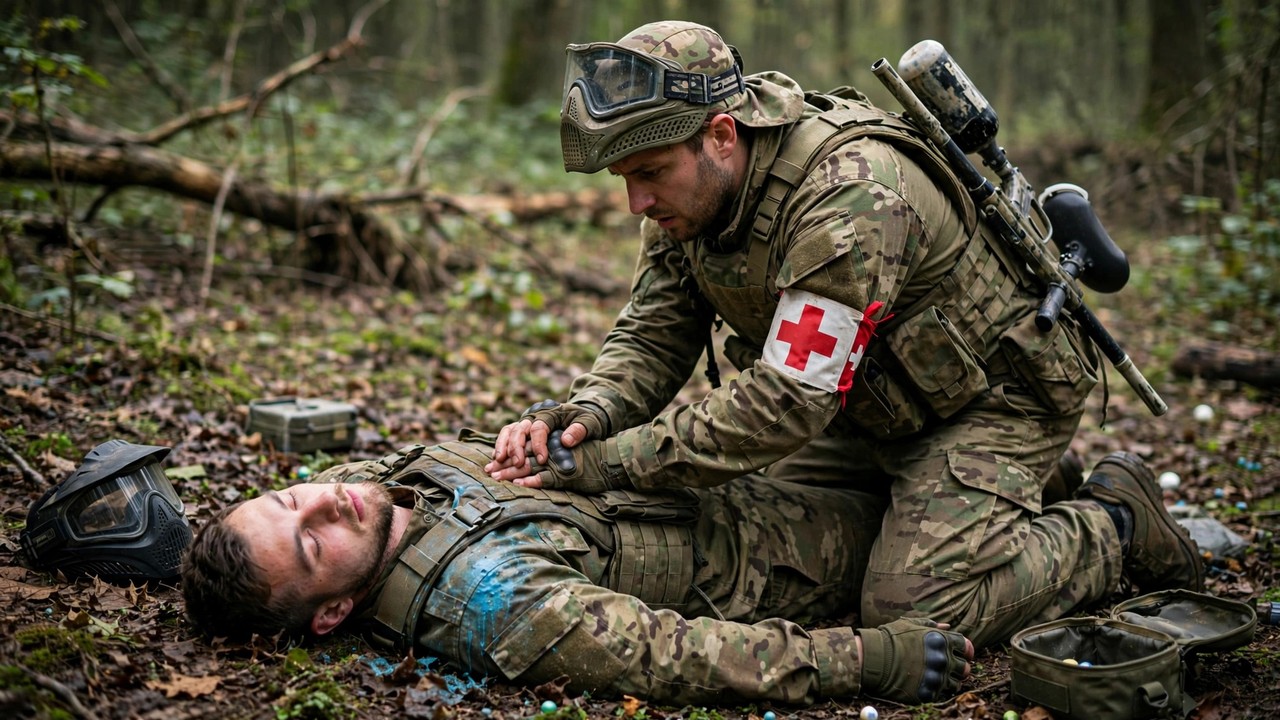
Getting hit in MilSim does not simply eliminate you. You are wounded, and you must follow the prescribed protocol to recover or stay out of play for a set period. Events commonly layer several mechanics on top of that.
- Medics who can revive wounded players, making the medic a high-value target and a position worth protecting.
- Casualty evacuation procedures, where wounded players have to be physically moved to a safe point rather than walking themselves off.
- Mobile respawn points, sometimes called medic barrels, which a faction can deploy forward. These typically may only be used once they are completely set up and deployed.
Taken together these rules make ground genuinely valuable, because pushing a respawn point forward is how a faction sustains an advance.
MilSim Compared With Scenario Paintball
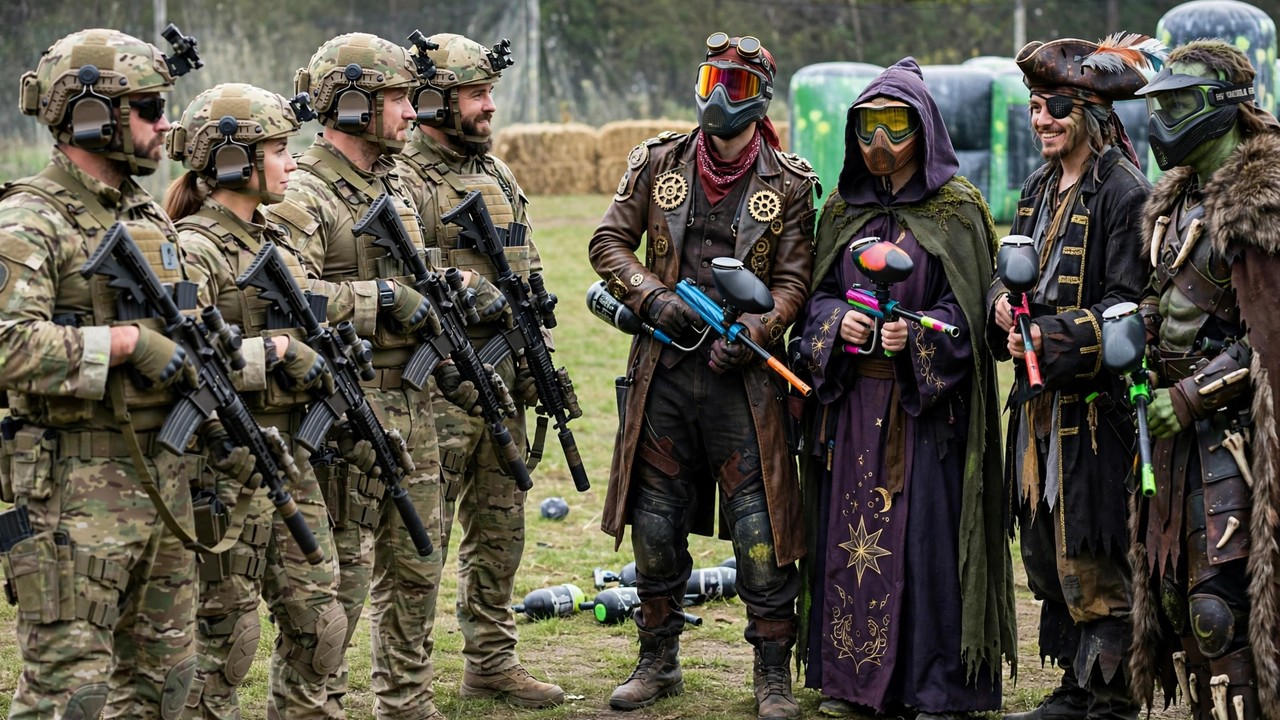
The two overlap and are often confused. Both run long, both use factions, both score on objectives. The difference is how much realism is enforced.
| Scenario | MilSim | |
|---|---|---|
| Theme | Story-driven, can be fictional | Modelled on real military operations |
| Uniform | Encouraged, rarely enforced | Required, enforced with ejection |
| Ammunition | Carry what you like | Issued and limited by supply chain |
| Command | Commanders assign missions | Full chain of command with platoon leaders |
| Getting hit | Respawn, often with a medic rule | Wounded protocol, medics, evacuation |
| Marker style | Anything | Magfed often required or encouraged |
Gear for MilSim
Buy the ruleset before you buy the gear. Beyond an approved uniform, the usual requirements are a magazine-fed marker, enough magazines to make limited ammunition workable, and load-bearing gear to carry them. Reliability beats rate of fire, since events run long and support is not close by.
Our roundups of the best woodsball paintball guns and the best paintball protective gear cover suitable equipment, and our explainer on how a paintball gun works is worth reading before you choose a feeding system.
Is MilSim for You?
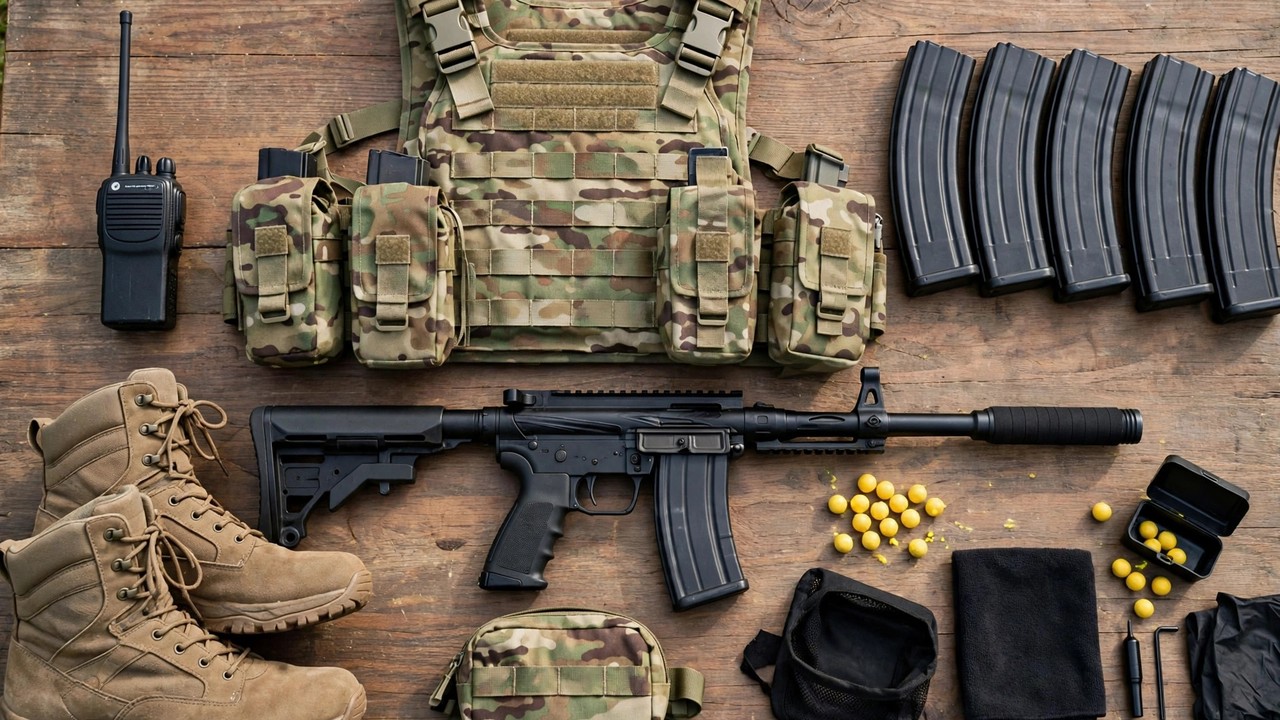
MilSim rewards patience, discipline and a willingness to follow orders from someone you may have met that morning. If the appeal of paintball for you is immersion and teamwork rather than personal scoreline, it is the deepest version of the sport available.
If you would rather show up, play, and leave without a briefing, start with woodsball or a smaller scenario game first. Both give you the tactical feel without the commitment, and both are a sensible route into MilSim later.
Frequently Asked Questions
MilSim, short for military simulation, is a highly structured format that mirrors real military organisation. Players operate inside a chain of command, wear approved uniforms, receive limited issued ammunition, and follow casualty procedures when hit.
Both run long and score on objectives, but MilSim enforces realism. Uniforms are required and enforced, ammunition is issued and limited by a supply chain, and there is a full chain of command with platoon leaders responsible for their unit following the rules.
Yes. Events specify authorised uniforms for each faction and failure to comply can result in ejection from the game. The rule exists so each faction looks like a cohesive unit, which makes identifying friend from foe possible at distance.
Players are issued an initial supply at check-in and are resupplied during the event based on their faction current supply chain capacity. How that ammunition is used and shared within a squad is left to unit leadership.
You are treated as wounded rather than eliminated and must follow the prescribed protocol to recover or sit out for a set period. Events commonly use medics who can revive players, casualty evacuation procedures, and mobile respawn points that must be fully deployed before use.