Last updated on September 28th, 2026 at 08:59 pm
FPS stands for feet per second, and it is how paintball measures the speed of a ball as it leaves the barrel. The industry standard maximum is 300 fps, most outdoor fields chronograph markers between 280 and 300, and many indoor fields run lower, around 250 to 280, because engagement distances are shorter. Low-impact games for kids typically run 200 to 250 fps.
That single number carries most of the sport’s safety system on its back, so it is worth understanding what it means, why the cap sits where it does, and how fields enforce it.
FPS Energy Converter
See what a velocity really means in speed and impact energy.
What FPS Actually Measures
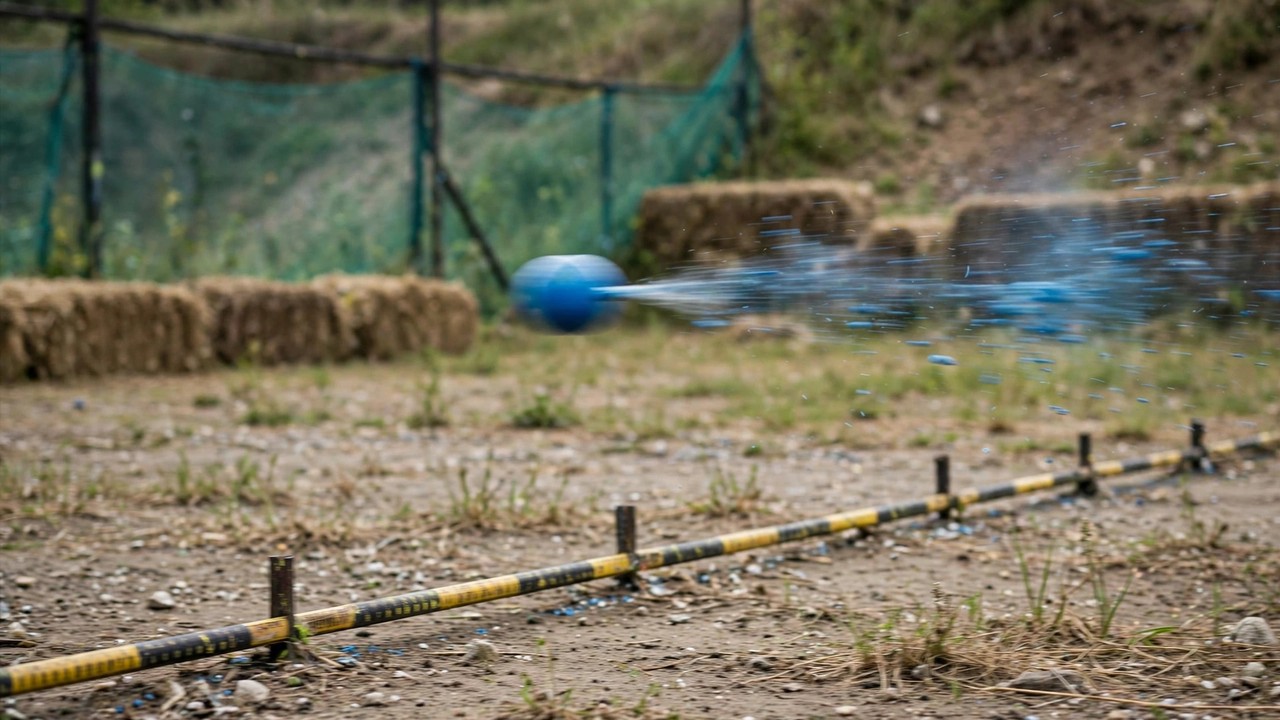
FPS is muzzle velocity: the speed of the paintball at the moment it exits the barrel, measured with a chronograph. It is not the speed the ball arrives at. A paintball is light, about 3 grams for standard .68 caliber, and it sheds speed quickly in the air. A ball that leaves at 280 fps may arrive at a target 100 feet away traveling far slower, which is why long shots often bounce instead of breaking.
For reference, 300 fps is roughly 204 miles per hour, or about 91 meters per second. A standard paintball at that speed carries around 13 joules of energy, in the same neighborhood as a hard-thrown baseball, spread over a ball designed to burst on impact.
Why the Limit Is 300 FPS
The 300 fps ceiling was settled early in the sport’s history, when testing showed that standard paintballs above that threshold start to carry enough energy to break skin at close range and to pose a serious threat to anything a mask does not cover. Below it, a hit on clothing or gear stings and bruises but rarely does worse, which is a big part of why paintball’s measured injury rate is low compared with most contact sports.
Masks are certified around the same math. Goggle systems built to the ASTM standard for paintball eye protection are tested against paintballs at velocities above the field cap, so a legal marker cannot defeat a legal mask. The system only works when both sides of that equation hold, which is why fields are strict about the chrono station and about masks staying on.
How Fields Enforce Velocity Limits
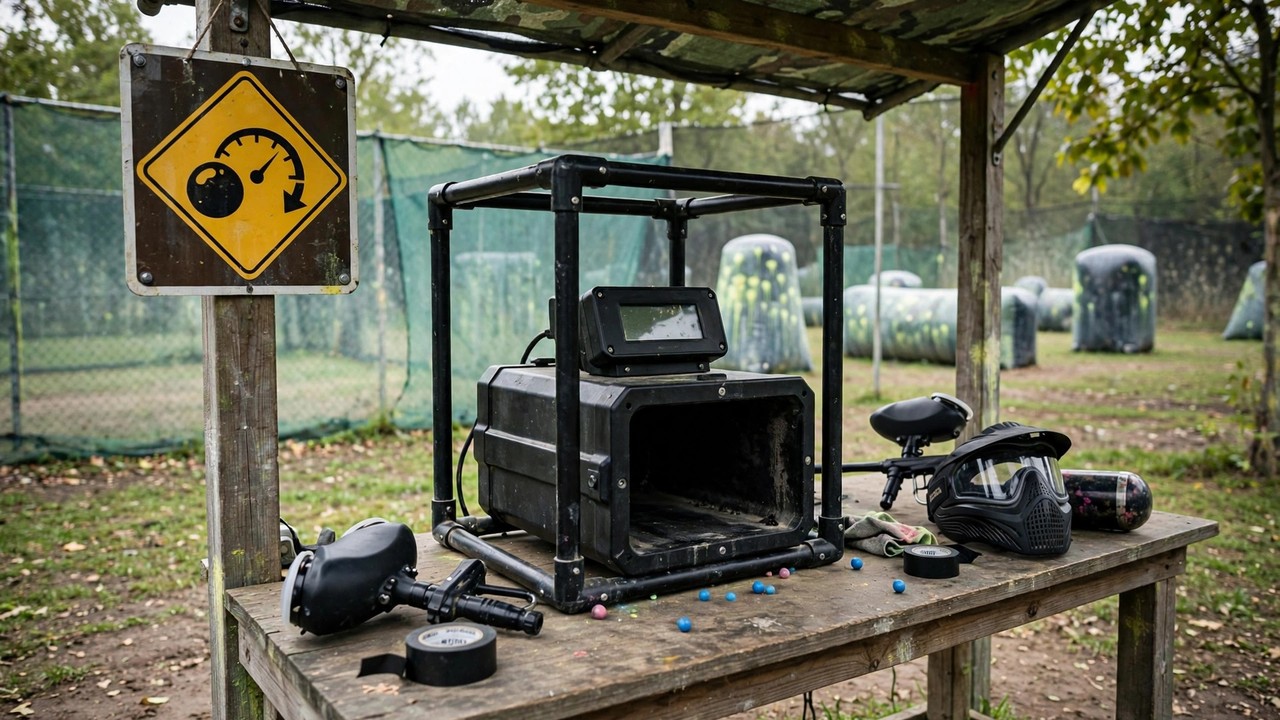
Every reputable field requires a chronograph check before you play. You fire several shots over the chrono, a referee reads the fastest, and your marker must come in at or under the field’s limit. Rental markers are pre-set. Personal markers are adjusted at the regulator or velocity screw until they comply, and tournament rules require velocity adjusters to be capped or tool-only so nobody can turn them up mid-game.
Competitive leagues also chrono players on the field, during points, at the referee’s discretion. The NXL rulebook makes the stakes explicit: at or under 300 fps is legal, 301 to 314 fps costs the player a minor penalty, 315 to 329 fps is a major penalty, and 330 fps or above is a gross major. Velocity is treated as seriously as any form of cheating, because it is the one number that protects everyone on the field.
Does Higher FPS Shoot Farther or Straighter?

Much less than new players expect. Raising velocity from 280 to 300 fps buys only a modest amount of extra reach, because drag builds with speed and a paintball’s light mass bleeds energy fast either way. Effective accurate range stays around 80 to 100 feet, and maximum carry distance changes little. Consistency matters far more: a marker that shoots 278, 280, 281 on consecutive shots will outshoot one that swings between 270 and 295, because a consistent ball flies a consistent arc.
That is why experienced players chase a stable regulator and good paint-to-barrel fit rather than more velocity. If you want the mechanics of how the shot happens at all, our guide to how a paintball gun works walks through the whole cycle.
FPS Numbers Worth Remembering
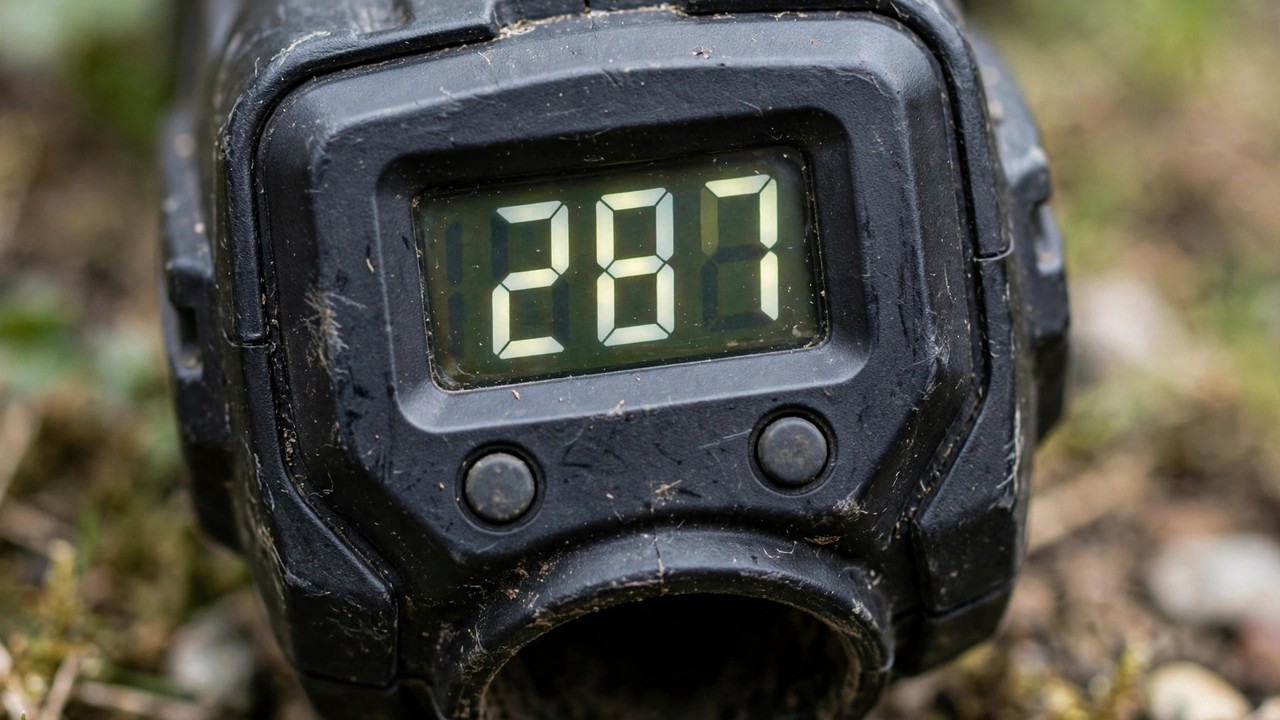
- 300 fps: the industry maximum, and the tournament legal ceiling
- 280 fps: the most common outdoor field cap, leaving a safety margin under 300
- 250 to 280 fps: typical indoor field range for close quarters
- 200 to 250 fps: low-impact paintball for kids and first-timers
If a field ever waves you through without a chrono check, treat it as a red flag. The velocity cap is the quiet agreement that keeps a game built on shooting people at each other genuinely safe, and every good field, from a Sunday rec operation to the pro circuit, enforces it the same way: measure first, play second. The full framework it sits inside is covered in our guide to paintball rules.
Frequently Asked Questions
Feet per second, the measure of a paintball's muzzle velocity. The industry maximum is 300 fps, and most outdoor fields chronograph markers between 280 and 300 before play.
At or under 300 fps, a paintball stings and can bruise but rarely does worse through clothing. Above 300, standard paintballs start to carry enough energy to break skin at close range, which is why the cap sits there.
Fire several shots over a chronograph at the field's chrono station and read the fastest. Adjust the regulator or velocity screw until the marker reads at or under the field limit.
Only slightly. Drag builds quickly with speed, so raising velocity from 280 to 300 fps adds little range. Accurate range stays around 80 to 100 feet either way.
Typically 200 to 250 fps, combined with lighter .50 caliber paintballs. The combination cuts impact energy by roughly two thirds compared with standard play.