Last updated on September 28th, 2026 at 08:59 pm
Wiping in paintball means deliberately removing or hiding a hit so you can keep playing after you should have been eliminated. It is the sport’s cardinal sin. Under the NXL rulebook it draws the harshest on-field penalty in the game, a gross major that removes the offender plus three teammates, and at a casual field it is the fastest way to be asked to leave.
This guide covers what counts as wiping, what does not, how referees catch it, and why the penalty is so much heavier than for almost anything else.
What Counts as Wiping
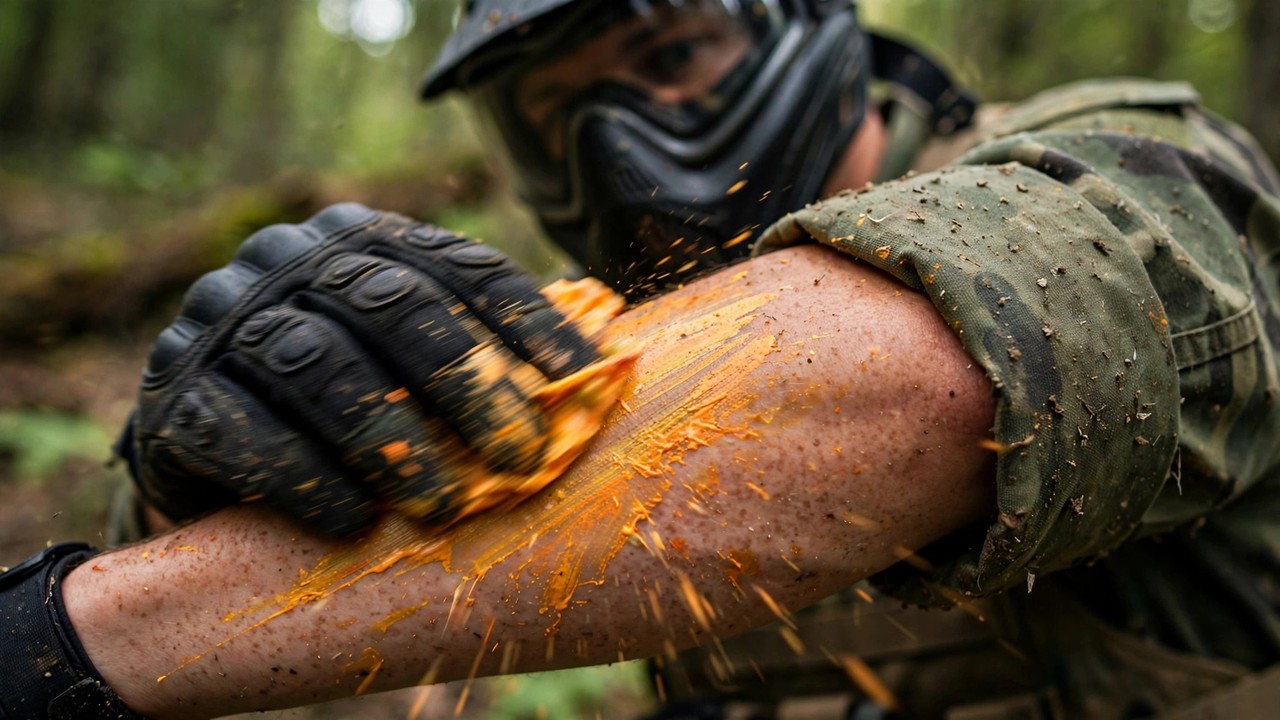
A valid hit in paintball is a paintball that breaks on you or your gear and leaves a solid mark. Wiping is any active, deliberate attempt to remove that mark to avoid elimination: rubbing it into your jersey, scraping it off a pack, smearing it into grass or dirt during a dive, or quietly turning a marked pod away from the referee.
The NXL definition goes one step further than most players realize. A player seen discarding a squeegee, rag, or pod that carries a hit, to keep a referee from seeing it, is penalized for wiping too. Ditching the evidence is the same offense as destroying it.
What Is Not Wiping

Not every touch of a paint mark is a violation, and the distinction matters. Splatter, the spray thrown off a ball that broke on a bunker next to you, is not a hit, and neither is a bounce that leaves no solid mark. You are allowed to keep playing with splatter on you, and referees will often wipe splatter off players themselves during a paint check so it cannot be mistaken for a valid hit later.
There is one more nuance from tournament play: only referees remove invalid hits. If a ball breaks on your goggle lens, you may clear it with a referee’s permission, since nobody is expected to play blind. What you may not do is make that call yourself anywhere else on your body. When in doubt, ask for a paint check and let the referee decide, which is exactly the habit our paintball etiquette guide recommends building from your first game.
The Penalty: Why Wiping Costs Three Teammates
Tournament paintball runs a penalty ladder. A minor penalty pulls the offender and one teammate, the one-for-one. A major pulls the offender and two teammates, the two-for-one, and that is what simply playing on after a valid hit costs. Wiping sits above both: a gross major, the three-for-one, removing the offender and three teammates from the point. In a five-player format that is most of the team gone for one player’s decision to cheat.
The logic is straightforward. Playing on can be an honest mistake, since players genuinely miss hits in the noise and adrenaline, and our guide to getting hit in paintball covers how often that happens. Wiping cannot be a mistake. It requires knowing you were hit and choosing to hide it, so the rulebook treats it as the deliberate act it is.
How Referees Catch Wipers
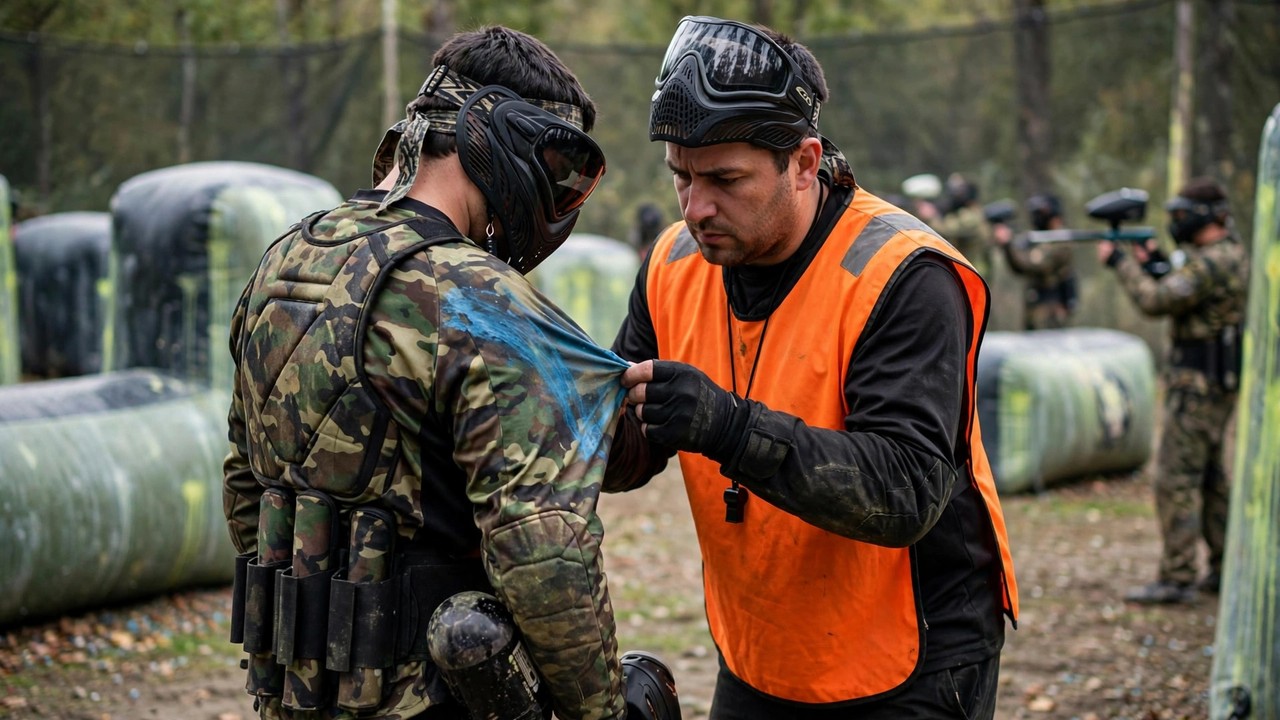
A wiped hit rarely disappears. Rubbing a break leaves a smear with fill worked into the fabric’s weave, which looks nothing like the clean starburst of a fresh break or the fine spray of splatter. Referees are trained on exactly that difference, and they also watch for the behavior around it: a hand that goes to a shoulder right after an opponent’s string of shots, a player who suddenly dives when nothing was being fired at their new position, a pod that vanishes behind a bunker.
At rec fields the enforcement is social as much as official. Fields run paint checks on request, and a player who develops a reputation for playing on and wiping stops getting invited into games. The core rules of paintball only function because the overwhelming majority of players call themselves out honestly.
If You Suspect an Opponent Is Wiping
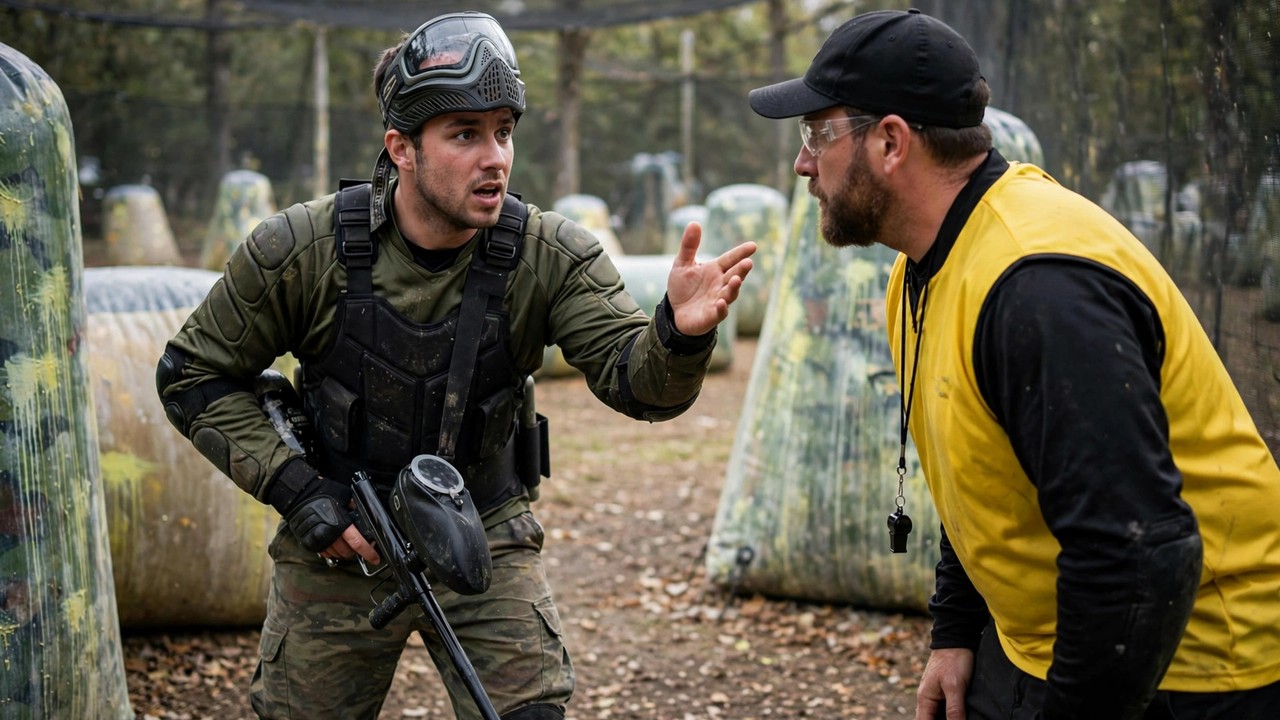
Do not shoot them repeatedly out of frustration, and do not start an argument mid-point. Call for a paint check, loudly and specifically: name the player and the location of the hit. A referee will hold the player, inspect, and make the call. In rec play, tell a marshal between games rather than settling it on the field. Overshooting a suspected wiper just stacks a second problem on top of the first, and it is the kind of escalation that referees penalize on its own.
Wiping is rare precisely because the culture is built against it. Paintball is a self-refereed sport for most of the people who play it, most of the time. Walking off the field with your hand up when a ball breaks on you is the whole social contract in one gesture, and it is why the game works at every level from a birthday party to the pro circuit.
Frequently Asked Questions
Deliberately removing or hiding a valid hit to keep playing after you should have been eliminated. It includes discarding marked pods, rags, or squeegees to avoid a referee's call.
In NXL tournament play it is a gross major: the offender and three teammates are removed, the three-for-one. Recreational fields typically eject repeat offenders.
No. Spray from a ball that broke on a nearby bunker is not an elimination, and referees will often wipe splatter off players so it cannot be confused with a real hit.
A wiped break leaves a smear with fill worked into the fabric, which looks different from a fresh starburst break or fine splatter. Referees also watch player behavior right after strings of shots.
Call for a paint check, naming the player and the location of the hit, and let the referee inspect. Do not overshoot them or argue mid-point.