Last updated on August 28th, 2026 at 06:46 pm
An old or expired paintball CO2 tank is a pressure vessel, so you can’t just toss it in the trash. Done wrong, a tank with gas still inside can rupture in a garbage truck or a fire. Done right, disposal is simple and safe: empty the tank completely, then recycle it as scrap metal or hand it to a paintball pro shop. Here’s exactly how to do each step.
- Step 1, Empty it completely and confirm there’s no pressure left.
- Step 2, Recycle it as scrap aluminum or steel, or return it to a pro shop.
- Never bury it, hammer it, burn it, or bin a tank that still holds gas.
What a Paintball CO2 Tank Actually Is
A paintball CO2 tank stores carbon dioxide as a liquid under high pressure, often 800–1,800 PSI, and releases it as gas to power your marker. That pressure is what makes an old tank worth handling carefully. Tanks also carry a stamped hydrostatic test date; in the US, CO2 tanks must be re-tested every 5 years, and once a tank is past test (or damaged) it can no longer be legally refilled, which is usually the point at which you’re looking to get rid of it.
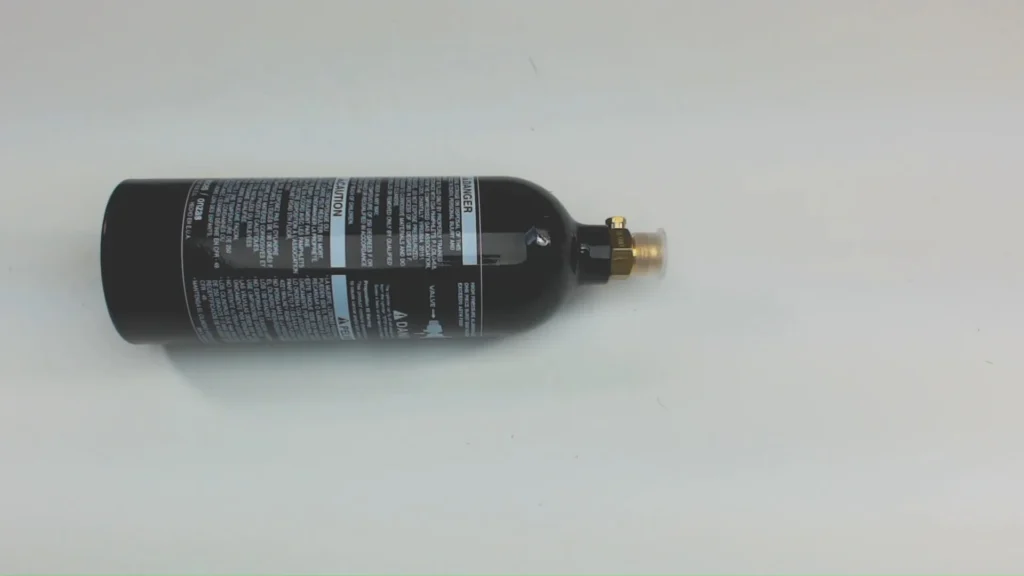
Step 1: Empty the Tank Completely
This is the step that makes everything else safe. You have two reliable ways to do it, and one easy shortcut:
- Dry-fire it empty, screw the tank onto your marker and pull the trigger repeatedly (outdoors, pointed at the ground) until it stops firing and no more gas escapes.
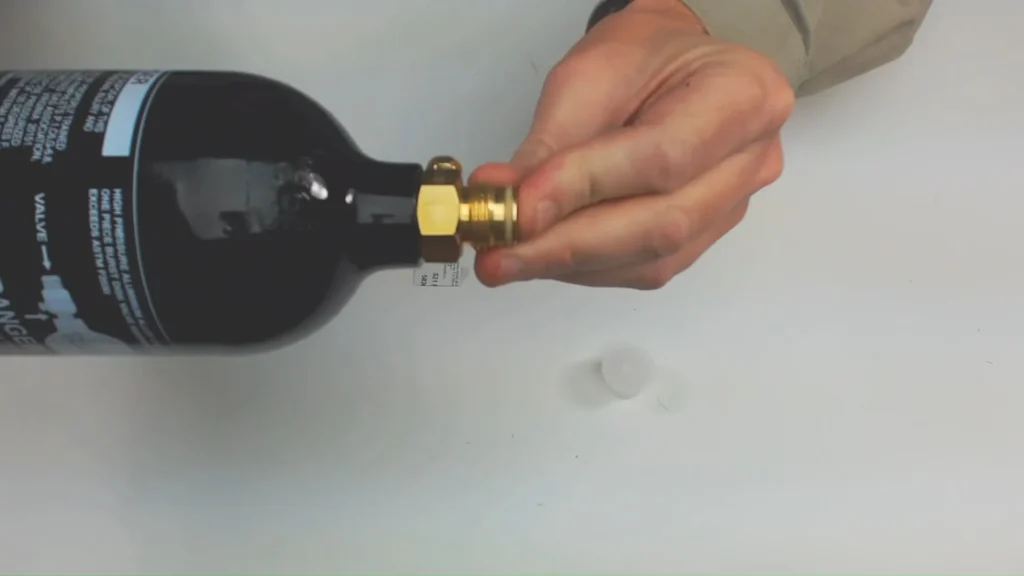
- Bleed the valve slowly, in a well-ventilated outdoor space, wearing gloves, slowly depress the pin valve to release the remaining CO2. Go slowly: rapid discharge makes the tank extremely cold and can damage the valve.
- Let a pro shop do it, any paintball store or field can fully de-gas a tank in seconds and will usually do it for free. This is the safest option if you’re unsure.
Once empty, the pin should move freely with no hiss of escaping gas. A fully de-gassed tank is inert and safe to handle. If your tank uses compressed air (HPA) instead of CO2, the same “empty it first” rule applies.
Step 2: Choose How to Dispose of the Empty Tank
Recycle It as Scrap Metal
Paintball CO2 tanks are made of aluminum or steel, and both are highly recyclable. Once the tank is fully empty, most scrap-metal recyclers will take it, some ask that you remove the valve or leave it visibly open so they can confirm there’s no pressure inside. A quick call to your local scrap yard or municipal recycling center tells you their exact requirement. This is the most responsible way to retire a dead tank.
Return or Resell It to a Pro Shop
A tank that’s still within its hydro date but that you no longer need doesn’t have to be scrapped at all. Many paintball stores and fields will take good used tanks for resale, trade, or their rental fleet. If you’re clearing out a whole marker, see our guide on what to do with an old paintball gun.
What NOT to Do with a CO2 Tank
A lot of bad advice circulates about this, and some of it is genuinely dangerous. Do not do any of the following:
- Don’t bin a tank that still has gas in it. The compactor in a garbage truck can rupture it.
- Don’t hit it, drill it, or crush it to “deform” it, if there’s any pressure left, that can cause a violent rupture.
- Don’t burn or incinerate it, and never leave a tank in a hot car or near a heat source.
- Don’t bury it. It doesn’t make a pressurized tank safe and can leak or corrode over time.
This guide reflects standard paintball safety practice and US hydrostatic-testing rules. Local recycling and hazardous-waste requirements vary, when in doubt, ask your scrap yard, recycling center, or a paintball pro shop.
Where to Take a Tank You Can’t Handle Yourself
If you’re not comfortable emptying or disposing of a tank on your own, you have easy options. Any paintball pro shop or field will de-gas a tank for you, usually for free, and can advise on recycling or disposal. A scrap-metal recycler takes fully emptied aluminium and steel tanks, and your local household hazardous-waste facility can handle anything you can’t safely empty. There’s never a need to improvise with a pressure vessel when these services exist.
Conclusion
Disposing of a paintball CO2 tank safely comes down to two things: empty it completely, then recycle it as scrap metal or pass it to a pro shop. Skip the household trash, and never hammer, bury, or burn a tank. Handle the pressure first, and the rest is easy.
FAQs
Not while it holds any gas, a pressurized tank can rupture in a garbage truck. Empty it completely first, then recycle it as scrap aluminum or steel rather than binning it. Many recyclers ask you to remove the valve so they can see it’s empty.
Either dry-fire the marker outdoors until it stops firing, or slowly bleed the pin valve in a well-ventilated area while wearing gloves. Go slowly, since fast discharge makes the tank very cold. Easiest of all: any paintball shop or field will de-gas it for you, usually free.
Yes. They’re made of aluminum or steel, both of which scrap-metal recyclers readily accept once the tank is fully empty. Call your local scrap yard or recycling center first, as some require the valve removed.
Check the stamped hydrostatic test date on the tank. In the US, CO2 tanks must be re-tested every 5 years; once past test date the tank can’t be refilled and should be emptied and recycled.