Last updated on August 28th, 2026 at 06:43 pm
Airsoft guns fire small 6mm plastic BBs using compressed air, and they generate that air in one of four ways: a spring, an electric motor (AEG), gas, or an external high-pressure air (HPA) system. The method a gun uses decides its rate of fire, power, realism, and price. Here’s how each system works and what sets airsoft apart from paintball.
- Spring, manually cocked, one shot at a time.
- AEG (electric), a battery-driven gearbox for semi and full auto.
- Gas, green gas or CO2, often with realistic blowback.
- HPA, an external air tank feeding the gun through a regulator.
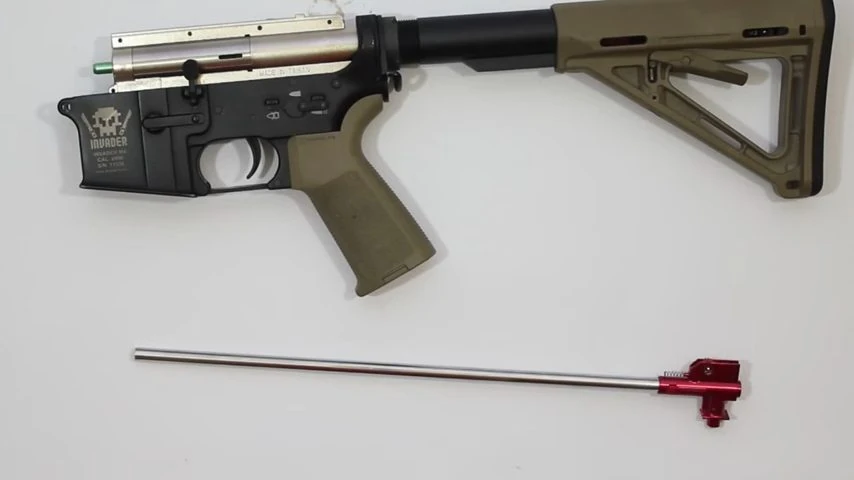
What All Airsoft Guns Have in Common
Whatever powers it, every airsoft gun does the same basic thing: it uses a burst of compressed air to push a 6mm plastic BB down the barrel. Two features are shared across almost all of them. First, power is measured in FPS (feet per second), and fields enforce FPS limits for safety. Second, airsoft guns use a hop-up unit, a small rubber bucking that puts backspin on the BB as it leaves the barrel, giving it lift and a much longer, flatter range. (This backspin is unique to airsoft; paintballs don’t use a hop-up.)
Spring-Powered Airsoft Guns
The simplest type. You manually cock the gun before every shot, which compresses a spring behind a piston; pulling the trigger releases the spring, and the piston pushes a burst of air behind the BB. Because they need re-cocking each shot, spring guns are single-shot, common in cheap starter pistols and, at the high end, precision sniper rifles.
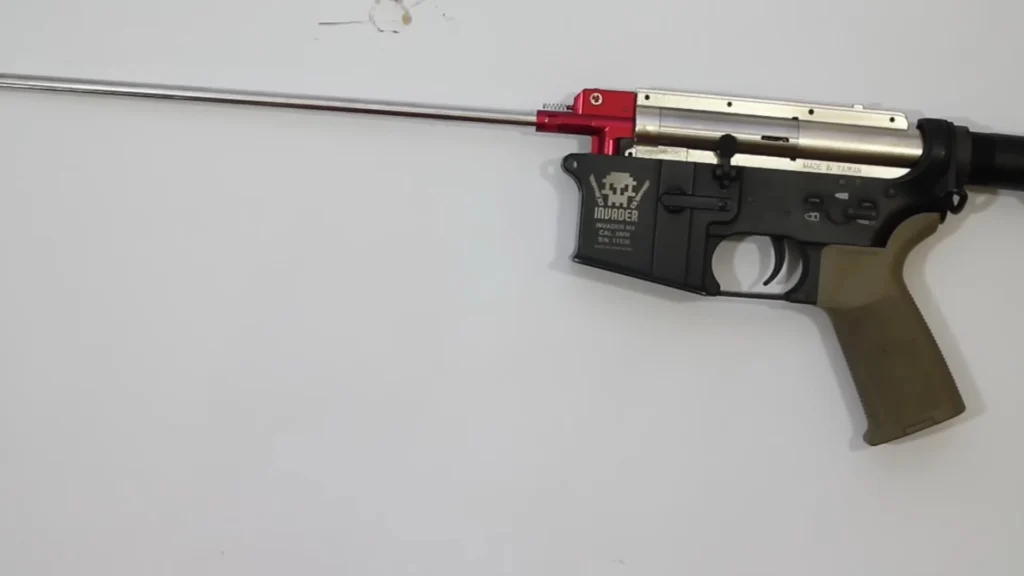
Electric Airsoft Guns (AEGs)
The most popular type for rifles. An Automatic Electric Gun uses a rechargeable battery to drive a motor and gearbox, which cycles that same spring-and-piston action automatically, over and over, so the gun can fire in semi-auto and full-auto. AEGs offer a great balance of rate of fire, consistency, and value, which is why they dominate airsoft skirmishing.
Gas Airsoft Guns
Gas guns store pressurised gas, usually “green gas” or CO2, in the magazine. Firing releases a metered burst to propel the BB, and in gas blowback (GBB) designs some of that gas also kicks the slide or bolt back, mimicking the recoil and cycling of a real firearm. That realism makes gas the favourite for pistols and collectors, though performance drops in cold weather.
HPA Airsoft Guns
HPA setups feed the gun from an external high-pressure air tank through a regulator and an electronic solenoid, much like an electronic paintball marker. Because you can dial the pressure precisely, HPA guns are extremely consistent and tunable, letting players fine-tune FPS and rate of fire. They’re popular with players who want top performance and easy adjustability.
FPS Limits and Safety in Airsoft
Like paintball, airsoft is governed by velocity limits for safety. Most fields cap standard AEGs somewhere around 350–400 FPS, with higher-powered sniper rifles allowed only alongside a minimum engagement distance so no one takes a high-speed hit at close range. Guns are checked on a chronograph before play, and full-seal eye protection is mandatory at all times, a 6mm BB to an unprotected eye is a serious injury, which is why the rules on eyewear are absolute.
Airsoft vs. Paintball: The Key Differences
The two sports share a mechanism but feel very different. Airsoft fires small, non-marking 6mm plastic BBs, so hits rely on players honestly calling themselves out, whereas paintball leaves a visible mark. Airsoft ammo is far cheaper and the guns look more realistic, which appeals to MilSim fans; paintball hits harder and settles disputes automatically. Many players enjoy both, choosing airsoft for realism and ammo economy and paintball for the unambiguous, higher-intensity hits.
Choosing Your First Airsoft Gun
Your first gun should match how you want to play. An AEG is the most versatile all-rounder for skirmishing, offering semi and full auto at a reasonable price. A cheap spring pistol or rifle is a low-cost way to try the sport, and a gas blowback gun delivers the most realistic feel for players who value that. Whatever you pick, budget for a decent battery or gas, spare magazines, and quality BBs, since those affect performance as much as the gun itself.
Airsoft Batteries and Gas Explained
What powers an airsoft gun shapes how you run it. AEGs use rechargeable LiPo or NiMH batteries, higher-quality batteries give a snappier trigger and faster rate of fire, while gas guns run on green gas or CO2 stored in the magazine. Gas performance drops in the cold, and you’ll want spare batteries or gas on hand for a full day, since running dry mid-game is the airsoft equivalent of running out of air.
Upgrading Airsoft Guns
Airsoft has a deep upgrade culture. A better hop-up bucking and a tighter-bore inner barrel noticeably improve range and accuracy; stronger springs raise power (within field limits); and better motors and gears sharpen an AEG’s response. Because these guns are so modular, many players tune them extensively, but always re-check your velocity on a chronograph after any power upgrade to stay within field rules.
Airsoft Safety and Field Rules
Safety mirrors paintball in the essentials. Full-seal eye protection is mandatory at all times, guns are chronographed to enforce FPS limits, and higher-powered snipers must observe a minimum engagement distance so no one takes a close-range hit at speed. Because BBs don’t mark, airsoft also relies on an honour system, calling your own hits honestly is central to the sport’s etiquette.
Airsoft or Paintball for Beginners?
Neither is objectively better, it comes down to what you want. Airsoft offers cheaper ammunition, realistic-looking guns, and a milder sting, which appeals to MilSim and tactical fans. Paintball hits harder but leaves a visible mark that settles disputes instantly and delivers a higher-intensity, more colourful game. Trying both is the surest way to discover which one clicks for you.
Conclusion
All airsoft guns launch a 6mm BB with compressed air and steer it with a hop-up for range, they just create that air differently. Spring guns are manual and cheap, AEGs are the versatile electric standard, gas guns add realistic blowback, and HPA offers the most tuning. Pick the system that matches how you want to play, and you’ll understand exactly how your airsoft gun works.
FAQs
Airsoft guns fire 6mm round plastic BBs propelled by compressed air. They’re non-marking, unlike paintballs, so hits rely on players calling themselves out. Power is measured in FPS, and fields set FPS limits for safety.
Spring guns are cocked by hand and fire one shot at a time. Electric (AEG) guns use a battery and gearbox for automatic fire. Gas guns use green gas or CO2 and often add realistic blowback recoil. HPA guns run off an external air tank for the finest tuning.
A hop-up is a rubber bucking that puts backspin on the BB as it leaves the barrel. That spin creates lift, giving the BB a flatter, longer, and more accurate flight. It’s a feature unique to airsoft, paintball markers don’t use one.