Last updated on August 28th, 2026 at 06:42 pm
A paintball marker is simply the proper name for a paintball gun, the device that uses compressed gas to fire paintballs at your opponents. “Marker” and “gun” mean the same thing and are used interchangeably. In this guide we’ll cover why it’s called a marker, the main parts that make one work, and the different types so you can recognise a good marker for your game.
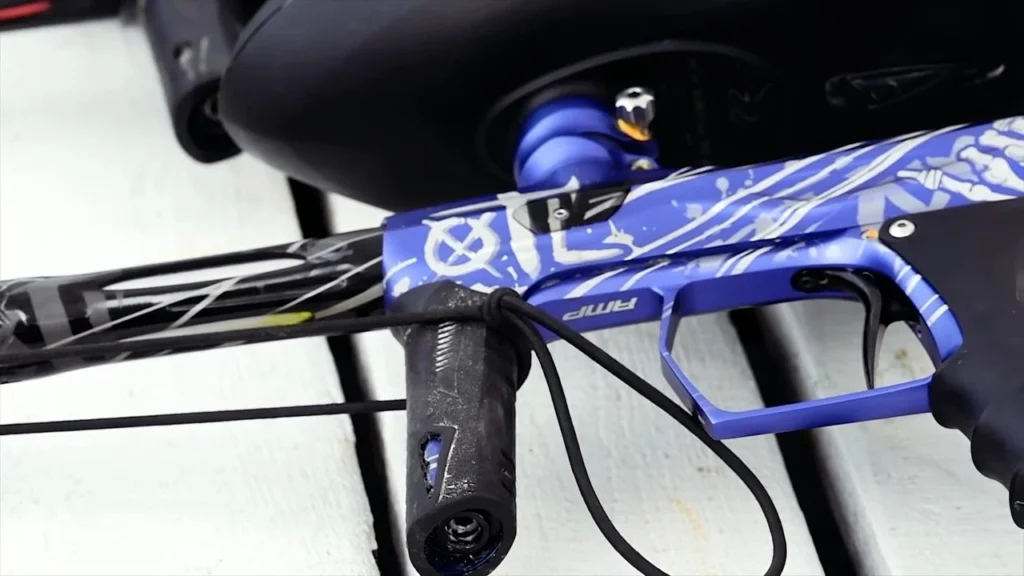
Why It’s Called a “Marker”
The name is a leftover from where the technology came from. The first of these guns were made for foresters and ranchers to mark trees and livestock with a splat of paint from a distance. When the sport of paintball grew out of that in the 1980s, the term stuck. So a paintball “marker” literally marks its target with paint, and many players prefer the word because it sounds less aggressive than “gun.”
The Main Parts of a Paintball Marker
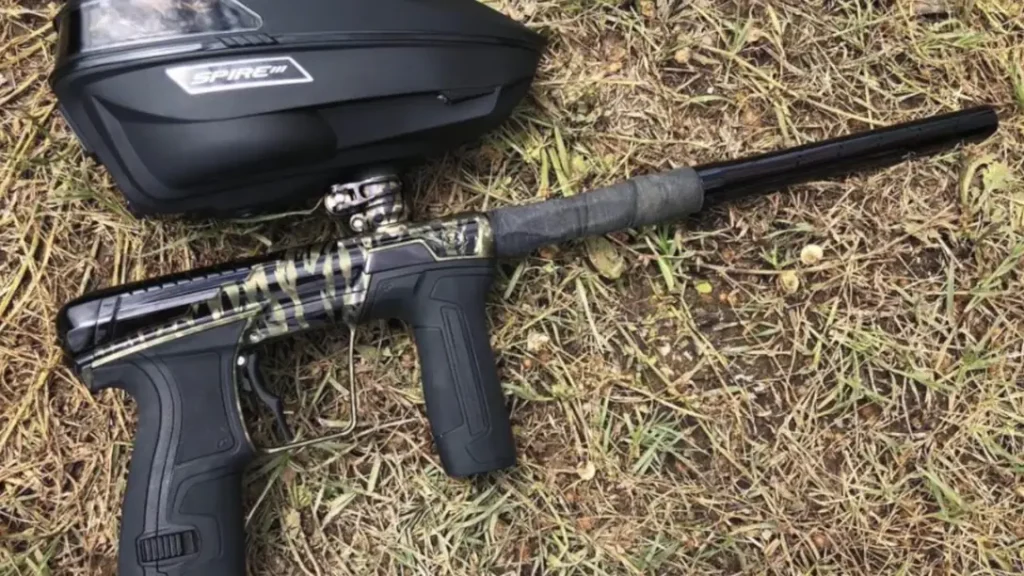
- Body, the core that houses the firing mechanism.
- Barrel, the tube the paintball travels down; length and bore match affect accuracy.
- Hopper (loader), sits on top and feeds paint into the marker.
- Air tank, CO2 or HPA that supplies the gas to fire.
- ASA (Air Source Adapter), where the tank screws into the marker.
- Bolt, chambers each ball and directs the gas burst behind it.
- Trigger frame and grip, houses the trigger and, on electronic markers, the circuit board.
- Regulator, steadies the gas pressure for consistent shots.
Types of Markers by Mechanism
- Pump markers, you manually cock the marker before each shot. Simple, accurate, and demanding, a purist’s choice.
- Mechanical (semi-auto) markers, one shot per trigger pull using a spring-and-hammer system. Rugged, affordable, and popular for woodsball and beginners.
- Electronic (electropneumatic) markers, a circuit board and solenoid fire the valve, giving lighter triggers, higher rates of fire, and modes like ramping. The choice for speedball and tournaments.
Types of Markers by Play Style
- Woodsball/scenario markers, durable, often milsim-styled, built for outdoor play.
- Speedball markers, light, fast electronic markers for tournament arenas.
- Paintball pistols, compact sidearms; see the best paintball pistols.
- Magfed markers, feed from detachable magazines for a tactical, limited-ammo style.
What Makes a Good Marker?
The best marker is the one that matches how you play and your budget, not the most expensive one. A rugged mechanical marker suits a beginner or woodsball player, while a light electronic marker suits fast speedball. Reliability, easy maintenance, a good air system, and paint-to-barrel match matter more than brand hype. Browse our picks for the best paintball guns and markers to match one to your style.
Choosing a Good Marker for Your Budget
The best marker for you depends far more on your budget and play style than on the price tag. Under about $100 you’ll find reliable mechanical markers ideal for beginners and casual woodsball; the $150–$400 range brings better build quality, upgrades, and entry-level electronic markers; and above that sit tournament-grade electropneumatic markers built for speed and efficiency. A newcomer is almost always better served by a rugged, easy-to-maintain marker in the lower brackets than by an expensive tournament gun whose performance they can’t yet use, so match your spend to how often and how competitively you actually plan to play.
Mechanical or Electronic: Which Should You Buy?
For most people starting out, a mechanical marker is the smart first buy, it’s cheaper, tougher, needs no batteries, and is simple to strip and clean, which makes it forgiving while you learn. An electronic marker earns its place once you move toward faster, more competitive play, offering a lighter trigger, higher rate of fire, and modes like ramping. Neither is objectively better; they suit different stages and styles, and plenty of players own one of each for woodsball and speedball respectively.
Signs of a Quality Marker
Whatever your budget, a few things separate a good marker from a frustrating one: consistent shot-to-shot velocity from a decent regulator, reliable feeding without frequent chops, easy access to the bolt and internals for cleaning, availability of spare parts and o-ring kits, and a solid, comfortable feel in the hand. Brand reputation and community support matter too, since a widely-used marker is far easier to get parts and advice for down the line.
Try Before You Buy
If you’re not sure which marker suits you, rent a few before committing. Most fields rent beginner-friendly mechanical markers, and playing a couple of sessions with different guns teaches you far more about weight, feel, and rate of fire than any spec sheet. Once you know whether you lean toward relaxed woodsball or fast speedball, and how often you’ll realistically play, you can buy a marker that genuinely fits, rather than overspending on features you won’t use or outgrowing a cheap gun in a month.
Upgrading Your Marker
As you play more, a few upgrades genuinely improve a marker. A quality barrel (or barrel kit with bore inserts) sharpens accuracy and quietens the shot; an aftermarket regulator steadies velocity; and better triggers or grips improve feel. Resist the urge to upgrade everything at once, though, barrel and paint match deliver the biggest real-world gains, while many cosmetic upgrades change little beyond looks.
New vs. Used Markers
The used market is a great way to get more marker for your money, since paintball gear from reputable brands holds up well. If you buy used, check that it holds air without leaking, cycles cleanly, and comes with its original parts, and favour popular models so spares and o-ring kits are easy to find. A well-maintained used marker from a trusted brand is often a smarter buy than a brand-new budget gun.
Common Marker Problems and Simple Fixes
Most marker troubles have straightforward causes. A leak or a hiss usually means a worn o-ring or cup seal; chopping paint points to a feed rate that can’t keep up or a paint-to-bore mismatch; and inconsistent velocity is typically a regulator or seal issue. Learning these few patterns lets you fix the vast majority of problems yourself rather than sending the marker away.
Keeping Your Marker Reliable
Whatever marker you choose, a little routine care keeps it dependable. Clean and lightly lubricate it regularly, replace seals before they fail, store it de-gassed and dry, and match it to fresh, correctly-sized paint. Reliability, not brand prestige, is what makes a marker a joy to own, and it’s almost entirely within your control.
Conclusion
A paintball marker is the paintball gun itself, named for its original job of marking targets with paint. Whether pump, mechanical, or electronic, they all share the same core parts and the same purpose. Understand those parts and types, match a marker to your play style, and you’ll pick a good one with confidence.
FAQs
A paintball marker is the proper name for a paintball gun, the device that uses compressed CO2 or HPA to fire paintballs. “Marker” and “gun” mean the same thing; the term comes from early versions used to mark trees and livestock.
Because the first ones were made to mark trees and cattle with paint from a distance. When paintball became a sport in the 1980s, the name carried over, and many players prefer “marker” as it sounds less aggressive than “gun.”
By mechanism there are pump, mechanical (semi-auto), and electronic markers. By play style there are woodsball/scenario, speedball, pistol, and magfed markers. The right type depends on how and where you play and your budget.