Last updated on August 28th, 2026 at 06:43 pm
Paintballs are made much like soft medicine capsules or fish-oil gel caps, through a process called encapsulation. A thin gelatin shell is formed around a non-toxic, water-soluble fill, sealed into a sphere, then dried and cured until the shell hardens. The result is the round, .68 caliber paintball that breaks on impact and washes away. Here’s how it’s actually done.
- The shell: gelatin, water, and colorant, the same family of material as capsule pills.
- The fill: a non-toxic, water-soluble dye mix (typically polyethylene glycol based).
- The method: rotary-die encapsulation, then hours to days of drying.
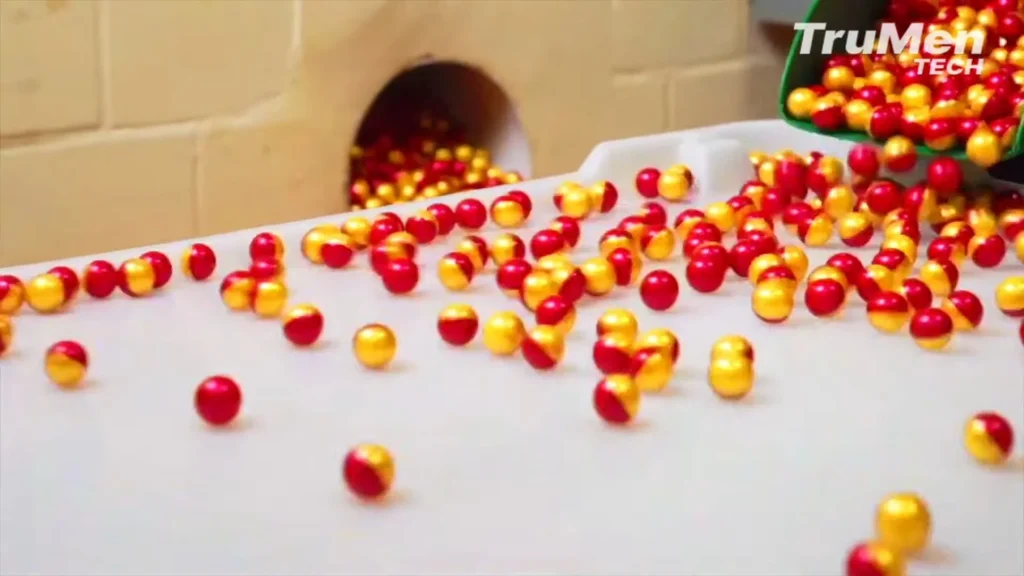
What Paintballs Are Made Of
A paintball has two parts. The shell is made from gelatin, water, and a colorant, the same broad type of material used for capsule medicines, which is why it’s biodegradable and breaks cleanly on impact. The fill is a thick, brightly colored liquid, usually based on polyethylene glycol (PEG) with non-toxic dyes and thickeners. Everything in a modern paintball is non-toxic, water-soluble, and washable, despite the myth, they’re not made of paint or harsh chemicals.
How Paintballs Are Made, Step by Step
- 1. Mix the fill. The colored, water-soluble liquid that becomes the visible mark is blended and dyed.
- 2. Prepare the gelatin. Gelatin is heated with water and colorant into a liquid, then spread into two thin, flat ribbons.
- 3. Encapsulate. The two gelatin ribbons feed between counter-rotating dies; the fill is injected between them, and the dies cut and seal a sphere around the fill in one motion, the same rotary-die machine used to make softgel capsules.
- 4. Dry and cure. The soft new paintballs are tumbled and dried for hours to days so the shells harden, the moisture balances, and the balls hold a round shape.
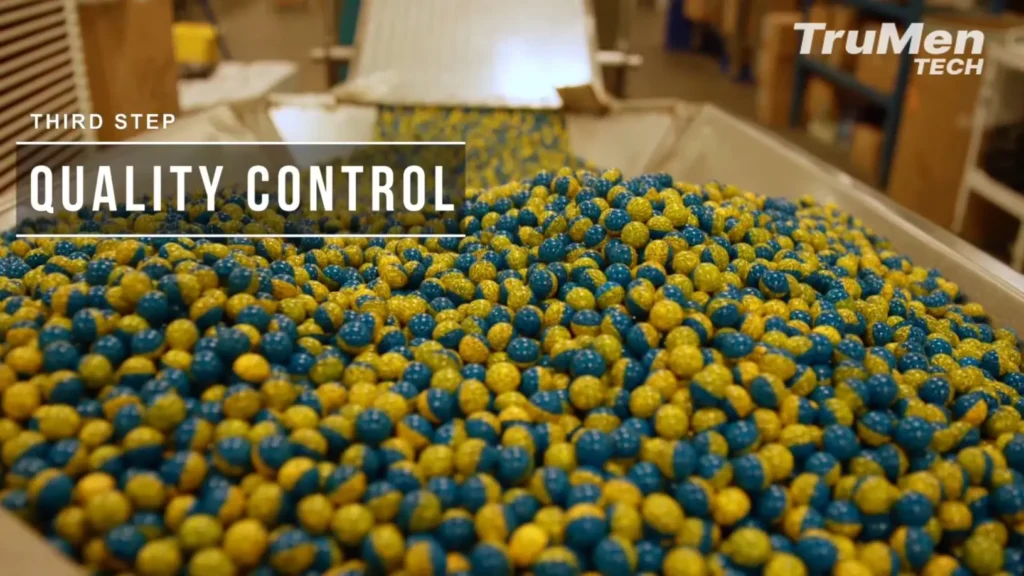
- 5. Sort and inspect. They’re graded by size (.68 caliber) and roundness; the roundest, most uniform ones become premium tournament paint.
- 6. Package. Finished paintballs are counted, bagged or bucketed, and sealed to keep out moisture.
Are Paintballs Toxic?
No. Modern paintballs are made from non-toxic, biodegradable, water-soluble ingredients, food- and cosmetic-grade materials rather than actual paint. The fill washes off skin and out of most clothes with water, and the gelatin shell breaks down naturally. That’s exactly why the sport is safe to play and why a hit only stings briefly without any chemical harm.
Why Quality Varies
The care taken in mixing, encapsulating, and especially drying is what separates cheap paint from premium. Better paint is rounder, has a more consistent shell thickness, and is fresh, so it flies straight and breaks reliably on the target instead of in your barrel. Storage matters after manufacture too, since gelatin absorbs moisture; see our guides on the best paintballs and how to store them.
The manufacturing quality is exactly what separates cheap paint from premium. Top-grade tournament paint is made to be perfectly round, with a thin, brittle shell that shatters reliably on the target rather than bouncing or breaking in your barrel, and a bright, thick fill that leaves an unmistakable mark. Achieving that consistency takes tighter control over the mix, the encapsulation, and especially the drying, which is why premium paint costs more and why serious players happily pay for it.
Why Freshness Matters so Much
Because the shell is gelatin, paintballs are sensitive to their environment from the moment they’re made. Correct drying and curing gives them their round shape and firm shell, but they’ll gradually reabsorb moisture from humid air afterward, swelling out of round and turning unreliable. That’s why fresh paint performs best and why storage, cool, dry, and sealed, matters so much once a bag leaves the factory.
Are Paintballs Environmentally Friendly?
Reassuringly, yes. Modern paintballs are made from non-toxic, water-soluble, biodegradable materials, food- and cosmetic-grade ingredients rather than actual paint, so the fill washes away and the gelatin shell breaks down naturally in the environment. That low impact is one reason paintball can be played across natural woodland and fields without lasting harm, provided players clean up their pods and packaging afterward.
From Factory to Field
One practical consequence of how paintballs are made is that freshness travels with them. Because the gelatin shell starts reabsorbing moisture as soon as it leaves the controlled factory environment, paint is best bought from busy retailers and fields with high turnover, where stock hasn’t been sitting for months. When you get a fresh, well-made batch home, keeping it sealed, cool, and dry preserves the roundness and shell quality the manufacturing process worked so hard to create, which is ultimately what lets the paint fly straight and break cleanly on the target.
Choosing the Ingredients
Everything in a modern paintball is chosen to be non-toxic and washable. The fill is typically built on polyethylene glycol, the same safe base used in many foods and cosmetics, coloured with food- or cosmetic-grade dyes and thickened so it splatters visibly. The shell is gelatin, water, and colourant, the same family of material as capsule medicines. Nothing in a quality paintball is actual paint or a harsh chemical, which is exactly why it rinses off skin and out of clothes.
Quality Control on the Line
After curing, paintballs pass through sorting and inspection. They’re graded by size and roundness, and the most uniform, perfectly spherical balls are set aside as premium tournament paint, while slightly less consistent ones become recreational grade. This sorting is a big reason premium paint costs more, you’re paying for tighter tolerances that make the ball fly straighter and break more reliably on the target.
A Short History of the Paintball
The paintball itself predates the sport. The first ones were made for foresters and ranchers to mark trees and livestock with a splat of colour from a distance. When people realised those markers could be turned on each other for fun, the sport of paintball was born in the early 1980s, and the encapsulation technology borrowed from the pharmaceutical industry is what made mass-producing consistent, affordable paint possible.
Conclusion
Paintballs are essentially large, colorful gel capsules: a gelatin shell encapsulating a non-toxic, water-soluble fill, formed on a rotary-die machine and then cured until firm. They’re safe, biodegradable, and washable, and the difference between cheap and premium paint comes down to how carefully they’re made and dried.
FAQs
A gelatin shell, the same family of material as capsule medicines, wrapped around a non-toxic, water-soluble fill, typically a polyethylene glycol base with food- or cosmetic-grade dyes. Both parts are washable and biodegradable, not actual paint or harsh chemicals.
No. Paintballs are made from non-toxic, biodegradable, water-soluble ingredients. The fill washes off skin and out of most clothes, and the gelatin shell breaks down naturally, which is why the sport is safe when players wear proper eye protection.
They’re made by encapsulation: two ribbons of gelatin pass through rotating dies while the colored fill is injected between them, sealing a sphere in one motion. The soft balls are then dried and cured for hours to days, sorted by size and roundness, and packaged.
Yes. The gelatin shell and water-soluble fill are biodegradable and non-toxic by design, so paint breaks down naturally and rinses away with water, one reason paintball is considered an environmentally low-impact sport.