Last updated on August 28th, 2026 at 06:44 pm
Store paintballs somewhere cool, dry, and sealed at room temperature, and rotate the bag every few days so they stay round, that’s the whole secret to making them last. Paintballs are gelatin shells filled with water-based dye, so heat, cold, and humidity are what ruin them. Keep those away and a bag will stay in good shape for months. Here’s how to store them properly.
- Cool & room temperature, not a hot garage, attic, or car.
- Dry & sealed, airtight against humidity.
- Off the floor and rotated, so they don’t develop flat spots.
- Use the oldest paint first.
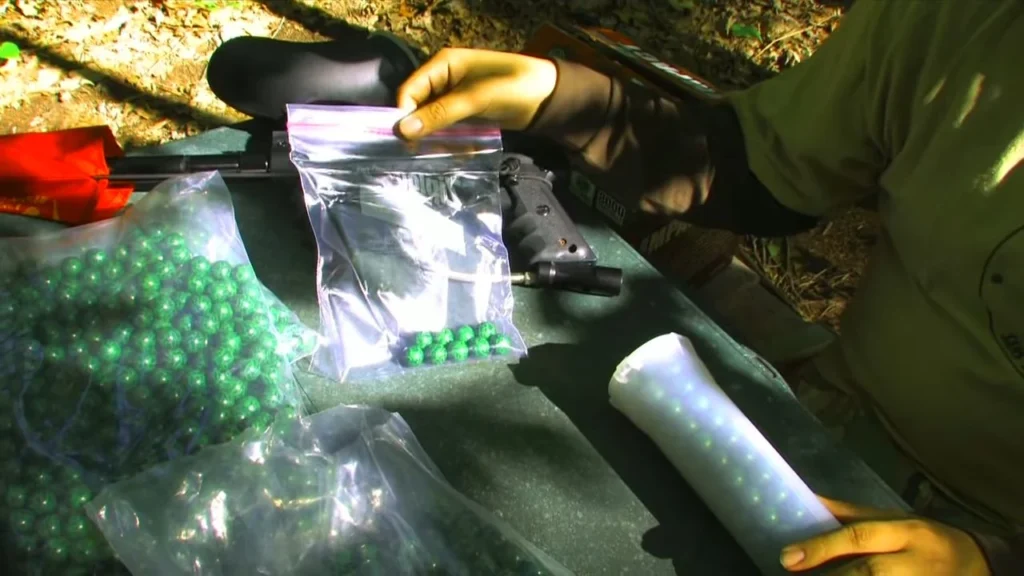
Where to Store Paintballs
The ideal spot is indoors at a steady room temperature, a closet or a shelf inside the house is perfect. Avoid the places most people default to: a garage, attic, shed, or car all swing between hot and cold and get humid, which deforms and softens paint fast. Keep the bag off a cold concrete floor too, since floor damp and chill both reach the paint. Never freeze paintballs or leave them baking in direct sun.
Keep Them Sealed and Dry
Humidity is a paintball’s worst enemy, the gelatin shells absorb moisture, swell out of round, and then jam or break in your marker. Keep paint in its sealed bag, or transfer an open bag into an airtight container or bucket to lock moisture out. If you live somewhere humid, a container with a silica gel pack helps keep the air dry.
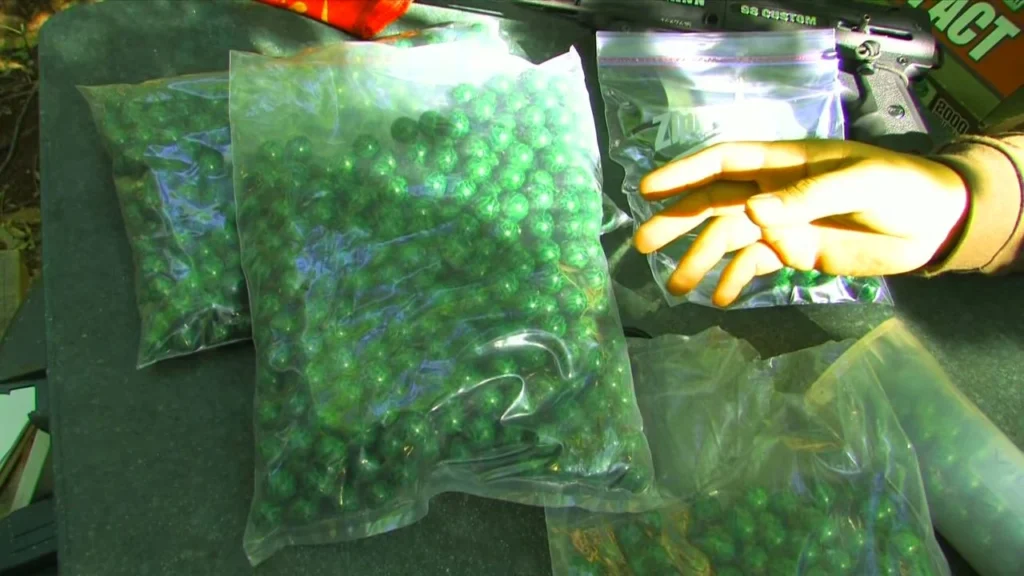
Rotate the Bag to Keep Them Round
Paintballs sitting in one position slowly develop flat spots from their own weight, and a ball that isn’t perfectly round won’t fly straight. Give the bag or container a gentle turn or roll every few days so the balls shift and hold their shape, a small habit that keeps a stored bag accurate. Always shoot your oldest paint first so nothing sits long enough to go bad.
How Long Do Stored Paintballs Last?
Stored well, cool, dry, and sealed, paintballs stay in good shape for about a year, sometimes two. Stored badly in heat or humidity, they can spoil in weeks. See our full guide on how long paintballs last for the details.
When to Toss Paintballs
Storage can only do so much, discard any paint that shows these signs, since it’ll chop in your marker and shoot inaccurately:
- Swollen or oval, no longer round.
- Brittle, the shell cracks when squeezed.
- Oily or leaking fill.
- Stuck together in clumps.
The Ideal Storage Setup
The best home for paintballs is an airtight container kept indoors at a steady room temperature, a closet shelf is ideal. An airtight bucket or resealable bag locks out the humidity that swells and ruins paint, and in damp climates a silica gel packet inside the container helps keep the air dry. Store the container out of direct sunlight and up off a cold concrete floor, both of which can affect the paint over time.
Common Storage Mistakes to Avoid
Most ruined paint comes down to a handful of avoidable errors. Leaving paint in a garage, shed, attic, or car exposes it to the temperature swings and humidity that deform it fastest. Freezing paintballs makes the shells brittle, while stacking heavy objects on a bag flattens the balls out of round. And leaving an opened bag exposed to the air lets moisture creep in, always reseal it.
How Heat, Cold, and Humidity Affect Paint
Each condition damages paint in its own way. Heat softens and deforms the gelatin shells and can make the fill leak; cold makes them brittle so they shatter on firing; and humidity, the worst offender, is absorbed by the shells, swelling them out of round so they jam or break in your marker. Keeping paint cool, dry, and sealed simply removes all three risks at once.
Storing Paint at the Field
Storage matters on game day too, not just at home. On a hot day, keep your spare bags and pods out of direct sun, in a shaded bag or a cooler, so the paint doesn’t soften and go out of round before you load it. In cold weather the opposite applies: keeping paint from getting icy stops the shells turning brittle.
Once you open a bag at the field, either shoot it that day or reseal what’s left before you head home. Loose paint rattling around a warm car for a week is the fastest way to ruin an otherwise good batch, so transfer leftovers back into a sealed container as soon as you can.
Storing Paint in Different Climates
Your climate changes what “good storage” looks like. In humid regions, an airtight container with a silica gel packet is essential to keep moisture out of the shells. In hot climates, avoid garages and cars entirely and use the coolest indoor spot you have. In genuinely cold areas, keep paint from freezing, since brittle shells shatter on firing. The universal rule, cool, dry, and sealed, just takes a little more effort at the extremes.
Organising Your Paint Supply
If you buy by the case, a little organisation keeps your paint fresh. Open one bag at a time and reseal the rest, label bags with the date if you stockpile, and always shoot your oldest paint first so nothing sits long enough to degrade. Rotating your stock the way a shop rotates its shelves means you’re always playing with the freshest paint you own.
Conclusion
Storing paintballs well is simple: keep them cool, dry, sealed, and at room temperature, off the floor, rotated occasionally, and used oldest-first. Steer clear of the garage, attic, and car, and lock out humidity. Do that and your paint stays round and reliable, and lasts far longer than a carelessly stored bag ever will.
FAQs
Keep them cool, dry, sealed, and at room temperature, indoors, not in a garage, attic, or car. Store them off the floor, rotate the bag every few days so they stay round, and always use your oldest paint first.
Yes. Heat softens and deforms them, cold makes them brittle, and humidity swells the shells so they break in your marker. Poor storage can ruin a bag in weeks, while proper storage keeps paint good for months.
It’s best not to. Garages, attics, sheds, and cars swing between hot and cold and get humid, all of which deform and spoil paint quickly. Store paintballs indoors at a steady room temperature instead.