Last updated on August 28th, 2026 at 06:48 pm
You can play paintball with as few as two people in a one-on-one duel, but it’s most fun with a group. For a good recreational game, aim for 6 to 12 players, roughly 3 to 6 per side. Big scenario events run into the dozens or hundreds. The right number really comes down to your field size and the format you’re playing.
- Minimum: 2 players (1-on-1); 4+ is more fun.
- Ideal rec game: 6–12 players, in even teams.
- Big scenario / events: 20 to hundreds.
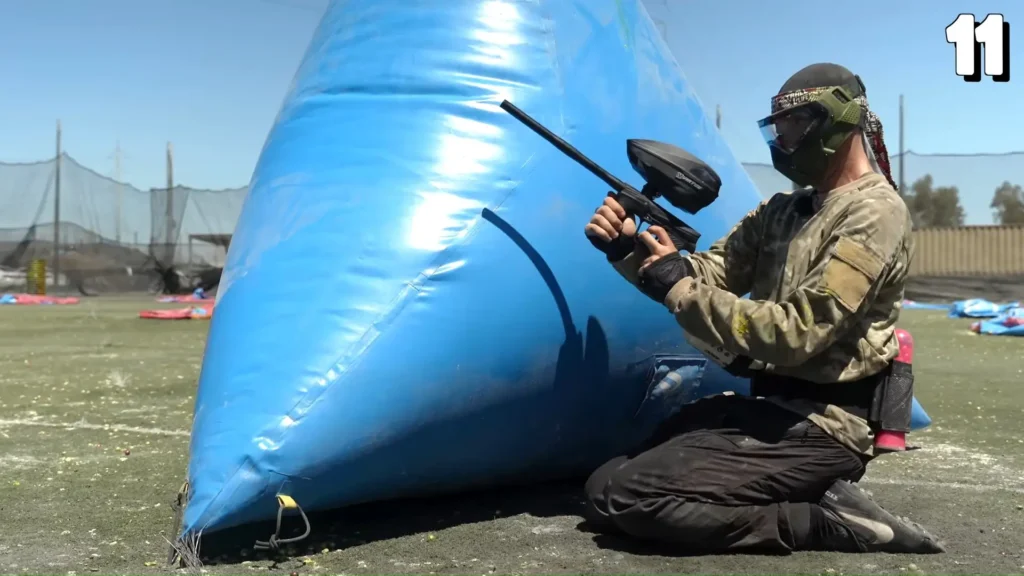
The Minimum You Need
Technically, two players are enough for a one-on-one match, and it can be a great way to practise. But paintball comes alive with teamwork, so four players (two per side) is a more satisfying floor, enough to cover each other, flank, and communicate. Below that, games end quickly and there’s little strategy.
The Ideal Number for a Fun Game
For most recreational days, 6 to 12 players hits the sweet spot. Split into even teams of 3 to 6, that’s enough for real tactics, covering lanes, coordinating pushes, and flanking, without the field feeling crowded. Try to keep the teams even in numbers and skill so games stay competitive, and rotate players in if you have more than the field comfortably holds.
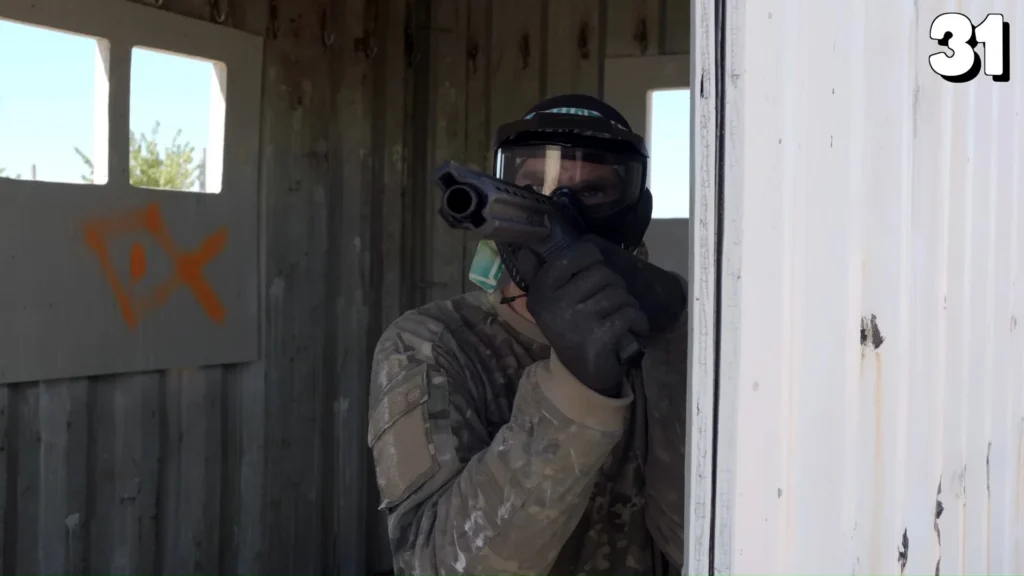
How Many Players by Format
- Speedball, played in fixed team sizes like 3-on-3, 5-on-5, or 7-on-7 on a compact field.
- Woodsball / recreational, flexible; anywhere from a few players to a couple of dozen across larger terrain.
- Scenario and big games, built for big numbers, often 50 to several hundred players over a large area.
Planning a Group or Party
If you’re organising an event, check the field’s capacity first, every venue has a comfortable maximum for its size. Book a group or party package for the best per-person rate, plan for even teams, and have a few spares in mind since not everyone always shows. Larger groups can simply rotate through rounds so nobody sits out for long. Working out how much paint each player needs ahead of time keeps the day running smoothly.
Best Team Sizes by Format
- 1-on-1: great for practice and learning.
- 3v3 to 5v5: the sweet spot for fast speedball.
- 5–10 per side: ideal for tactical woodsball.
- Dozens or more: scenario and big games.
Playing with Uneven Numbers
Odd numbers happen, and they’re easy to work around. Rotate players in each round so everyone gets game time, give the smaller team a head start or an objective advantage to even things out, or have the spare player referee. Keeping the teams balanced in skill matters just as much as balancing the numbers.
Can You Play Paintball with Just Two People?
Yes, two players is enough for a one-on-one duel or to practise aiming, movement, and snap-shooting. It’s less dynamic than a team game and burns through the fun of flanking and covering fire quickly, but it’s a perfectly good way for beginners to learn the basics or for two friends to get some trigger time without organising a whole group.
The Ideal Group Size for a Fun Day
For most recreational outings, a total of eight to twelve players hits the sweet spot. That gives you balanced four-versus-four or six-versus-six teams with a substitute or two, enough bodies to make cover and teamwork matter, and the flexibility to rotate people in and out between rounds so nobody is sitting out for long.
How Player Count Changes the Game
The number of players fundamentally alters the feel. Small groups play fast, duel-heavy games where individual skill decides everything; larger groups create longer, more chaotic battles where communication, coordinated pushes, and holding lanes become the deciding factors. Bigger isn’t automatically better, but matching your group size to the field keeps games balanced and fun.
Balancing Teams Matters More than Numbers
Getting the headcount right is only half the job, balancing the skill across teams matters just as much. A lopsided game where all the experienced players end up on one side is frustrating for everyone and quickly stops being fun. Good organisers mix newer and stronger players across both teams, reshuffle between rounds if one side keeps dominating, and hand the smaller or weaker team an objective advantage or a head start. A close, well-matched game with six players a side beats an unbalanced one with twenty, so pay as much attention to who is on each team as to how many people are playing in total.
Playing Solo: Walk-on and Open Days
You don’t actually need to bring a group at all. Most fields run walk-on or open-play days where individual players and small groups turn up and are mixed into balanced teams on the spot. It’s a great way to play without organising anything, to meet regulars, and to learn from more experienced players. If you can’t rally enough friends, check your local field’s schedule for open sessions rather than assuming you need a full roster of your own.
When Bigger Groups Need Splitting
Very large groups, a birthday party or a corporate day of twenty or thirty, usually play better split into rotating teams rather than one giant free-for-all. Smaller teams keep games manageable, let everyone get involved, and allow people to sit out and rest between rounds. A good field or organiser will handle this split for you, balancing the teams and rotating players so the day stays fun for the whole group.
Conclusion
Two players are enough to start, but 6 to 12 in even teams makes for the best recreational paintball, while scenario games thrive on dozens or more. Match the headcount to your field size and format, keep the teams balanced, and book a group package, and everyone gets a great game.
FAQs
A minimum of two for a one-on-one game, though four or more is more fun. The ideal for a recreational game is 6 to 12 players split into even teams, while scenario events are built for dozens or even hundreds.
Around 8 to 12 works well for most parties, enough for competitive, tactical games with even teams, while still fitting comfortably on a typical field. Larger groups can rotate through rounds so nobody sits out for long.
It varies by format. Speedball uses fixed sizes like 3, 5, or 7 per side, while recreational woodsball is flexible, commonly 3 to 6 per team for a fun game. Keep the two teams even in numbers and skill for the best matches.